Trade relations between Uzbekistan and China have entered a phase of rapid expansion, reflecting both countries’ growing strategic and economic alignment across Eurasia.
In the first quarter of 2026 alone, bilateral trade turnover rose by 35.5% year-on-year, reaching $4.109 billion, according to data released by China’s General Administration of Customs (GAC) and reported by Xinhua.
This sharp increase highlights not only the strengthening of bilateral economic ties but also Uzbekistan’s rising role as a key trade partner for China in Central Asia. The momentum suggests that the two countries are moving beyond traditional commodity exchange toward a more diversified and structurally integrated trade relationship.
A closer look at the composition of trade shows a significant imbalance in favor of Chinese exports. During the reporting period, China’s exports to Uzbekistan increased by 30.6%, reaching $3.585 billion. Meanwhile, Uzbekistan’s exports to China grew at a much faster pace of 83.3%, although from a smaller base, totaling $524 million.
This divergence reflects both the structural nature of trade flows and Uzbekistan’s gradual expansion of its export capacity. While Chinese goods dominate the bilateral exchange, Uzbekistan is steadily increasing its presence in the Chinese market, signaling a slow but notable shift toward more balanced trade dynamics.
Structural Dynamics and Sectoral Drivers
The growing trade turnover is underpinned by a combination of industrial cooperation, infrastructure development, and rising demand for Chinese manufactured goods in Uzbekistan. China remains one of Uzbekistan’s largest trading partners, supplying machinery, electronics, vehicles, construction materials, and consumer goods that are essential for Uzbekistan’s ongoing modernization and urban development projects.
At the same time, Uzbekistan is increasingly exporting raw materials, agricultural products, and intermediate goods to China. The 83.3% increase in exports to China suggests rising competitiveness in certain sectors, particularly agriculture, textiles, and mineral resources. This trend aligns with Uzbekistan’s broader economic reform agenda, which prioritizes export diversification and deeper integration into global value chains.
The March 2026 trade figures further illustrate the intensity of bilateral exchange. In that single month, total trade reached $1.3 billion, with Chinese exports to Uzbekistan amounting to $1.16 billion, while Uzbek exports to China stood at $140 million. This monthly snapshot underscores the persistent asymmetry in trade flows but also confirms sustained high-level demand on both sides.
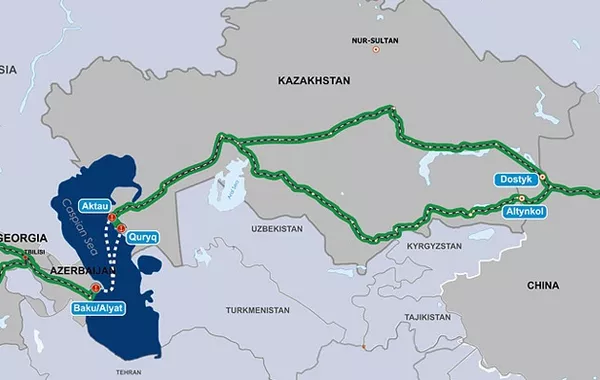
Beyond goods exchange, the trade relationship is increasingly linked to infrastructure connectivity and investment flows. China’s involvement in regional transport corridors, logistics hubs, and industrial parks has contributed to facilitating smoother trade operations. Uzbekistan’s geographical position as a landlocked but strategically located country makes it a key transit and production node within China’s broader Eurasian economic outreach.
Long-Term Trajectory and 2025 Baseline Growth
The strong performance in 2026 builds on already robust growth recorded in the previous year. According to the State Customs Service of China, total bilateral trade between China and Uzbekistan reached $16.1 billion by the end of 2025, representing a 17.9% increase compared to 2024.
This steady upward trajectory indicates that the current surge is not an isolated phenomenon but part of a longer-term structural expansion. Over the past decade, China has consistently strengthened its position as Uzbekistan’s leading trading partner, driven by complementary economic needs: China’s demand for resources and markets, and Uzbekistan’s need for investment, infrastructure development, and industrial upgrading.
The acceleration seen in early 2026 suggests that the partnership is entering a more mature phase, where trade growth is being reinforced by institutional cooperation mechanisms, improved logistics networks, and policy alignment under broader regional initiatives.
Strategic Implications and Future Outlook
The rapid expansion of China-Uzbekistan trade carries significant strategic implications for Central Asia’s economic landscape. Uzbekistan is increasingly positioning itself as a regional hub connecting China with broader Middle Eastern and European markets, while China continues to deepen its economic footprint in the region through trade, infrastructure, and investment.
However, the persistent trade imbalance-where Chinese exports far exceed Uzbek exports-remains a structural challenge. While Uzbekistan’s export growth rate is accelerating, the absolute gap suggests that achieving more balanced trade will require continued industrial diversification, value-added production, and expanded access to Chinese consumer and industrial markets.
Looking ahead, the trajectory of bilateral trade is likely to remain upward, supported by ongoing infrastructure projects, logistics modernization, and regional connectivity initiatives. If current trends continue, China and Uzbekistan may further integrate their economies into a more interdependent framework, with trade serving as a central pillar of their broader strategic partnership.
In conclusion, the first quarter of 2026 confirms that China-Uzbekistan trade relations are not only expanding rapidly but also evolving in complexity. While challenges remain, particularly regarding trade balance, the overall direction points toward deeper economic integration and sustained growth, reinforcing the importance of this partnership within the wider Eurasian economic architecture.