The current international system is experiencing a significant transformation characterized by escalating geopolitical competition, the weakening of multilateral norms, and the growing fragmentation of global governance. Selective enforcement, rival power centers, and the increasing marginalization of significant portions of the Global South pose a growing threat to the post-Cold War order, which was once based on the concepts of international law and institutional cooperation. Building trust between states has become more challenging and important in this context, especially across politically, economically, and culturally diverse regions.
Regional mechanisms have gained new significance in this context. Regional platforms provide a more practical framework for encouraging communication, reducing tensions, and advancing cooperative approaches to common challenges, even though global consensus is still elusive. One of the most extensive attempts to institutionalize such a framework throughout Asia is the Conference on Interaction and Confidence-Building Measures in Asia (CICA), a continent that is simultaneously becoming a global powerhouse and still has some of the most complicated security dynamics.
The evolution of CICA's Secretariat, which is celebrating its twentieth anniversary, is a reflection of broader changes in international relations. It is gradually evolving from a primarily dialogue-based platform to a more institutionalized and structured organization that can handle both conventional and unconventional security issues. This crucial stage coincides with Azerbaijan's current chairmanship (2024-2026), which presents an opportunity to influence the course of CICA's transformation.
CICA’s Transformation and the Role of the Secretariat
The main idea behind CICA is that security in Asia cannot be achieved through confrontation or bloc-based approaches; it has to be built through dialogue, mutual respect, and small steps toward building trust. Over time, this idea has turned into a set of Confidence-Building Measures (CBMs) that cover military-political, economic, environmental, and humanitarian areas.
However, CICA has had to change from its original format due to the shifting global environment. The need for more structured mechanisms and increased institutional capacity has been highlighted by the increasing complexity of security challenges, such as supply chain disruptions, cyber threats, climate change, and economic fragmentation.
The CICA Secretariat has been a key player in this process. In addition to serving as an administrative body, it has increasingly taken on the roles of initiative coordinator, dialogue facilitator, and institutional continuity driver. The Astana Statement (2022) started the ongoing transformation process, which aims to turn CICA into a fully-fledged international organization with better operational capacity and strategic importance over time.
This change is not just technical; it is a part of a bigger change in how people in Asia think about regional governance. Platforms like CICA are expected to offer more inclusive, adaptable, and regionally grounded approaches to cooperation in a setting where global institutions are frequently thought to be insufficiently representative or effective.
Azerbaijan’s Contribution: Chairmanship in a Time of Transition
As the organization works to strengthen its institutional underpinnings while broadening its functional scope, Azerbaijan's chairmanship of CICA comes at a critical juncture. Baku has based its leadership on the idea of improving connectivity, digitalization, and sustainable growth, which are all areas that connect development and security.
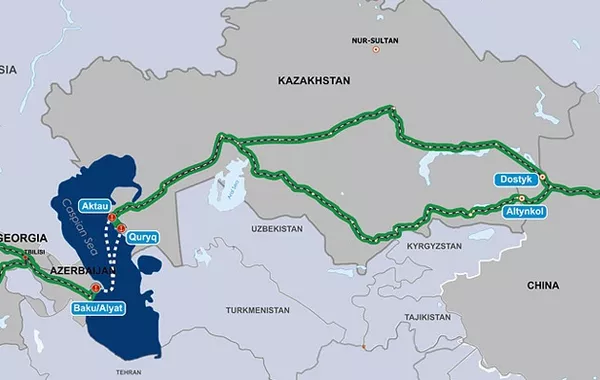
Azerbaijan's strategy is consistent with its overarching foreign policy approach, which prioritizes regional cooperation, strategic balance, and multilateralism. Azerbaijan has grown into a vital logistical and energy hub that connects Central Asia, the South Caucasus, and Europe due to its location at the intersection of important transportation corridors. Its vision for CICA as a platform that combines connectivity with confidence-building has been influenced by its geographical and economic role.
Importantly, Azerbaijan's chairmanship has been marked by real institutional advancement and active diplomatic engagement. A key milestone was the informal meeting of the CICA Council of Foreign Ministers, held on 25 September 2025 on the sidelines of the 80th session of the United Nations General Assembly in New York. The meeting offered a chance to discuss urgent regional and global issues and evaluate the progress made under Azerbaijan's chairmanship.
The meeting resulted in important decisions being taken, such as the creation of two new advisory bodies, the CICA Women Council and the CICA Finance Summit, which are anticipated to greatly improve institutional depth and thematic cooperation within the organization. Azerbaijan's role in encouraging a more organized and goal-oriented approach within CICA was highlighted by the favorable evaluations made by member states during the meeting.
Through focused thematic initiatives, Azerbaijan has actively contributed to broadening CICA's functional agenda in addition to high-level diplomacy. The international conference on enhancing the role of women in the CICA space, which took place in Baku in April 2026 and signaled the beginning of the Women Council, is a noteworthy example. In addition to CICA's traditional emphasis on political and economic security, this initiative is part of a larger effort to incorporate inclusivity and social dimensions into the organization's developing framework.
By hosting significant gatherings like the Thirteenth Meeting of the CICA Think Tank Forum in September 2025, Azerbaijan has simultaneously strengthened its position as a forum for regional discussion and agenda-setting. These initiatives support the organization's shift to a more successful institutional model by bridging the gap between political discourse and policy-oriented expertise.
The CICA Summit, which is scheduled to take place in Baku in October 2026, is a significant turning point in this process of change. In addition to consolidating current reforms, the summit is anticipated to offer a forum for furthering conversations about CICA's future institutional structure. The summit will concentrate on resolving pending issues and advancing the organization's long-term strategic direction.
When combined, these efforts show that Azerbaijan's chairmanship is actively influencing CICA's development through institutional innovation, diplomatic engagement, and real-world implementation rather than by just setting agendas. By doing this, Azerbaijan is helping CICA become a more cohesive, inclusive, and functionally relevant platform that can address the issues of a multipolar and increasingly complex global environment.
The Baku Experience at the CICA Think Tank Forum: Connecting Policy and Discussion
The Think Tank Forum (TTF), an advisory and intellectual platform that connects academic expertise with policy processes, is one of the most important tools assisting CICA's institutional development. Such Track 1.5 and Track II mechanisms have become crucial elements of successful regional governance in a time when traditional diplomacy is unable to handle complicated, multifaceted issues.
In this sense, the CICA Think Tank Forum's Thirteenth Meeting, which took place in Baku on September 9-10, 2025, was a significant turning point. Under the theme "Resonance of Development and Security: Regional Cooperation and Governance in the Institutional Transformation of CICA," representatives from 21 member states attended the forum, which was organized by the Center of Analysis of International Relations (AIR Center) in collaboration with the Shanghai Institutes for International Studies (SIIS).
Notably, the forum was held outside of China for the first time since its establishment, highlighting both the platform's maturity and Azerbaijan's expanding role within CICA. A number of significant trends pertinent to the organization's transformation were brought to light during the discussions.
First, there was a significant convergence around the idea of "security through development," which was indicative of a larger movement away from military-centric strategies and toward more all-encompassing security paradigms. In order to lower the likelihood of conflict and promote long-term stability, participants stressed the importance of economic interdependence, infrastructure connectivity, and technological cooperation.
Second, the forum emphasized the value of connectivity as a means of boosting national resilience. Initiatives like the Middle Corridor, the Belt and Road Initiative, and other regional transportation projects were presented as tools for fostering interdependence and trust between states rather than just as commercial endeavors.
Third, the talks emphasized how Asia and the Global South are increasingly influencing the development of the future world order. CICA members' concerns about current structural imbalances were reflected in calls for more inclusive global governance and increased representation of developing nations.
Lastly, the Baku forum reaffirmed the significance of the Think Tank Forum as a source of strategic insight, policy-relevant research, and intellectual exchange. Contributions like collaborative research initiatives, policy suggestions, and thematic studies were recognized as crucial inputs for CICA's decision-making procedures.
In this way, the Think Tank Forum is becoming a more integrated part of CICA's institutional architecture, supporting evidence-based policymaking and strengthening the organization's ability to adapt.
Challenges Facing CICA
Despite its advancements, CICA still has a number of structural and operational issues that could limit how quickly and thoroughly it transforms.
One major problem is the diversity of its membership, which despite being a source of strength can actually make the reaching of consensus more difficult. Political systems, strategic priorities, and economic development levels vary greatly among member states.
Many CBMs are non-binding, which can restrict implementation and lessen the organization's operational impact. This presents another challenge. Although flexibility is a benefit, it must be counterbalanced with systems that guarantee accountability and continuity.
Alongside groups like the SCO, ASEAN, and others, CICA works in a congested institutional environment. It is still necessary to ensure complementarity rather than duplication.
Lastly, the organization needs to keep enhancing its Secretariat's ability to oversee a growing agenda and plan more intricate projects.
Conclusion
It is impossible to overestimate the significance of confidence-building as a basis for stability in an increasingly fragmented global environment. Regional platforms like CICA are in a unique position to provide more adaptable, inclusive, and context-sensitive approaches to cooperation as global governance mechanisms encounter increasing limitations and geopolitical divisions widen.
CICA has developed over the last 20 years from a forum that was mainly focused on dialogue to an emerging institutional actor that has the power to influence regional norms and practices. Its gradual transformation, which is based on inclusivity, consensus, and multifaceted cooperation, reflects a distinctly Asian approach to security, where development, connectivity, and communication are seen as components that reinforce one another.
This crucial stage has coincided with Azerbaijan's chairmanship, which has advanced the organization's institutional and functional aspects. Azerbaijan has shown how political vision can be translated into useful initiatives that enhance regional cooperation through active diplomatic engagement, the promotion of new advisory mechanisms, and the hosting of important platforms like the Think Tank Forum.
However, CICA's ability to transition from incremental dialogue to more structured and outcome-oriented cooperation will determine its future effectiveness. In addition to institutional strengthening, this calls for a deeper integration of policy innovation, analytical expertise, and inclusive participation across various societal sectors.
If CICA's ongoing transformation is carried out successfully, it may become a key component of a more representative and balanced regional order that can handle both established and new security issues. In this sense, CICA's experience provides more general lessons for 21st-century international cooperation: that trust is developed gradually, that diversity can be a source of strength, and that communication, shared responsibility, and a dedication to collective advancement are ultimately necessary for sustainable security.
Find the original article here