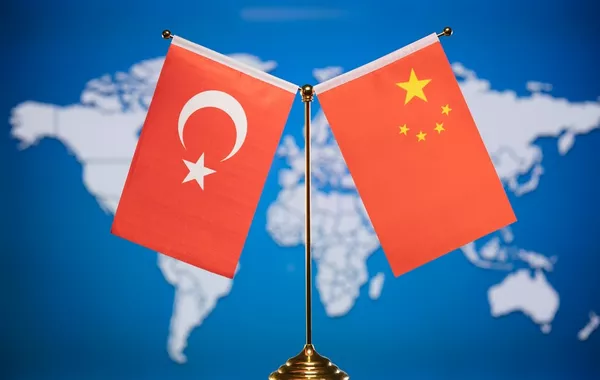
The Organization of Turkic States (OTS) is meeting more often, its summits attracting more attention, and Recep Tayyip Erdogan is invoking Pan-Turkic imagery with increasing frequency. Against this backdrop, academic and policy debate over Pan-Turkism and Turanism has revived - and the two terms are routinely conflated.
They are not the same. Tracing their separate intellectual histories clarifies what is actually at stake in the current moment, and what is not.
The Genesis of Pan-Turkism: The Age of Pan-Ideologies
Pan-Turkism did not emerge in isolation. The late 19th and early 20th centuries produced a wave of transnational ideological projects, of which Marxism was only the most ambitious. Pan-Americanism promoted hemispheric integration under U.S. influence. Pan-Germanism shaped the political imagination of the German and Austro-Hungarian spheres. Pan-Slavism, alongside currents such as Slavophilism, became central both to imperial Russian policy and to the strategic anxieties of its rivals.
Within this environment, Ottoman intellectuals - often educated in European institutions yet rooted in Islamic traditions - searched for an ideological response to imperial decline. Facing fiscal crisis, territorial fragmentation, and mounting external pressure, they sought a unifying doctrine to consolidate a disintegrating political order. Observing how rival powers leveraged "Pan-ideologies" to reinforce state cohesion, segments of the Ottoman elite formulated a parallel response.
Historical precedents appeared compelling. Pan-Italian sentiment had contributed to the unification of Italy in 1870. Pan-Germanism had strengthened Prussian dominance, culminating in the German Empire and the elevation of the Prussian king to Kaiser. Inspired in part by movements such as "Young Italy," the Young Turks envisioned a similar framework for the Ottoman context. They expected such an ideology to consolidate society around the ruling elite and the Sultan, stimulate economic and military modernization, and elevate the monarchy to a status comparable to contemporary European emperors.
A successful Pan-Turkic project also promised to extend Ottoman influence into the Caucasus and Central Asia. But the rise of Turkish nationalism deepened internal fractures, alienating non-Turkish populations - most notably Arabs and Armenians. By the early 20th century, parallel nationalist movements had emerged in response, including the Arab intellectual circles that would later contribute to Arab nationalism. Among the most significant was Al-Fatat ("Young Arab Society"), founded in 1909 by Arab students in Paris - one of the earliest organized expressions of modern Arab nationalist thought.
Turanism vs. Pan-Turkism: A Conceptual Distinction
Turanism did not originate within Ottoman political thought. It was introduced by Matthias Alexander Castrén, a scholar of Finno-Ugric and Siberian languages working within the intellectual framework of the Russian Empire. Observing the mobilizing power of Pan-Slavism, Castrén proposed a broader civilizational grouping that extended beyond Turkic peoples.
In its original formulation, Turanism encompassed Hungarians, Finns, Estonians, Ugric groups, Tungusic peoples, Mongols, and Turks. This expansive vision was institutionalized in organizations such as the Turan Society, founded in Budapest in 1910 under Pál Teleki, which promoted the idea of a transcontinental "Turan" stretching from Europe to East Asia.
Ziya Gökalp, the principal theorist of Turkism and Turanism within the Ottoman context, rejected this civilizational scope. In The Principles of Turkism, he confined the concept of Turan strictly to Turkic peoples, excluding groups such as Hungarians and Finns.
The divergence between a broad, civilizational Turanism and a narrower, ethnolinguistic Pan-Turkism lies at the root of much of the contemporary confusion surrounding the terms.
The Interwar Period and the Nazi Shadow
The interwar years forced a retreat into pragmatism. Both Mustafa Kemal Atatürk and Hungarian Admiral Miklós Horthy understood the dangers of ideological adventurism. Atatürk focused on building "state nationalism" within republican borders, avoiding any provocation of the Soviet Union.
Admiral Miklós Horthy also approached Turanist circles pragmatically. Although Turanist organizations were not banned outright, as many radical movements were, the Horthy regime kept them within carefully controlled limits to prevent them from developing into autonomous political forces capable of challenging state authority. Instead, Turanist networks were selectively utilized as informal instruments of Hungarian foreign policy and trade diplomacy, particularly in cultivating relations with Kemalist Türkiye and Imperial Japan during the interwar period.
Leadership of the radical nationalist wing in Türkiye gravitated toward figures such as Nihal Atsız, an ideologue of Pan-Turkism whose writings promoted an exclusionary, racialized vision of Turkish identity. His work identified communists, Jews, Persians, and Russians as civilizational enemies, reflecting the broader climate of extremist nationalism in the period.
A comparable strain of rhetoric appeared in Iraq through figures like Khairallah Talfah, the maternal uncle and early mentor of Saddam Hussein. Talfah authored the pamphlet Three Whom God Should Not Have Created: Persians, Jews, and Flies, often cited as indicative of the ideological currents shaping Saddam's formative years.
Meanwhile, Nuri Killigil - commonly known as Nuri Pasha and the half-brother of Enver Pasha - served as the commander of the Islamic Army of the Caucasus and fought against Bolshevik forces during the collapse of the Russian Empire and the wider turmoil of the post-World War I period. After the consolidation of Atatürk’s rule, Nuri Pasha spent extended periods abroad, including in Germany, before eventually returning to Türkiye prior to the Second World War.
During the Second World War, he established an arms and steel production enterprise, and maintained contacts with Nazi Germany. In historical literature, he is often associated with facilitating links between German authorities and Turkic populations from the Soviet Union, including formations such as the Turkestan Legion.
The turning point came in 1944. Following the German defeat at Stalingrad, Ankara reassessed the risks of alignment with pro-German and radical nationalist circles. Concerned that such currents could provoke Soviet pressure or even intervention, the Turkish government moved against them. The 1944-45 Racism-Turanism Trials produced arrests and prosecutions of prominent Pan-Turkist figures - Nihal Atsız among them. Many convictions were later overturned on appeal.
The Cold War and the Post-Soviet Opening
After the Second World War, Türkiye could not afford a transnational ideological project of this kind. Hungary, absorbed into the Soviet bloc, underwent repressive campaigns comparable in scale and method to Stalinist purges. Under one-party communist consolidation, Turanist ideas were eliminated from public and political life. Educational institutions, media, and political structures were reduced to instruments of communist propaganda.
In Türkiye, under Kemalist leadership during the Cold War, Pan-Turkist circles - particularly those associated with the Grey Wolves - were confined to the domestic arena. Turkish intelligence, military elites, and political leadership initially marginalized these groups, then selectively co-opted them as instruments against leftist and communist opposition. They were deployed in street confrontations and in suppressing student unrest. During periods of series military coup d'etat, the Grey Wolves functioned as an auxiliary ideological and operational extension of the security apparatus. They were not permitted to engage in any meaningful cross-border activity.
Even within the nationalist tradition, the strategic limits of Pan-Turkism were openly acknowledged. Alparslan Türkeş, founder of the MHP and the Grey Wolves, framed the doctrine in self-restraining terms - affirming the right of every Turk to wish for the liberation of Turks under foreign rule, but insisting that it was "essential to be realistic in our nationalism and to be on a path that will never lead Türkiye into dangers." Pan-Turkism in its mainstream Turkish articulation, even at its most ideologically charged, was never a project to redraw borders.
The configuration began to shift only after the collapse of the Soviet Union. Pan-Turkist networks, including affiliates of the Grey Wolves, re-emerged in Azerbaijan, where they experienced a brief resurgence. Their sympathizers, led by Abulfaz Elchibey, came to power and attempted to translate Pan-Turkist rhetoric into state policy. The phase proved short-lived. Azerbaijan's defeat in the war with Armenia over Nagorno-Karabakh, along with the loss of surrounding territories, undermined Elchibey's authority and pushed the country into political instability. Elchibey's Pan-Turkist positions also strained relations with Iran and with regional partners such as Uzbekistan under Islam Karimov, particularly after Azerbaijan granted refuge to Karimov's political opponents.
After the collapse of the Soviet Union, Azerbaijan’s defeat in the First Nagorno-Karabakh War and the adoption of Section 907 of the U.S. Freedom Support Act - which significantly limited direct American assistance to Baku amid the influence of Armenian lobbying efforts in Washington - created a deep sense of geopolitical isolation within the Azerbaijani leadership. In this context, then-President Heydar Aliyev revived and institutionalized the concept of “One Nation, Two States,” a doctrine asserting that Turks and Azerbaijanis, despite being separated by historical and political developments into different state structures, belong to the same broader ethnocultural community.
However, two important historical clarifications should be made.
First, the intellectual foundations of the concept can be traced back to Mammad Amin Rasulzade, the founding figure of the Azerbaijan Democratic Republic. Rasulzade articulated similar ideas earlier in his work “The Siyavush of Our Time”(Əsrimizin Siyavuşu), written during his period of political exile following the Bolshevik takeover of Azerbaijan.
Second, the historical separation between Anatolian Turks and Azerbaijani Turks did not emerge solely because of external imperial interventions or arbitrary geopolitical divisions. It was also shaped by the fact that various Turkic dynasties and ruling elites historically pursued distinct imperial projects and competing state traditions, which frequently brought them into military confrontation with one another, even when Turkic languages were widely used in administration and court culture.
The Safavid dynasty, Afshar dynasty, Qajar dynasty, Ottoman Empire, Shaybanid dynasty, Timurid Empire, and Mughal Empire all possessed Turkic political or dynastic roots to varying degrees, yet each developed its own imperial identity, geopolitical ambitions, and model of state-building - often through violent processes of expansion and integration.
For this reason, Rasulzade’s choice of the title “The Siyavush of Our Time” carried deep symbolic meaning. Siyavush, a central figure in Shahnameh, was born of a Turanian mother and an Iranian father, embodying a dual and conflicted identity. Rasulzade used this metaphor to describe the complex identity of Azerbaijani Turks in the early twentieth century, situated historically and culturally between the worlds of Turan and Iran. He viewed strategic alignment with Anatolian Turks as one possible avenue for political survival.
Heydar Aliyev’s later revival of the “One Nation, Two States” doctrine in the 1990s likewise reflected a survival strategy under difficult geopolitical circumstances. Following military defeat and diplomatic isolation, Azerbaijan sought a reliable strategic partner capable of assisting in the creation of a new national army, officer corps, and military aviation infrastructure. Azerbaijani access to Russian military institutions became increasingly constrained politically in the early 1990s, while Türkiye emerged as the principal external actor willing and able to support the restructuring and modernization of Azerbaijani armed forces.
The same period saw a much wider Turkish push into Central Asia. Ankara was the first to recognize the independence of the new Turkic republics. Under President Turgut Özal, more than 1,170 official delegations visited the region in the first year of independence, and over 140 bilateral cooperation agreements were signed by 1993. Özal himself died that year after an exhausting diplomatic tour of Central Asia. His successor, Süleyman Demirel, articulated the ambition in geographic terms, speaking of a Turkic world stretching "from the Adriatic to the Great Wall of China."
The response from Central Asian capitals was cautious from the outset. Having only just emerged from Moscow's tutelage, Tashkent, Astana, Ashgabat, and Bishkek had no appetite to substitute a Russian "elder brother" for a Turkish one. Cultural and linguistic affinities did not translate into political deference. Pan-Turkist parties in Kazakhstan and Uzbekistan remained marginal; Türkiye's mid-1990s political instability and currency crisis hardened regional skepticism. Within Türkiye itself, Pan-Turkism never emerged from its marginal position. Society and the political elite prioritized other strategic directions - the dominant national project of the 1990s and early 2000s was integration with the European Union. Ankara's attempts to establish economic and political influence in Central Asia quickly encountered structural limits: it lacked the capacity to compete with the United States, China, the European Union, or Russia. The constraint, often noted half-jokingly but accurately, was financial. It has remained largely unchanged.
The Erdogan Era: Pan-Islamism and the Limits of the Arab World
By political evolution, Recep Tayyip Erdogan is more accurately described as a Pan-Islamist than a Pan-Turkist. He has never been closely associated with nationalist ideology and, in his early career, often regarded nationalist circles with skepticism. Consistent with a Pan-Islamist orientation, his strategic ambitions were directed toward neighboring Middle Eastern states and post-Ottoman regional influence.
Early in his tenure, Erdogan was widely regarded as a promising figure, with significant popularity across the Middle East. His team included a number of capable policymakers, and his foreign policy was articulated through Ahmet Davutoglu's "Zero Problems with Neighbors" doctrine, which prioritized deep engagement with the Arab world.
The high point came in 2011, at the height of the Arab Spring. Erdogan's reception in Cairo after the fall of Hosni Mubarak was not just diplomatic theater; it signaled a moment when Türkiye appeared poised to lead a new political order in the Arab world. His model - combining electoral legitimacy, economic growth, and Islamic identity - was openly embraced by Rached Ghannouchi's Ennahda Movement and Egypt's Freedom and Justice Party under Mohamed Morsi.
The window closed quickly. The emerging Türkiye-Qatar alignment triggered a counter-reaction from Saudi Arabia and the United Arab Emirates, which viewed Ankara's rise - and its association with the Muslim Brotherhood - as a direct threat. The decisive rupture came with the 2013 Egyptian coup d'état led by Abdel Fattah el-Sisi. With Morsi removed, Türkiye's influence in Egypt collapsed, and Ankara's broader ambition to shape the post-Arab Spring order was effectively rolled back.
Türkiye's involvement in the Syrian civil war, including support for opposition forces against Bashar al-Assad, drew the country into a prolonged security crisis marked by cross-border instability and terrorist attacks. As domestic pressures mounted and electoral margins narrowed, Erdogan entered into a strategic alliance with Devlet Bahceli of the Nationalist Movement Party (MHP). This was a pragmatic convergence: a Pan-Islamist leadership aligned with a Pan-Turkic nationalist base to secure political dominance.
It is here, around the mid-2010s, that the Pan-Turkic register began to enter Erdogan's foreign-policy vocabulary in a sustained way - not because Ankara had developed a new doctrine, but because the Middle Eastern project had stalled and the Turkish-nationalist constituency had become indispensable at home.
The OTS Era: From Rhetoric to Architecture
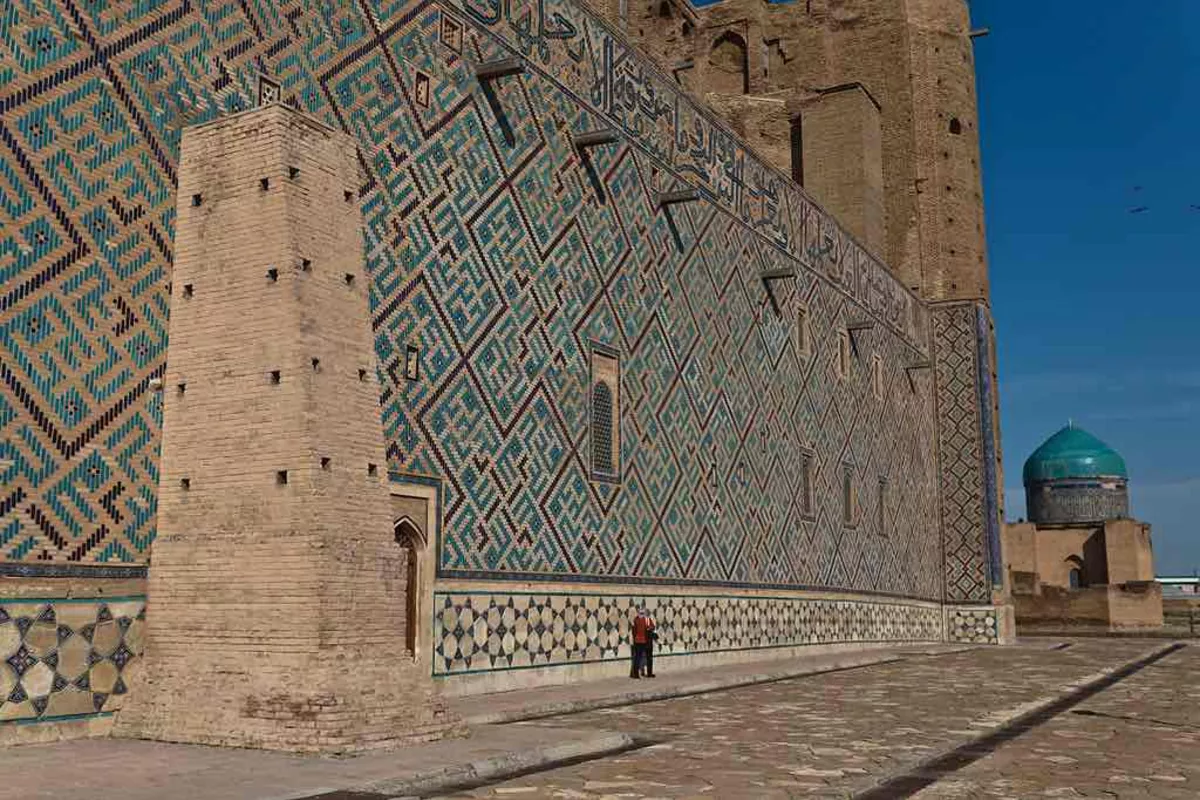
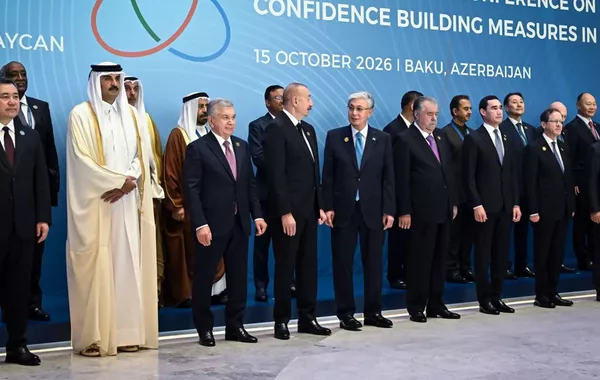
The Turkic Council, founded in 2009 in Nakhchivan as a relatively modest coordinating body, was reconstituted in November 2021 as the Organization of Turkic States. The Istanbul summit that year adopted the "Turkic World Vision 2040," set out priorities for cooperation across trade, transport, defense, and cultural affairs, and signaled an institutional ambition the Turkic Council had not previously projected. Member states are Türkiye, Azerbaijan, Kazakhstan, Kyrgyzstan, and Uzbekistan; Hungary, Turkmenistan, and the Turkish Republic of Northern Cyprus hold observer status.
Three developments distinguish the OTS phase from earlier iterations.
First, Azerbaijan's victories in the 2020 Second Karabakh War and the September 2023 operation that restored Baku's full control over the territory altered the regional balance. Turkish drones - particularly the Bayraktar TB2 - proved decisive in 2020 and reframed Türkiye's role in the South Caucasus from rhetorical patron to material guarantor. Defense exports, training arrangements, and joint exercises have since become a recurring instrument in Ankara's relations with Turkic partners, including Kazakhstan and Uzbekistan.
Second, the institutional architecture has thickened. The Turkic Investment Fund has begun operations, the Common Alphabet Commission - chaired by a deputy chairperson of the ruling AKP - has advanced proposals for orthographic convergence, and parliamentary, educational, and media platforms have multiplied. None of this constitutes integration in the European Union sense - there is no shared market, no supranational authority, no binding political commitments - but the cumulative effect is a denser web of cooperation than at any previous moment.
Third, the geopolitical environment has shifted. Russia's war in Ukraine has weakened Moscow's position in Central Asia and the South Caucasus, opening space for alternative external partners. China remains the dominant economic actor through the Belt and Road Initiative, but its presence is principally commercial and infrastructural. Türkiye, by contrast, offers something the other major powers do not: a cultural and linguistic frame, defense-industrial cooperation, and an explicit invitation to participate in a shared political identity.
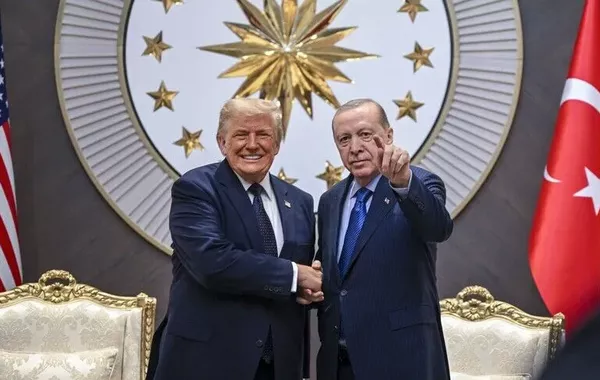
These shifts have produced the more theatrical expressions of the moment. At the 2021 Istanbul summit, MHP leader Devlet Bahceli presented Erdogan with a map of the "Turan World" stretching from the Balkans to East Asia. Erdogan has since referenced a "Turan Army" and invoked the Turkic world in speeches that would have been inconceivable from a Turkish leader two decades earlier. Azerbaijani President Ilham Aliyev has gone further, asserting that the Turkic world "does not consist of independent Turkic states only," its boundaries extending to "compatriots living beyond the countries that are members." Burhanettin Duran, Türkiye's Deputy Foreign Minister, has argued that Ankara should adopt a "balancing role to ensure that Beijing does not engage with the Turkic world as it has with Africa." Statements of this kind generate alarm in Tehran, Moscow, and parts of the European press - the more so given Türkiye's NATO membership and the substantial Turkic minorities inside Russia and China.
The Substance Is More Limited
The OTS member states themselves do not subscribe to a Pan-Turkic political project. Kazakhstan and Uzbekistan in particular have been explicit - through both rhetoric and policy - that their participation is functional, not civilizational. Astana maintains its multi-vector foreign policy, balancing China, Russia, Türkiye, and the West with care; Tashkent, despite the warming under Shavkat Mirziyoyev, remains constitutionally committed to non-bloc neutrality. Neither government has any interest in being absorbed into a Turkish-led ideological architecture. Azerbaijan, the most ideologically aligned member, is also the most strategically dependent on Türkiye - a relationship that constrains Baku rather than radiating outward from it.
The hesitancy that defined Central Asian responses in the 1990s has matured into something firmer. The post-Soviet republics that resisted swapping a Russian elder brother for a Turkish one are now actively building room for themselves between all the larger powers. Multi-vector diplomacy is no longer a defensive posture; it is the strategic identity of the region.
The clearest recent illustration of these limits came at the first EU-Central Asia Summit in April 2025. In their joint statement, Central Asian heads of state reaffirmed UN Security Council Resolutions 541 (1983) and 550 (1984), both of which deny recognition to the Turkish Republic of Northern Cyprus. This was a striking signal. Northern Cyprus has held observer status in the OTS since 2022, and Türkiye is the only state in the world that recognizes it as sovereign. When forced to choose between alignment with European norms and solidarity with their Pan-Turkic partner, the Central Asian governments chose Europe.
The structural constraint identified earlier in this piece remains. Türkiye's economy, under sustained inflationary pressure and currency volatility, lacks the capacity to underwrite a Pan-Turkic project on the scale of Chinese investment in the region or even Russian energy and labor markets. Defense exports and educational programs are real instruments, but they are insufficient to reorient the strategic calculus of Central Asian capitals.
Conclusion
Erdogan has not replaced Pan-Islamism with Pan-Turkism. His engagement with Hamas, his posture toward Gaza and the wider Muslim world, and his enduring rivalry with Saudi Arabia and the UAE all attest to the continuing centrality of the Islamist register in his political identity. What has happened is that Pan-Turkism has joined Pan-Islamism in the toolkit - deployed in similar fashion, for similar ends. Both are flexible instruments for projecting influence into regional spaces where Türkiye's material capacities are constrained. Both mobilize different domestic constituencies. Neither, on its own, constitutes a coherent grand strategy.
Pan-Turkism in the OTS era is therefore neither the marginal current of the Cold War nor the transformative civilizational doctrine its admirers and detractors describe. It has acquired institutional vehicles, symbolic vocabulary, and a measure of operational substance through defense cooperation. It has not acquired the financial base, the doctrinal coherence, or the partner buy-in to become a transformative geopolitical project. The Cairo of 2011 has become the Astana of today - a venue where Ankara is welcomed, listened to, and quietly hedged against by partners pursuing their own agendas with other powers.
The entire discourse surrounding Pan-Turkism is far more about the past than the future. Even in earlier centuries, Turks, Uzbeks, and Azerbaijanis pursued their own imperial projects, which often relied on militarized imperial expansion and coercive state-building, rather than united into a single political, economic, or civilizational space. Historical experience suggests that whenever the pan-Islamic dimension becomes the dominant component of Pan-Turkist ideology, the risk of military confrontation and regional destabilization increases significantly. For much of the Republican era, Turkish political and military elites were conscious of this danger and generally sought to subordinate ideological ambitions to state pragmatism and geopolitical restraint - a pattern that many critics argue has become less consistent under the current ruling establishment.
See the original article here