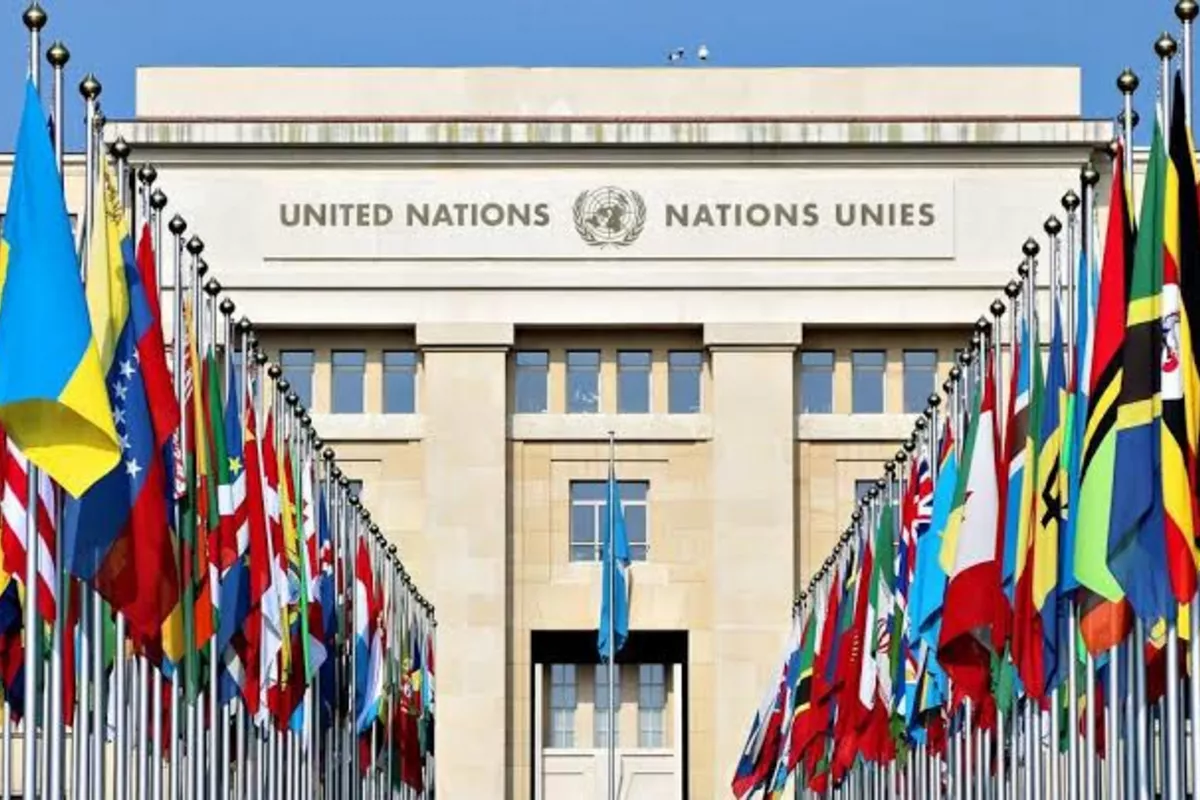
The United Nations never ceases to surprise - unfortunately, often for the wrong reasons. This time, the surprise comes in the form of a financial absurdity that is difficult to comprehend.
At the centre of the controversy is a decades-old financial rule under which the UN was obliged to return unused funds from peacekeeping mission budgets to member states, even in cases where those funds had never actually reached UN accounts because of chronic delays in contributions. The arrangement appears fundamentally illogical. Under this system, the UN found itself in the bizarre position of effectively returning money to debtor countries that had never paid their contributions in the first place, thereby creating an artificial liquidity shortfall within the organisation itself.
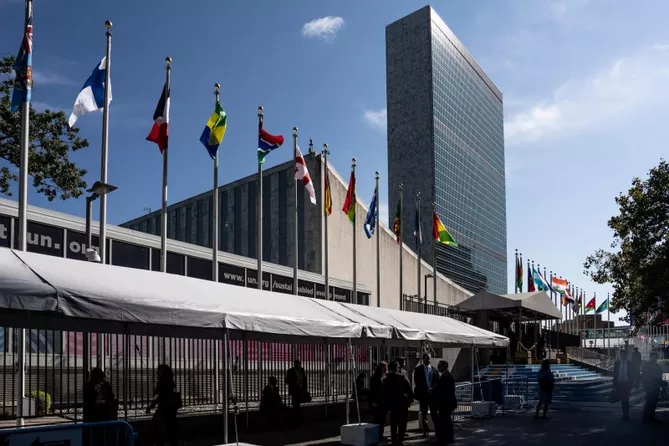
According to media reports, the UN's regular budget for 2026 amounts to $3.45 billion. However, due to delayed payments from major contributors, including the United States and China, the organisation has faced a genuine risk of financial paralysis and operational collapse at its headquarters.
To illustrate the scale of the problem, imagine a country that is expected to contribute $100 million to the United Nations but fails to do so. It is not the only member state in arrears. As a result of insufficient funding, the UN becomes unable to carry out planned programmes, leaving an "unused balance" at the end of the financial year. Under the previous rules, this amount could then be offset against future contributions, despite the fact that the corresponding funds may never have existed in UN accounts at all. Consequently, the country not only delayed its financial obligations and hindered the organisation's work, but also reduced the amount it would be required to pay in the future.
Few financial arrangements could appear more paradoxical. Yet this concerns the UN - the world's largest international organisation, established to shape global affairs and maintain international order. Through its own regulatory framework, it found itself trapped in a system that defied basic financial logic. This was not merely a matter of returning budget surpluses; it amounted to redistributing money the organisation never actually possessed. In other words, the UN's financial architecture had long operated in contradiction to elementary principles of accounting and governance. The problem has now become so acute that the organisation itself has acknowledged the need for reform.
Source: Reuters
According to UN data, the organisation ended 2025 with a record $1.6 billion in unpaid assessed contributions. Combined arrears related to the regular budget, peacekeeping operations and two international tribunals exceeded $6.5 billion. By early 2026, the organisation's management had been forced to introduce strict austerity measures. These restrictions affected numerous areas, ranging from staff recruitment to the implementation of peacekeeping and humanitarian operations.
In an effort to avoid a liquidity crisis, the UN has now amended a 75-year-old financial rule by introducing significant reforms. Under the new system, unused funds are no longer returned to member states but remain within UN accounts. More than $900 million will remain in peacekeeping budgets, while approximately $400 million will be transferred to the regular budget to ensure the uninterrupted functioning of the organisation's institutions.
UN Secretary-General António Guterres supported the reform, stating that the previous mechanism posed serious risks to the financial sustainability of the entire system.
Perhaps describing these problems merely as "risks" understates the seriousness of the situation. For decades, the UN operated under these rules, and it is hardly surprising that the organisation often appeared ineffective. An institution that presents itself as the world's leading platform for peace, security and sustainable development functioned for years under a financial framework that contradicted common sense. Funds effectively existed only on paper, without any actual financial backing, yet still served as the basis for future offsets and financial calculations.
This is not merely an accounting anomaly; it reflects a broader crisis of governance, accountability and financial transparency. Taken together, these shortcomings help explain the widespread perception of the UN's institutional dysfunction.
The contradiction becomes even more striking when one considers that the UN routinely calls upon member states to fulfil their international obligations, while finding itself compelled to urgently revise its own rules simply to maintain financial stability. This inevitably raises a broader question: how sustainable is the current global institutional structure?
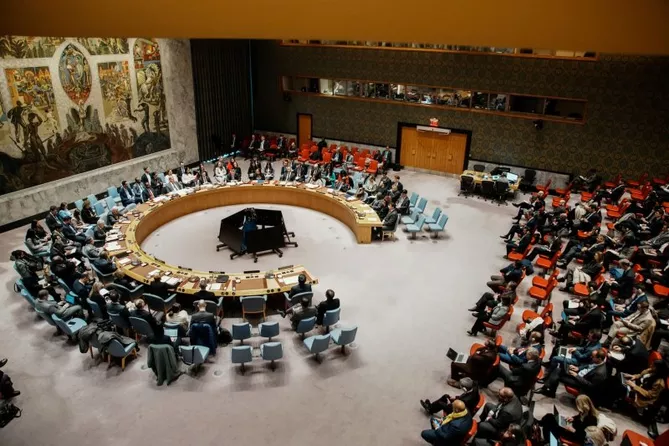
Financial shortcomings are only one aspect of the criticism directed at the UN. In recent years, increasing attention has focused on its bureaucratic structure and, above all, the UN Security Council - an institution originally designed to address the world's most pressing security challenges but which many now view as one of the principal obstacles to resolving them. Such criticism has persisted for decades.
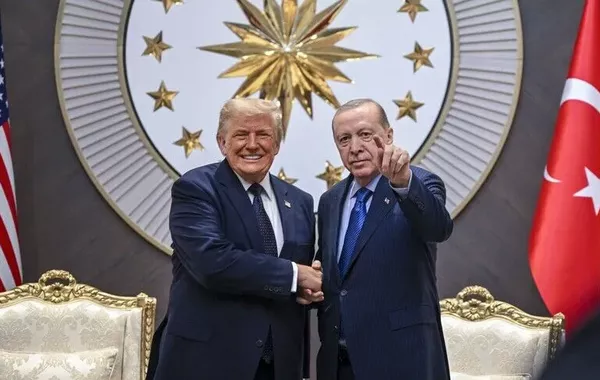
The world has undergone profound changes since 1945, yet the institutional structure of the UN remains largely unchanged. This contradiction has become particularly evident in recent years. Calls for comprehensive reform of the organisation have grown steadily. Increasingly, world leaders repeat the phrase popularised by Turkish President Recep Tayyip Erdoğan: "The world is bigger than five." The Turkish leader was referring to what many perceive as the anomaly of a system in which the fate of 193 countries depends heavily on the decisions of the five permanent members of the Security Council. Yet those five states themselves frequently fail to reach agreement. Ironically, that very reality is likely to remain the principal obstacle to any meaningful reform.
American expert Nikola Gvozdev, in an interview with the Azerbaijani media outlet Day.Az, argued that there are simply no realistic reform proposals capable of securing the support of all five permanent members of the UN Security Council. At best, he suggested, only peripheral or cosmetic changes are possible, while fundamental institutional reform remains unattainable.
According to Gvozdev, the permanent members are unlikely ever to agree on meaningful changes to the Security Council. For example, he noted that the United States would never accept reforms to the veto system that would allow only two permanent members to block resolutions. Likewise, Russia and China have shown no willingness to relinquish or share their existing privileges. Although all five permanent members publicly support the idea of expanding the Security Council, each has its own objections regarding who should be included and under what conditions.
In Gvozdev's assessment, the UN is increasingly reverting to a model resembling that of the Cold War era. The organisation continues to serve as a platform for dialogue between competing blocs and as a mechanism for funding specific international activities, such as humanitarian assistance and public health initiatives. However, he argues that expectations of meaningful political breakthroughs are unrealistic, as the organisation is once again approaching the kind of institutional deadlock that characterised much of the 20th century.
Gvozdev is far from alone in expressing scepticism about the prospects for fundamental reform. Many experts share the view that meaningful changes remain highly unlikely. African countries, Latin American states, the Islamic world, numerous Asian nations and emerging centres of global influence still lack permanent representation with powers equivalent to those enjoyed by the five permanent members of the Security Council.
Source: Reuters
As a result, while the UN formally represents the interests of the international community as a whole, critical decisions on international security continue to depend overwhelmingly on the five permanent members. Consequently, countries of the Global South have limited prospects of securing meaningful participation in the organisation's principal decision-making body.
For this reason, many states have increasingly focused on strengthening alternative international organisations and forums. Indeed, that process is already well underway. The Organisation of Islamic Cooperation, the African Union, ASEAN and the Non-Aligned Movement have all gained renewed relevance and influence. Increasingly, many countries appear unwilling to rely exclusively on the UN-an organisation that critics describe as an ailing and increasingly ineffective giant.
Many analysts argue that the UN's dysfunction stems from the concentration of too many competing and often contradictory interests within a single institution, while opportunities for lobbying and corruption remain extensive. Important decisions, they argue, are frequently negotiated behind closed doors, while the public manifestations of diplomacy-resolutions, votes and official statements-often amount to little more than symbolic gestures.
Calls for reform of the Security Council are nothing new. Its current structure and composition are direct consequences of the international order established after the Second World War. It is difficult to imagine that the states which acquired these extraordinary powers would ever voluntarily agree to limit them.
Indeed, some observers argue that the UN was created primarily to serve the immediate strategic interests of the victorious powers following the Second World War, with insufficient consideration given to the long-term evolution of international politics. The institutional rules established 80 years ago did not anticipate the profound geopolitical transformations that would later reshape the world.
Today, some believe the only realistic way to fundamentally alter the existing international order would be to establish parallel institutions operating under different rules and possessing different powers. Meaningful reform of the Security Council, they argue, would require profound changes within the domestic political systems of the permanent member states themselves.
Such expectations, however, remain far removed from political reality.
By Tural Heybatov