What Awaits Iran: Regime Change or Regime Update?
In the wake of recent developments in Iran, one question dominates the debate: As the post-Khamenei era begins, will the system collapse or will it adapt and carry on in a different form? Who will become the next leader? And perhaps most importantly, what does the Iranian people actually want?
For years, Iranian society has felt trapped between two poles. On one side stands the idea of returning to a Western-leaning monarchy. On the other side, the rigid theocratic structure of the current clerical regime.
Today, a significant segment of Iranian society appears to be searching for a “third way” beyond these two options. Neither a foreign-backed monarchy nor a continuation of the status quo. What is being demanded is something more national, more independent, yet also more accountable.
The strength of this sentiment is evident. Yet there is still no clear, broadly representative leader capable of embodying it.
And here lies the critical question:
Can a genuinely “national figure” emerge from within Iran who is capable of persuading both reform-minded segments of society and institutions rooted in the state tradition?
This does not appear easy. The current establishment may be unwilling to open space for a strong, system-transcending national figure. Western actors, meanwhile, may hesitate to fully embrace a leader who operates independently of their strategic preferences.
So while the idea of a “third way” is compelling, the political architecture capable of carrying it forward remains undefined.
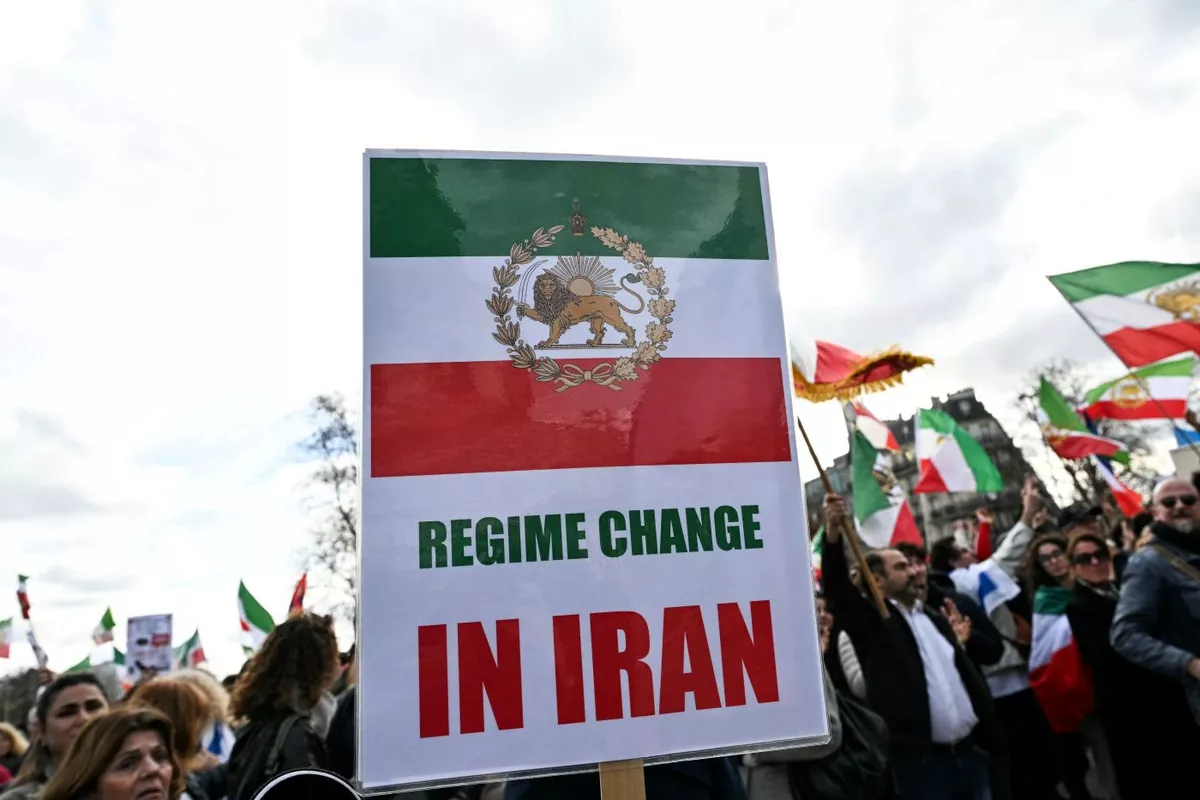
Names associated with the Shah’s era occasionally resurface in international discussions. Yet inside Iran, there is little evidence of a broad and unified social base ready to rally behind a monarchical restoration.
Among Persians and other ethnic communities such as Turks (Azeris) and Kurds, there are no strong signs of a widespread and cohesive demand for a return to monarchy. A Pahlavi-style restoration, therefore, appears to rest on a limited domestic foundation.
The most plausible scenario today is not the total collapse of the system, but its internal transformation.
In other words, a regime update.
What would that mean? Preserving the existing state structure, rebalancing the distribution of power, adopting a more pragmatic foreign policy posture, and allowing a more controlled opening domestically.
Put differently: not revolution, but evolution.
Model of Najaf or Qom
Within the Shiite world, two governance approaches stand out: the Najaf model and the Qom model.
The Qom-centered model is built on the doctrine of "Velayat-e Faqih" (Guardianship of the Islamic Jurist). In this system, the supreme leader is both the highest religious authority and the ultimate political decision-maker. Religious and political authority are fused. Elected institutions do not represent the final source of power. Strategic decisions remain under the control of the supreme leader. Iran has been governed under this framework since 1979.
The Najaf approach, by contrast, does not place direct political authority in the hands of the religious establishment. Clerics provide guidance, but they do not directly exercise executive power. Religious authority plays a moral and advisory role. Political decision-making operates through elected institutions. The relationship between religion and state is more indirect. This model does not exclude religion from public life, but it does not position clerical leadership at the head of executive governance.
If Iran were to embark on a regime update, it could entail a partial shift from the Qom model toward something closer to the Najaf approach.
Under such a recalibration, religious legitimacy would be preserved. Political decision-making could become more collective and more limited in scope. International tensions might be reduced. The domestic system could regain breathing space.
This would not amount to a Western-style liberal transformation. But it would represent a revision within Iran’s own theological and political tradition.
Iran now stands at a three-way crossroads: A hard regime change accompanied by chaotic rupture, a monarchical-style restoration, or a controlled transformation from within.
The third scenario, self-preserving reform, appears the most likely.
Ultimately, two variables will determine the outcome, which are the scale of public pressure and the configuration of power balances within the state.
Iran may either attempt to continue unchanged and absorb the risks, or it may choose to update its system in search of a new equilibrium.
The decisive question is this: Will Tehran see this moment as a threat to resist, or as an opportunity to adapt?
Find the original article here