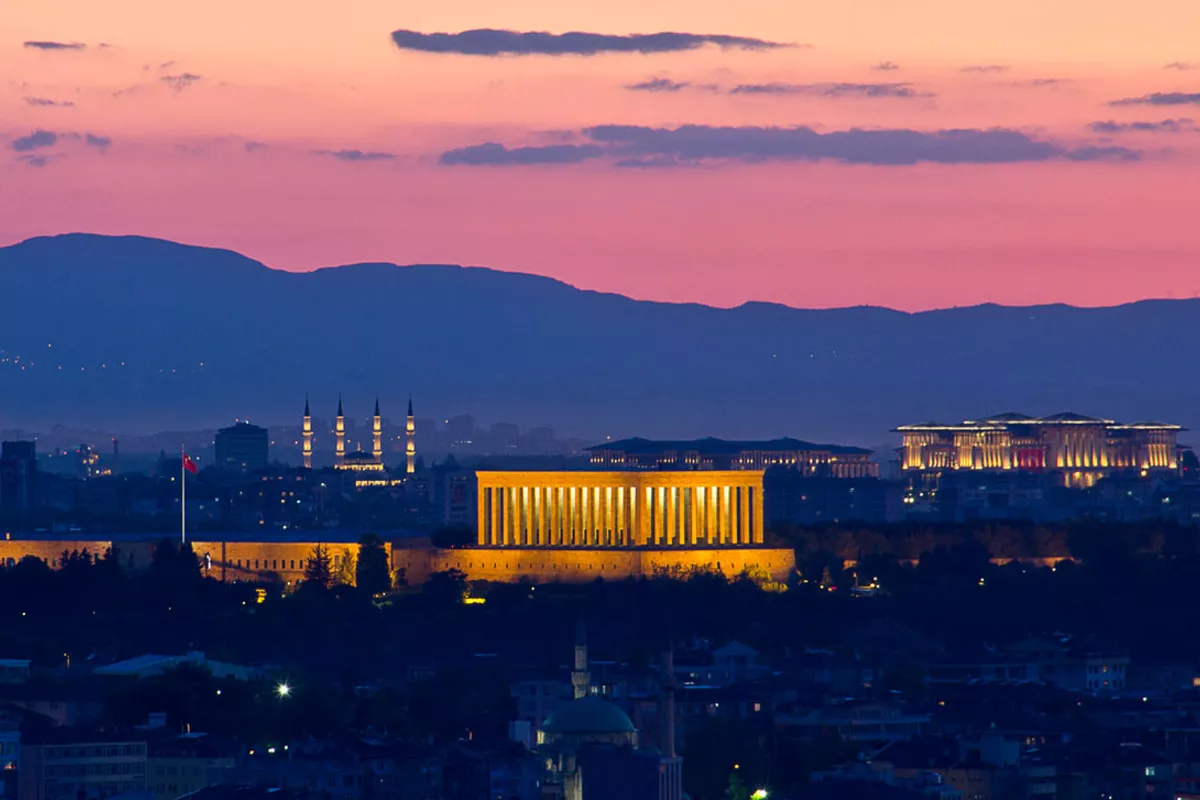
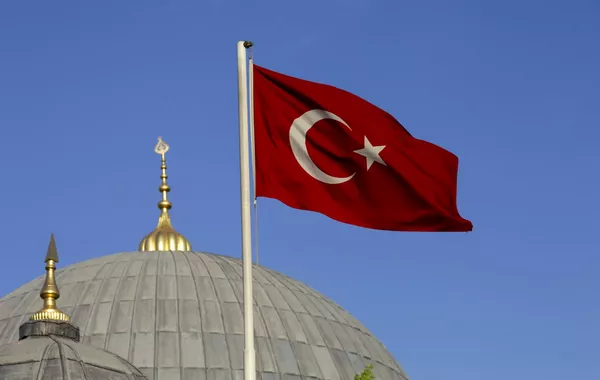
When NATO leaders gather in Ankara on July 7-8, they will do so as the alliance confronts one of its biggest strategic transitions since the end of the Cold War.
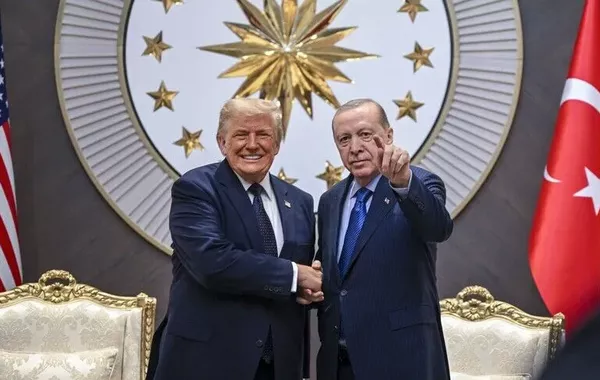
Russia's war in Ukraine, President Donald Trump's demands that Europe assume greater responsibility for its own security and Washington's growing focus on competition with China are reshaping NATO's future.
Rather than replacing the United States, European allies are increasingly preparing to assume greater responsibility for the continent's conventional defense, while Washington shifts its attention toward strategic deterrence and priorities beyond Europe.
Analysts say the Ankara summit could offer an early glimpse of what some have begun calling "NATO 3.0" - a model that seeks to preserve the transatlantic alliance while redefining the balance of military responsibilities between Europe and the United States.
Beyond Burden Sharing
Although successive US administrations have long urged European allies to invest more in defense, analysts say Trump's second term has fundamentally changed Europe's calculations.
Karl-Heinz Kamp, associate fellow at the German Council on Foreign Relations' Center, said European governments spent decades discussing burden sharing without taking meaningful action.
"For the first time in 40 years, Europe got awake," he told Anadolu. "Europe was promising to do more and to do fair burden sharing for the first time in decades."
At last year's NATO summit in The Hague, members agreed to increase defense and security spending to 5% of GDP by 2035.
For many European governments, the increase was also a political signal to Washington that Europe was finally prepared to carry a larger share of the burden for collective defense.
At the same time, some countries remain reluctant, partly because they view the target as reflecting a Trump administration priority rather than a NATO-wide consensus, Dimitris Tsarouhas, senior Washington fellow at ELIAMEP, told Anadolu.
According to Jason Davidson, senior fellow with the Atlantic Council's Transatlantic Security Initiative, countries' perceptions of Russia largely explain the uneven pace of progress.
"We have seen mixed progress thus far," Davidson said.
While every EU member of NATO met the alliance's previous 2% defense spending target for the first time in 2025, spending levels still vary considerably across the alliance. Countries on NATO's eastern flank continue to invest the largest share of their economies in defense, with Poland leading at 4.48% of GDP.
"Allies like Poland that perceive an intense threat from Russia and are fully committed to a continued US role in Europe have exceeded the target or are moving toward it,” Davidson said. “Others, like Italy, that perceive less of a threat from Russia, have made little or no progress.”
NATO 3.0
For analysts, rising defense spending is only one part of a much broader transformation.
Increasingly, they describe the alliance as moving toward what has become known as "NATO 3.0" - a managed redistribution of responsibilities rather than a weakening of transatlantic ties.
Under that model, European allies would provide most of the conventional military forces needed to defend the continent, while the United States would retain responsibility for nuclear deterrence and the strategic capabilities that Europe cannot yet replicate.
Paul Taylor, senior visiting fellow at the European Policy Centre, said this should not be viewed as Europe replacing the United States.
"The Europeans are primarily responsible for the conventional defense of Europe. The United States continues to provide the nuclear umbrella and some unspecified conventional capabilities," he said.
Those capabilities would likely include intelligence, surveillance and reconnaissance, strategic airlift, long-range strike capabilities, satellite infrastructure, logistics and command-and-control systems.
The concern, Taylor said, is not the destination but the pace of the transition.
The cancellation of the planned deployment of a US armored brigade to Poland, the abandonment of plans for long-range missile deployments in Germany and reductions in US contributions to NATO force planning have reinforced concerns that Washington may reduce its military role faster than European allies can compensate.
Strategic Autonomy or Strategic Maturity?
The transition has also revived long-running debates over Europe's future security architecture.
For years, much of that discussion centered on the concept of strategic autonomy.
Kamp argued that even the phrase is politically loaded.
In his view, it has traditionally been associated with French ambitions for greater independence from Washington while implying European leadership under Paris rather than genuine burden sharing.
"France never put the money on the table to reach this strategic autonomy," he said.
Riho Terras, vice-chair of the European Parliament's Committee on Security and Defense and former commander of the Estonian Defence Forces, believes Europe should instead focus on becoming "strategically mature."
"It is no longer possible to rely solely on the United States for our security, as we have done for decades," he told Anadolu.
Yet he rejected suggestions that Europe should seek to replace NATO or establish its own military.
"A European army is a bad idea," he said. "It is a project that risks dividing NATO rather than strengthening European security."
Kamp also argued against the creation of new political structures.
"We don't need any new structure for European decision-making," he said. "We have one, and this is NATO."
Tsarouhas likewise dismissed the idea of a complete break with Washington.
"This will be a long and hard process, and difficult dilemmas will have to be confronted," he said. "Europe's biggest problem is not the lack of resources but the lack of courageous political leadership."
Complete decoupling from the United States, he added, "is not on the cards because it is practically impossible and will harm Europe irreparably."
Where Does Türkiye Fit?
Analysts say that Türkiye, the host country, is also likely to take an increasingly important role in any evolving defense architecture.
Taylor said the EU alone cannot provide an effective decision-making framework because of unanimity rules and because several of Europe's most important security actors sit outside the bloc.
He argued Europe needs a permanent defense structure operating alongside both NATO and the EU.
Such a framework, he said, should include Britain, France, Germany, and Poland, in cooperation with Türkiye, which has become a key arms manufacturing hub.
"What happens, for example, if Washington decides that a limited Russian incursion into the Baltic region is 'not America's war'?" Taylor said, arguing Europe must be able to take rapid political decisions in such scenarios.
"Türkiye is an essential partner, then obviously we need to have them in the core," Taylor added, also highlighting Ankara's role in the Black Sea region and its importance to Ukraine.
Europe Still Depends on Washington
Despite growing defense budgets and political momentum, analysts caution that Europe remains years away from matching key American military capabilities.
Strategic airlift, intelligence gathering, satellite communications, aerial refueling, logistics and command-and-control remain areas where European militaries continue to rely heavily on the United States.
"Can we replace US military capacities one-to-one? No, we cannot, or at least not now, because it would cost a fortune," Kamp said.
Terras agreed.
"The United States remains the global leader in satellite communications, intelligence and several strategic military capabilities. It will take Europe years to reach a comparable level," he said.
Taylor likewise argued that strategic autonomy should be understood as a gradual process rather than a fixed destination.
"It's not something you achieve after a couple of years of increase in military spending, and so at the moment - no, Europeans have not achieved anything close to strategic autonomy," he said.
Despite those capability gaps, Taylor argued that Europe no longer has the luxury of postponing the effort.
"We don't have a choice,” he said. “Even if it were unrealistic, we would have to be doing it, because Mr. Trump has forced us.”
Find the original article here