Negotiations over the Strait of Hormuz are gradually ceasing to be merely part of diplomatic efforts to end the confrontation between the United States and Iran. In recent days, it has become increasingly clear that the dispute is now about something much bigger. At stake, in effect, is the question of who will control one of the world’s most important energy routes - and under what terms.
That is why the current standoff over Hormuz could have consequences extending far beyond U.S.-Iranian relations.
Until recently, the logic of the negotiations appeared relatively straightforward: stop the military escalation, ensure the safety of shipping and bring tankers back through the strait. The situation now looks different. Iran is seeking a model in which its special role in regulating traffic through Hormuz would no longer be merely a consequence of geography or military power, but would effectively receive political recognition.
And that is one of Washington’s main red lines.
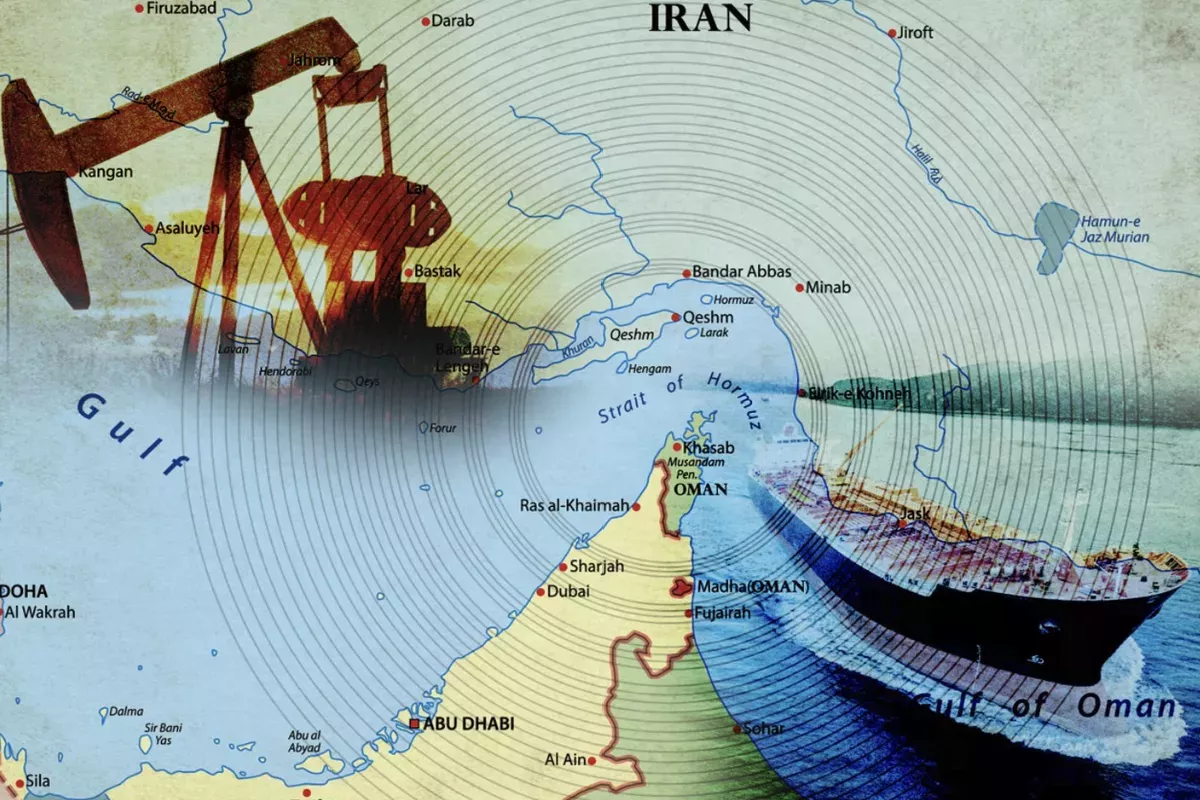
Under a mechanism being discussed by Iran and Oman, Tehran could gain a role in controlling vessels entering the Persian Gulf through Hormuz. Moreover, according to Reuters, the Iranian side is seeking the ability to monitor outbound traffic and, under certain circumstances, intervene in its movement. Talks between Tehran and Muscat have already reached the stage of discussing specific coordinates for maritime routes.
At first glance, this may appear to be a technical matter of navigation. In reality, it is a strategic issue.
If such a mechanism were formalized in an international agreement, Iran could achieve through diplomacy what it has tried for decades to achieve through threats: turning its geographical position near the Strait of Hormuz into a permanent instrument of political influence.
Credit: ethicasocietas.it
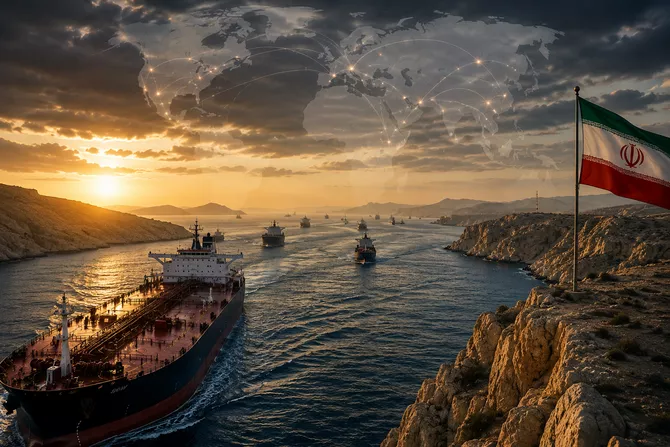
Today, an enormous share of global energy trade passes through this narrow maritime corridor. According to the U.S. Energy Information Administration, around 20 million barrels of oil and petroleum products per day moved through Hormuz in 2024 - roughly one-fifth of global petroleum liquids consumption. Around one-fifth of global liquefied natural gas trade also passed through the same route. Asia is particularly dependent on the strait: in 2024, approximately 84% of the oil and condensate transported through Hormuz was destined for Asian markets.
In other words, Hormuz is not merely an Iranian problem, an American problem, or even solely a Gulf problem.
It is one of the valves of the global economy.
And that is precisely why the current negotiations are taking on an entirely different meaning.
Washington has traditionally insisted on the principle of freedom of navigation through the strait. The American position envisages all shipping lanes remaining open without Iranian fees or restrictions. In July, the United States was already demanding that Tehran publicly guarantee an end to attacks on vessels and ensure the free movement of shipping through Hormuz.
Tehran is proposing a different philosophy.
Iran is effectively saying: if security in Hormuz depends on us, if tanker traffic cannot be guaranteed without an agreement with us, then our role should be formalized.
That is the essence of the political bargaining taking place today.
Iran is attempting to transform its ability to threaten shipping into a recognized right to participate in managing shipping.
The distinction is fundamental.
For decades, control over Hormuz existed primarily as a potential threat. Every serious crisis involving Iran was accompanied by the same question: could Tehran close the strait, and what would happen to global oil prices if it did?
Now a different question is emerging for the first time: can Iran secure an agreement under which it would no longer need to close Hormuz because its right to influence maritime traffic would become part of a new regional order?
That is exactly the outcome Washington fears.
At the same time, Iran’s negotiating position is strengthened by economic reality. Hormuz cannot currently be fully replaced. Saudi Arabia and the United Arab Emirates have pipelines capable of redirecting some oil exports away from the strait, but their spare capacity is insufficient to replace the entire maritime flow. According to the EIA, the available additional capacity of Saudi and Emirati routes bypassing Hormuz stood at roughly 2.6 million barrels per day - many times less than the volumes that normally pass through the strait itself.
That is why even the possibility of another crisis is immediately reflected in global markets.
On August 11, Brent crude rose by more than 2%, approaching $90 per barrel, as expectations of a rapid agreement between the United States and Iran weakened again. According to Reuters, traffic through the strait also remains well below normal levels: six vessels passed through it on Monday, compared with an average of eleven over the previous 10 days, while crude oil exports along the route fell to around 3 million barrels per day from 4.4 million a week earlier.
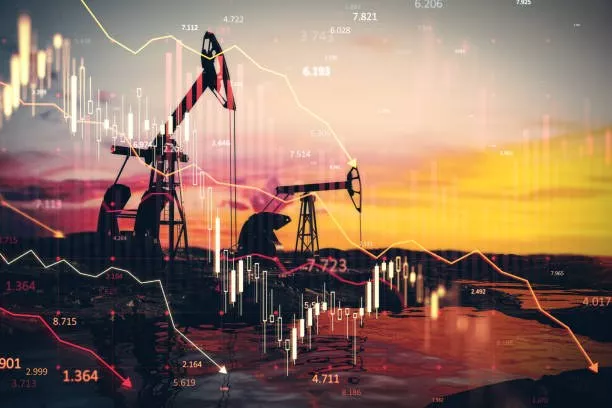
Photo credit: abc.az
This is where the real price of the current bargaining becomes clear.
For the United States, the issue is preserving the principle of freedom of navigation. For Iran, it is about obtaining recognition that no regional security system can be built while excluding Tehran. For the Gulf monarchies, the objective is even more pragmatic: they simply need to be able to export their oil and gas reliably.
As a result, Washington’s interests and those of the Arab Gulf states may not fully coincide.
For the United States, granting Iran formal powers in Hormuz could look like a strategic concession. For Gulf oil producers, however, a controlled and predictable shipping mechanism - even one that gives Iran a significant role - could theoretically be preferable to a permanent threat of war and closure of the strait.
Oman occupies a particularly important position in this arrangement. Muscat has long possessed a unique ability to maintain dialogue simultaneously with Iran, the Arab monarchies and the West. Iran and Oman are also not newcomers to managing maritime traffic in the area: the existing traffic-separation system in the strait was proposed by the two countries and adopted by the International Maritime Organization as far back as 1968.
But the current discussion goes far beyond technical navigation rules.
Tehran is linking the reopening of Hormuz to other demands as well. Iran is calling for sanctions relief and compensation for damage suffered during the conflict. In response, Donald Trump has put forward a counter-demand for compensation from Iran itself, arguing that Tehran should pay for losses and damage Washington attributes to Iranian actions over several decades. The exchange of demands has already significantly reduced expectations of a rapid compromise.
The diplomatic process has therefore reached an unusual point.
Formally, the sides are negotiating peace. In reality, they are bargaining over the balance of power after peace.
That is far more complicated.
A ceasefire can be signed in a day. A new regional order cannot.
If the United States accepts a model that grants Iran special powers over shipping, Tehran will be able to present it as proof that pressure produced a strategic result. Iran would not merely have survived the confrontation - it would have forced its adversaries to recognize its central role in the Persian Gulf.
If Washington categorically rejects such a model, another question arises: how does the United States intend to guarantee freedom of navigation for years to come without maintaining a permanent military presence and risking another confrontation?
There is no simple answer.
That is why Hormuz is now becoming much more than an issue in U.S.-Iranian negotiations. What is unfolding is an attempt to define a new architecture of control over the Middle East’s most important energy corridor.
And the consequences of such a decision would be felt first not by America, but by Asia.
Most of the oil and gas moving through Hormuz is destined for China, India, Japan, South Korea and other Asian economies. Any new navigation regime would therefore inevitably become an issue not merely of Middle Eastern politics, but of global politics.
And therein may lie the central paradox of the current negotiations.
Peace around Hormuz may ultimately be achieved not when one side wins the military confrontation outright, but when the parties agree on who gets to keep a hand on the pulse of the global energy economy.
The main question today, therefore, is no longer simply whether Hormuz will reopen.
The more important question is this: if it does reopen, who will set the rules for passing through it?