From oil transit and the Middle Corridor to a trans-Caspian internet link and green energy, cooperation between Baku and Astana is becoming increasingly practical. Both countries have ambitious plans, but their success will depend on overcoming logistical, financial and trade challenges.
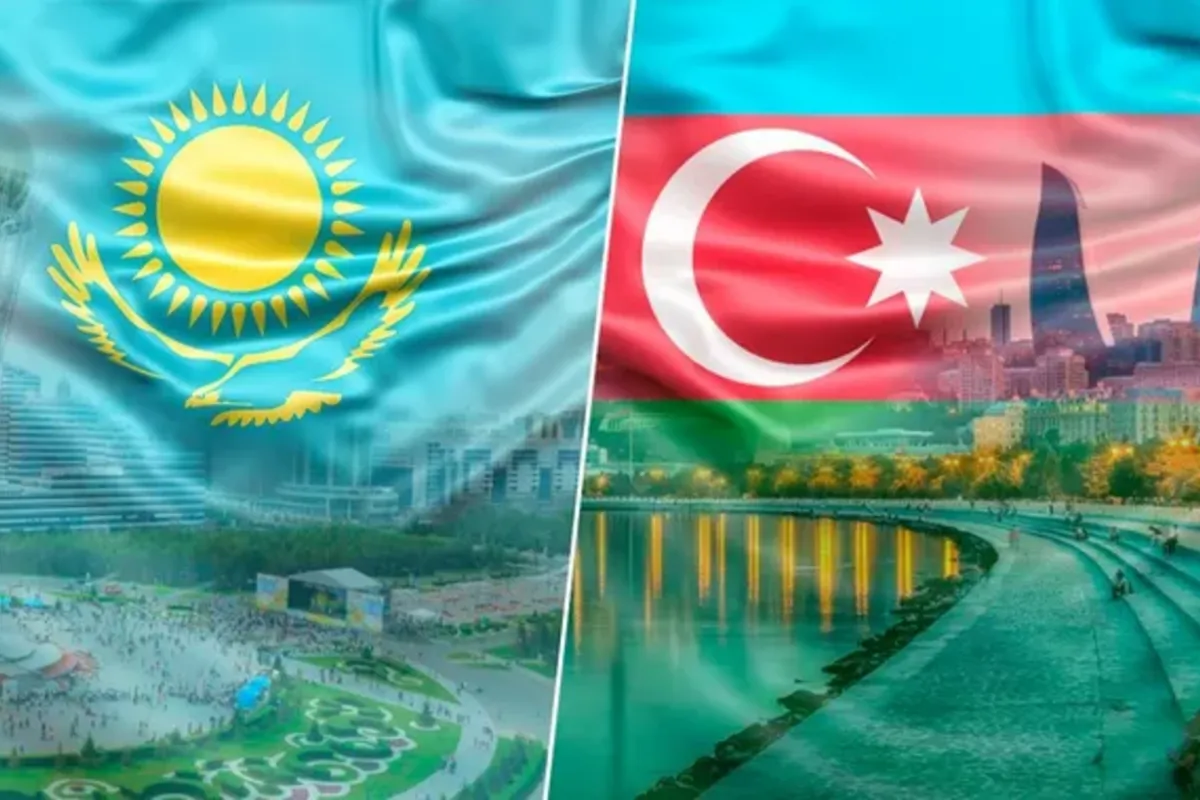
The Caspian Sea was long viewed primarily as a body of water separating the South Caucasus from Central Asia. Today, it is becoming one of the most important links between the two regions. Kazakhstan and Azerbaijan, located on opposite shores of the Caspian, are making greater use of their geographical positions to develop new trade, energy and digital routes.
For Astana, cooperation with Baku offers additional access to international markets. For Azerbaijan, partnership with Central Asia’s largest economy strengthens its role as a transit and logistics hub between East and West.
This cooperation extends beyond any single major project. A range of initiatives is gradually creating a new network of connections across the Caspian.
The Middle Corridor: From Political Vision to Practical Challenge
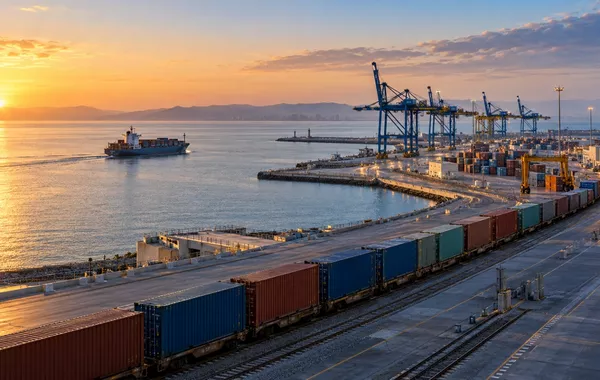
The Trans-Caspian International Transport Route, known as the Middle Corridor, remains one of the main areas of cooperation. It connects China and Central Asia with the South Caucasus and Europe via the Caspian Sea.
The route is strategically important for both Kazakhstan and Azerbaijan. Both countries are interested in increasing transit volumes, attracting investment and improving the competitiveness of their ports, railways and logistics centres.
On 15 October, Presidents Kassym-Jomart Tokayev and Ilham Aliyev discussed bilateral cooperation in Baku. In their presence, the two sides exchanged a signed agreement on cooperation in developing the Trans-Caspian route.
According to Kazakhstan’s Ministry of Transport, freight volumes along the route rose by 30% in January-September 2026 compared with the same period a year earlier. The figure points to growing interest in the route, although sustained growth will require greater capacity across all its sections.
Recent talks in Astana underscored the urgency of that task. The two sides discussed the development of the Middle Corridor and the Caspian Bridge project, which aims to improve trans-Caspian freight transport. Plans for a joint intermodal cargo terminal are also under consideration.
The route’s success, however, depends on more than infrastructure construction. For shippers, cost, predictable delivery times and straightforward documentation are essential. A shortage of vessels, delays at ports or uncoordinated tariffs could make the corridor less attractive, even with strong political support.
Baku and Astana therefore face the challenge of turning the route’s separate sections into a more coordinated logistics system.
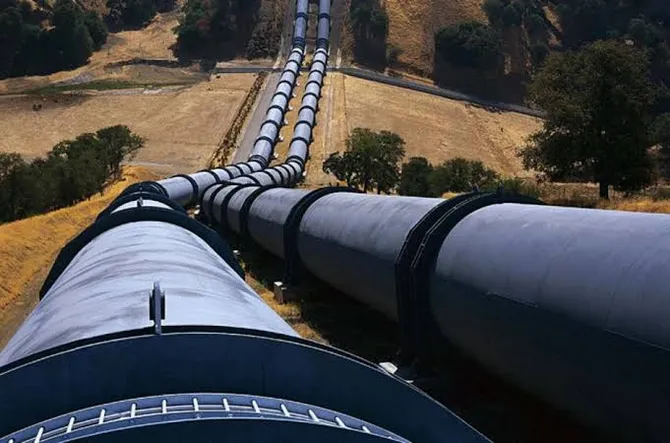
photo: getty images
Oil Across the Caspian: The Case for Diversification
Energy remains another pillar of Kazakh-Azerbaijani relations. Kazakhstan is interested in expanding its oil export options, while Azerbaijan has infrastructure that can help deliver crude to international markets.
One route crosses the Caspian Sea before continuing through the Baku-Tbilisi-Ceyhan pipeline. In September, the two sides discussed increasing the transit of Kazakh oil through Azerbaijan. Kazakhstan is also considering other trans-Caspian options as it seeks to diversify its export routes.
The value of this cooperation lies in providing additional export options. The extent to which they can be used, however, will depend on tanker availability, port capacity, commercial agreements and transport costs.
Undersea Internet: A New Dimension of Partnership
While oil and transport have long been central to the bilateral agenda, digital infrastructure is opening a new area of cooperation.
In October, Tokayev and Aliyev took part in the launch of a trans-Caspian fibre-optic communication line. According to the two sides, the project is expected to strengthen digital connectivity between the countries and help diversify data routes between Europe and Asia.
The project’s significance extends beyond bilateral relations. International trade and transport increasingly depend on reliable communications, while digital networks have become essential infrastructure for logistics, finance and business.
For Kazakhstan and Azerbaijan, the cable provides an opportunity to complement the physical route across the Caspian with a digital one and make the region more attractive for technology projects.
Green Energy: Ambitious Plans and Complex Decisions
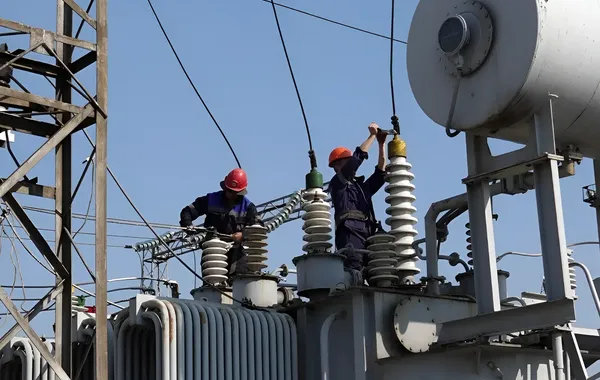
Another promising area is cooperation on renewable energy and the transmission of electricity across the Caspian.
During talks between the foreign ministers of Kazakhstan and Azerbaijan in April 2026, the two sides discussed major infrastructure projects, including a deep-sea power cable along the Caspian seabed.
Such connections could eventually create opportunities for electricity exports and closer integration of regional energy systems. But this is a capital-intensive undertaking whose success will depend on technical and economic assessments, financing and coordinated decisions among the participating countries.
For now, projected supply volumes and implementation timelines should not be treated as settled outcomes.
Trade: The $1 Billion Goal
Despite active political dialogue and major infrastructure plans, bilateral trade remains an area where the partnership’s potential has yet to be fully realised.
According to Kazakh statistics, trade between the two countries exceeded $282 million in January-August 2026, of which approximately $248.3 million consisted of Kazakh exports to Azerbaijan. The figures highlight the predominance of shipments from Kazakhstan.
At their October 15 meeting, the presidents reaffirmed their intention to increase annual bilateral trade to $1 billion. Achieving that target will require more than higher freight volumes: the countries will also need to expand the range of goods they exchange, strengthen business ties and develop joint production.
Opportunities exist in agriculture, food processing, metallurgy, transport and other sectors. According to Kazakhstan’s trade promotion organisation QazTrade, Kazakh companies began exporting new products to Azerbaijan in 2026, including certain types of rolled steel and copper cathodes.
Developing trade in both directions would help create a broader and more sustainable economic foundation for the partnership.
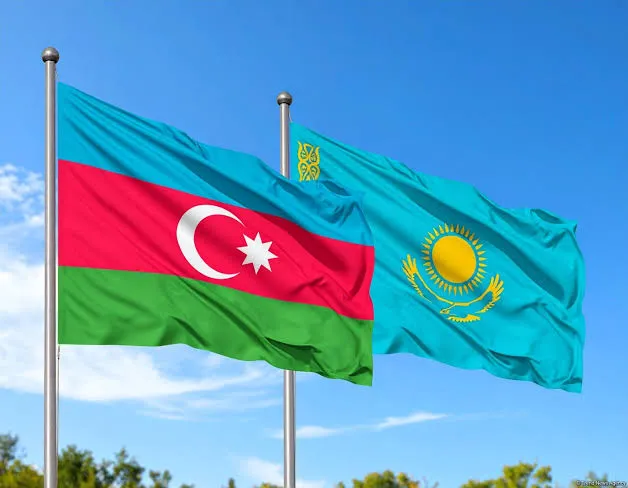
photo: getty images
A Shared Regional Agenda
Relations between Kazakhstan and Azerbaijan are developing beyond the bilateral level. The two countries also work together through multilateral formats connecting Central Asia, the South Caucasus and the Turkic world.
At their meeting in Baku on 15 October, the sides highlighted the development of their strategic partnership and allied relations, as well as Azerbaijan’s participation as a full member in the Consultative Meetings of Central Asian heads of state.
Closer ties between the regions are increasing the importance of practical issues such as transport connectivity, trade, energy security and resilient communications. Kazakhstan and Azerbaijan’s shared interests in these areas provide a basis for further joint initiatives.
Relations between Baku and Astana are increasingly shaping how goods, energy and data move across the Caspian. The next phase of their partnership will depend on how effectively the two countries turn their agreements into functioning routes and expand their economic ties beyond transit.