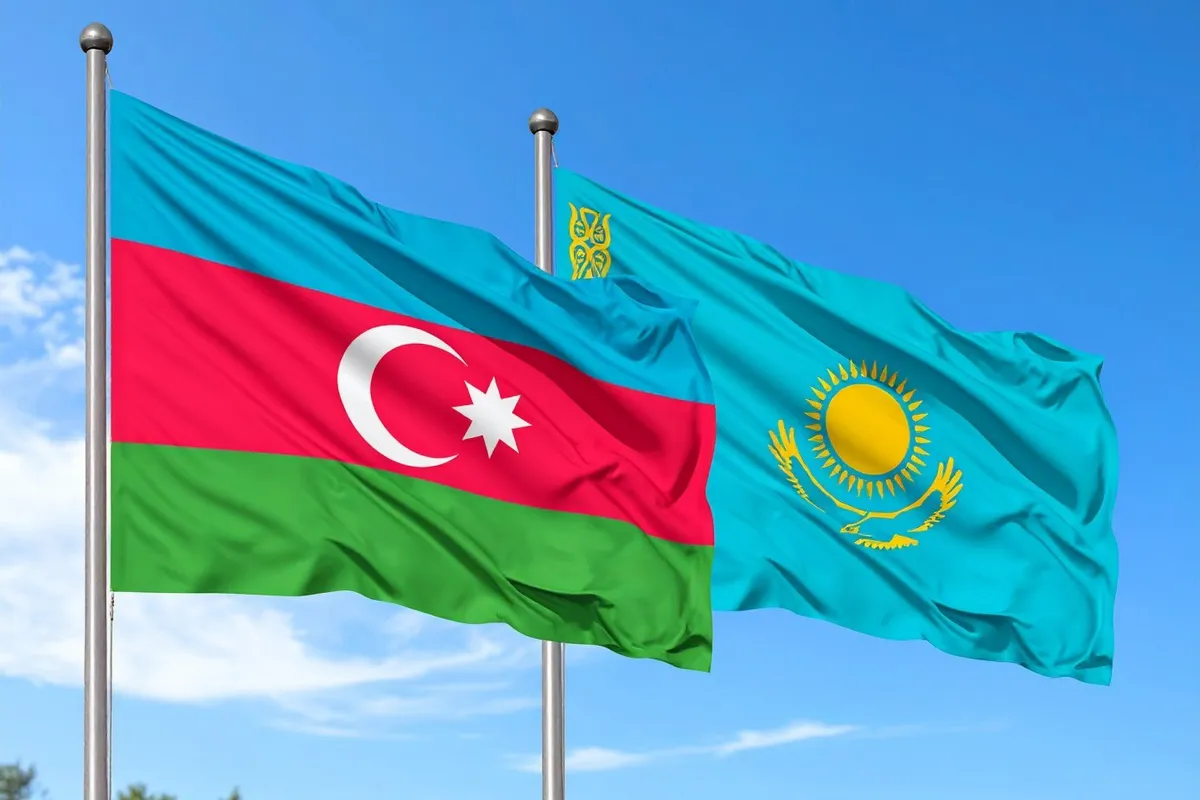
Kazakhstan and Azerbaijan are no longer simply two countries linked by the Caspian Sea. They are increasingly shaping a shared vision of Eurasian connectivity - one that encompasses transport, energy, digital infrastructure, investment and regional diplomacy.
The opportunity before Astana and Baku is considerable. As international trade routes come under pressure and countries seek greater economic resilience, the two states can turn their geographical position into a source of lasting influence. But geography alone will not deliver that result. Their success will depend on practical cooperation, institutional coordination and the ability to protect their independence in an increasingly competitive geopolitical environment.
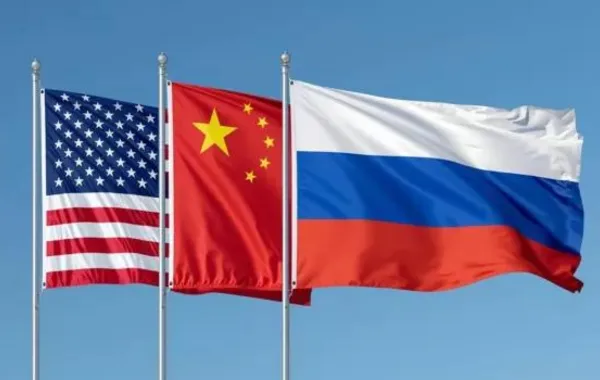
The latest discussion around President Kassym-Jomart Tokayev’s proposal to invite Russia to participate in the “OTS+” format or grant it observer status in the Organization of Turkic States illustrates both the opportunities and challenges facing the region.
Dialogue with Russia Must Not Weaken Turkic Cooperation
Tokayev’s initiative should be viewed in the context of Kazakhstan’s traditionally multi-vector foreign policy. Astana has long sought to maintain constructive relations with different centres of power while defending its own national interests. Extending this approach to multilateral diplomacy is consistent with that tradition.
Russia has deep historical, geographical and economic ties with the Turkic world. Numerous Turkic peoples live within its borders, and Moscow maintains important relationships with Kazakhstan, Azerbaijan, Türkiye and the Central Asian states. Against this background, a structured dialogue between Russia and the OTS is neither surprising nor inherently problematic.
However, an important distinction must be maintained. Participation in an “OTS+” dialogue or observer status would be different from full membership. The former could provide an additional channel for discussion without changing the organisation’s foundations or its members’ right to determine their own priorities.
For Kazakhstan, such an arrangement could support its efforts to maintain a stable regional environment. For Azerbaijan, an additional platform for engagement with Moscow could offer opportunities to discuss transport connectivity, Caspian security and other shared concerns.
Yet dialogue can only be beneficial if it takes place under clear rules. The OTS must preserve its independence, internal cohesion and freedom to make decisions without external pressure. It should not become an arena in which major powers compete for influence over the Turkic states.
The value of Tokayev’s initiative will therefore depend on how it is implemented. If it rests on equality, mutual respect and non-interference, it could broaden the organisation’s diplomatic reach. If it compromises the OTS’s autonomy, it would weaken the very platform it is intended to strengthen.
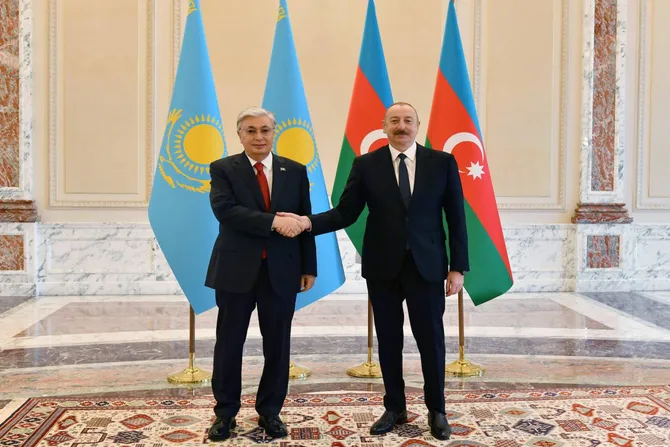
Photo: AZERTAC
Political Trust Must Translate Into Economic Results
The relationship between Kazakhstan and Azerbaijan provides an example of how regional cooperation can acquire practical substance. Today, the two countries enjoy a strategic partnership with an allied dimension, supported by close political dialogue and a growing number of joint projects.
Mutual visits by President Tokayev and Azerbaijani President Ilham Aliyev, together with the work of the Supreme Interstate Council, have strengthened political trust. That trust is a valuable asset, but its real test is whether it can generate sustainable economic benefits.
Bilateral trade reached approximately $470.7 million in 2025. According to the figures available, trade has increased fivefold over the past five years, and the two sides have set a target of raising it to $1 billion. This is achievable, but only if the partnership expands beyond traditional trade and commodity flows.
Kazakhstan possesses a substantial resource and industrial base. Azerbaijan offers developed transport infrastructure and access to the markets of the South Caucasus, Türkiye and Europe. Bringing these strengths together could support joint ventures in manufacturing, mechanical engineering, agriculture, petrochemicals and digital technology.
The Kazakhstan-Azerbaijan Direct Investment Fund could play an important role in this process by providing a financial instrument for projects that create long-term economic value.
The central question is whether the two countries can turn strong political relations into an economic partnership of comparable scale. Their ambition should be to build production chains, attract investment and create businesses that compete beyond their national markets.
The Middle Corridor Needs Reliability, Not Just Ambition
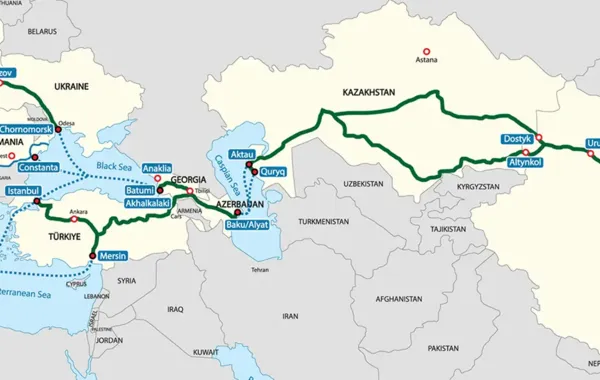
The Middle Corridor has become central to discussions about Eurasian trade. Connecting China and Central Asia with the Caspian region, the South Caucasus, Türkiye and European markets, it offers Kazakhstan and Azerbaijan an opportunity to strengthen their role in international commerce.
But shippers do not choose a route because of its geopolitical symbolism. They choose it because it is fast, affordable and reliable.
For the corridor to compete, Astana and Baku must address the practical obstacles that raise costs and delay cargo. The ports of Aktau, Kuryk and Alat need coordinated operations. Ferry and container vessel capacity must keep pace with demand, while railway infrastructure and connections between different modes of transport require continued investment.
Digitalisation is equally important. Repeated paperwork, uncoordinated customs procedures and a lack of reliable information can undermine the benefits of improved infrastructure. A coordinated digital system should allow businesses to track cargo, process documents in advance and obtain timely information about each stage of the journey.
Tariffs must also become more transparent and predictable. Companies need to know the total cost of transportation before goods are dispatched. A route cannot be genuinely competitive if businesses face unexpected charges and delays along the way.
The World Bank has suggested that, with coordinated investment and institutional reforms, freight volumes along the Middle Corridor could more than triple and delivery times could be halved by 2040. That potential will not be realised automatically. It requires cooperation among governments, transport operators, private investors and international financial institutions.
The goal should be to establish the Middle Corridor as an economically viable route in its own right, rather than relying solely on demand created by geopolitical disruption elsewhere.
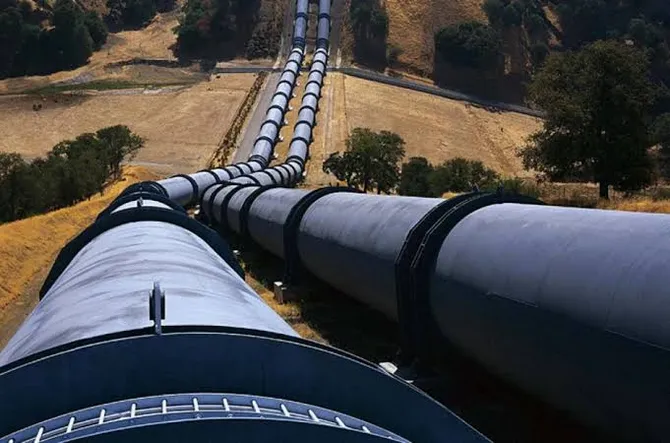
photo: getty images
Energy and Digital Links Can Create the Next Breakthrough
The Kazakhstan-Azerbaijan partnership has the potential to grow well beyond transport. Energy, digital infrastructure and investment could become its next major drivers.
Kazakhstan is interested in diversifying its oil export routes, while Azerbaijan has infrastructure that connects the Caspian region to international markets. Expanding the transit of Kazakh oil through Azerbaijan, including via the Baku-Tbilisi-Ceyhan pipeline, could serve the long-term interests of both countries.
At the same time, their energy partnership should not be confined to hydrocarbons. The proposed Caspian Green Energy Corridor involving Kazakhstan, Azerbaijan and Uzbekistan offers a longer-term vision for renewable electricity cooperation and transmission towards western markets.
This is an ambitious undertaking, and its success will depend on financing, infrastructure, commercial demand and coordination across several countries. Nevertheless, it demonstrates that the Caspian region can aspire to become a bridge for clean energy as well as oil and gas.
Digital connectivity is another promising area. The trans-Caspian fibre-optic cable linking Kazakhstan and Azerbaijan, launched in October 2026, adds a new dimension to the relationship. The approximately 380-kilometre connection is designed to provide capacity of at least 400 Tbit/s.
Its significance should be measured not only by the cable itself, but also by the opportunities it may help create: data centres, cloud services, telecommunications platforms and other digital businesses. With the right investment and regulatory environment, Kazakhstan and Azerbaijan could strengthen their positions as regional technology and communications hubs.
The next breakthrough will come when these links support the development of local industries. The two countries should aim to become not only transit states, but also joint producers, investors and participants in international value chains.
The Caspian's Decline Threatens the Shared Vision
There is, however, a challenge that could affect every aspect of this agenda: the declining level of the Caspian Sea.
The issue is often discussed as an environmental problem, but for Kazakhstan and Azerbaijan it is also a question of economic security. The condition of the Caspian directly affects ports, shipping, energy infrastructure and the future of trans-Caspian trade.
Lower water levels can make it harder for vessels to reach ports, limit the loads they carry and increase the cost of maintaining access channels. For Aktau, Kuryk and Alat, the implications must be considered in long-term planning. If left unaddressed, these pressures could make shipping more expensive and less predictable, undermining the competitiveness of the Middle Corridor.
The causes of the sea’s decline are complex and include rising temperatures, evaporation, changes in river flows and human activity. No single country can resolve the problem alone.
Kazakhstan and Azerbaijan should therefore strengthen joint scientific monitoring, exchange hydrological and climate data, and develop shared forecasts. They should also coordinate plans to adapt port infrastructure, including navigation systems and access channels, wherever such work is environmentally and economically justified.
But bilateral cooperation is only part of the answer. All five Caspian littoral states - Azerbaijan, Kazakhstan, Russia, Iran and Turkmenistan - have an interest in protecting the sea’s ecosystems and preparing for changing conditions.
Azerbaijan and Kazakhstan could take the lead in promoting a broader regional response that combines environmental protection with practical economic planning. The Caspian is a shared natural system, and its future cannot be separated from the region’s development.
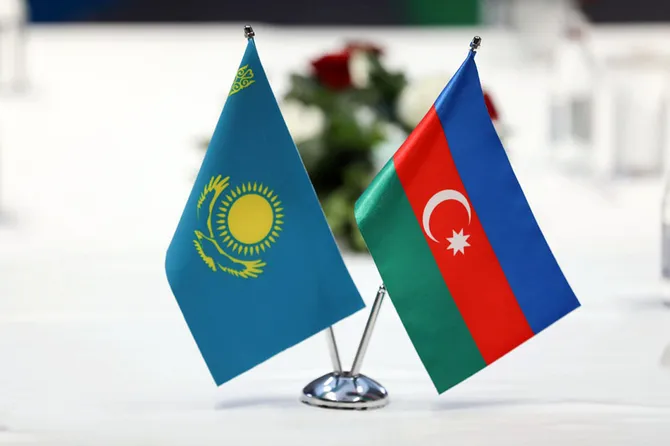
photo: getty images
From Transit States to Regional Centres
Kazakhstan and Azerbaijan are well placed to influence the emerging economic architecture of Eurasia. Their interests converge around diversified trade routes, energy security, digital connectivity, investment and regional stability.
Their most important advantage, however, may be their ability to work with a wide range of partners while retaining independent decision-making. Neither the Middle Corridor nor cooperation within the OTS needs to be framed as a geopolitical confrontation with other countries. Both can succeed as platforms for practical cooperation that serve the interests of their members.
The task now is to match political ambition with implementation: make transport more reliable, turn infrastructure into industrial opportunity, protect the Caspian and ensure that regional institutions remain independent.
If Astana and Baku can achieve this, they will do more than connect larger markets. They will help shape a region that generates its own growth, sets its own priorities and plays a more influential role in Eurasia’s future.