The Middle Corridor’s Future Depends on More Than Railways: Azerbaijan’s Strategic Role in Eurasian Trade
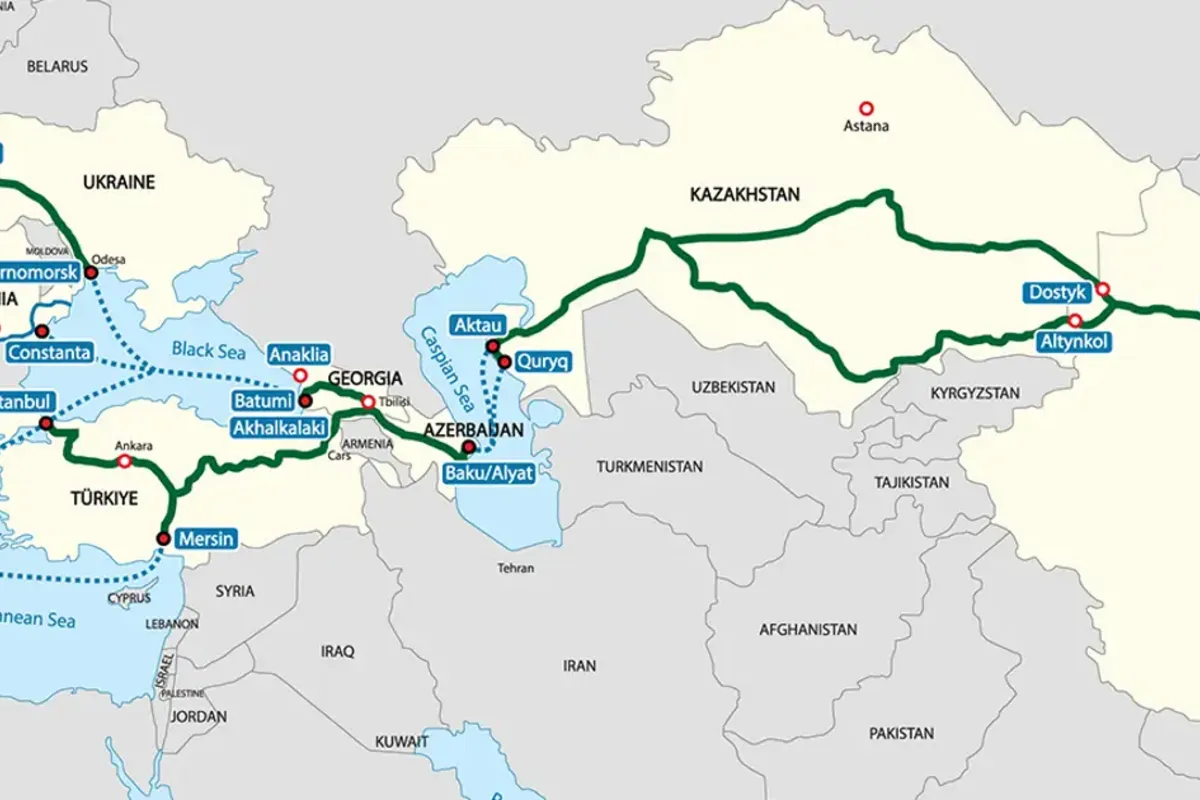
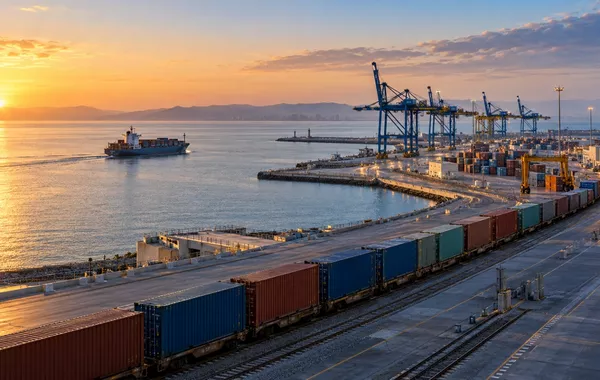
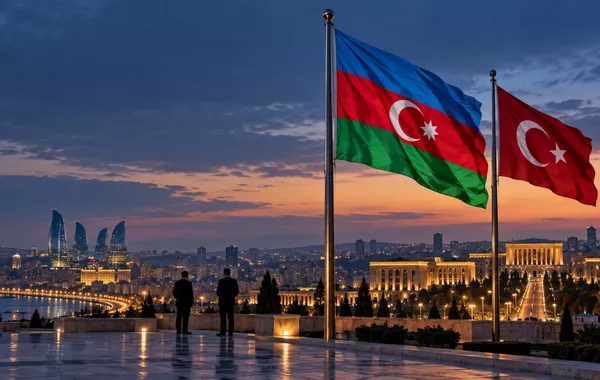
The Middle Corridor is becoming an increasingly important connection between China and Europe, and Azerbaijan occupies a central position in its development. The country is a key hub in the Caspian segment of the route: the Port of Baku and the Baku-Tbilisi-Kars railway connect Central Asia with Türkiye and European markets.
In 2025, total transit through Azerbaijan reached 14.3 million tonnes, of which approximately 4.7 million tonnes were transported via the Middle Corridor. For Central Asian countries, the route offers a connection to European markets that bypasses Russia. Its reliability is increasing as the corridor moves towards regular operations.
Yet the Middle Corridor’s long-term success will depend on more than the construction of railways and ports. The countries along the route must also improve coordination, reduce delays and turn transit flows into wider economic opportunities.
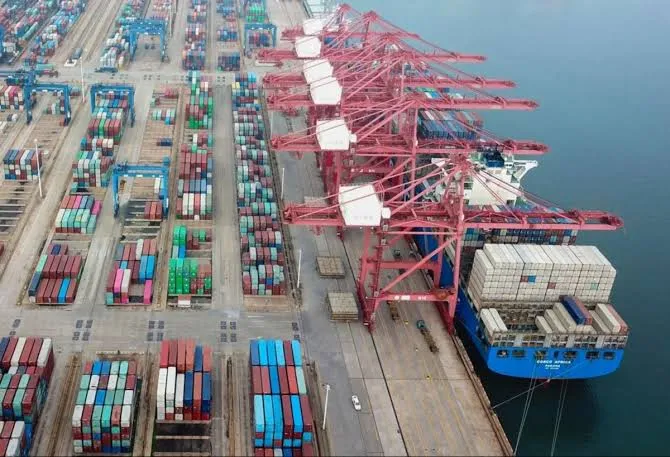
photo: getty images
China’s expanding role
China’s contribution to the Middle Corridor is multifaceted. It is a major source of cargo, an investor and, increasingly, a participant in the management of infrastructure projects.
In 2025, transportation along the Trans-Caspian International Transport Route amounted to 4.12 million tonnes, remaining above the 4 million-tonne mark.
The Chinese side has expressed readiness to participate in the establishment of cross-border transport hubs, logistics parks and digital customs systems intended to reduce delivery times and costs. The specific investment parameters of these projects are still being worked out.
China is therefore more than a source of transit cargo. Its participation can contribute to a shift from infrastructure connectivity towards operational standardization across the route.
A new railway and a changing transport map
The China-Kyrgyzstan-Uzbekistan railway has the potential to fundamentally change Central Asia’s transport geography. In 2026, 22% of the total construction work is planned to be completed, while the first tunnel, Kosh-Dobo-2, was completed in August 2026.
Once the railway is completed, Central Asian countries will gain more convenient access to the east. Cargo will also be able to travel across the Caspian Sea to Azerbaijan and onward to Europe via the Middle Corridor.
Integrating the railway with the Middle Corridor would provide a stronger cargo base for the transport chain linking Central Asia, the Caspian Sea, the South Caucasus and Europe.
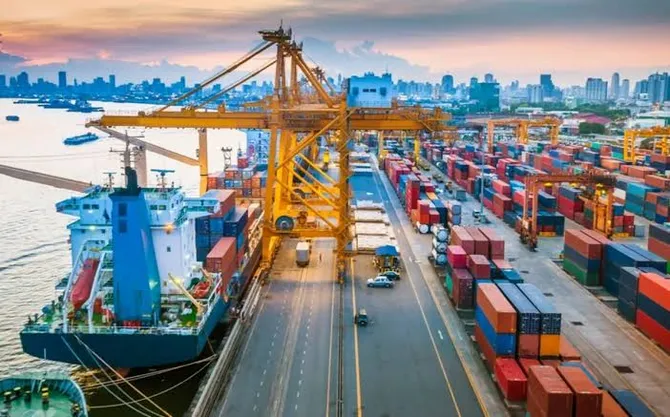
photo: getty images
The Caspian bottleneck
The most serious constraint on the corridor remains its Caspian segment. Ferry and roll-on/roll-off vessel capacity is limited, while the coordination of port and customs procedures requires greater efficiency.
Transportation along the Middle Corridor has a higher unit cost than maritime shipping. Its competitive advantage lies instead in speed and reduced political risks, rather than the lowest possible price.
To make the route faster and more reliable, Azerbaijan and Central Asian countries should prioritize stable schedules and coordinated connection windows across the Caspian Sea. They should also work towards standardized end-to-end tariffs and liability rules, a unified digital consignment note and advance customs clearance.
Beyond transit fees
For the Middle Corridor to generate benefits beyond transit revenues, it must develop into a production and logistics platform.
The Port of Baku’s nominal container capacity is 100,000 TEU, while operational optimization has already enabled its actual throughput capacity to exceed that level. Following the completion of the second phase of expansion, the target capacity is 500,000 TEU.
Cross-border transport hubs, logistics parks and digital customs systems proposed by the Chinese side could provide a starting point for joint projects. If Azerbaijan and Central Asian countries also establish processing, sorting and storage facilities along the route, transit flows could support local industrial activity and employment.
The Middle Corridor’s potential lies in connecting markets and creating economic activity along the way. Achieving that will require both infrastructure investment and closer coordination among the countries it brings together.