Armenia Reduces Russian Footprint in Strategic Sector
Recent statements by Armenian Prime Minister Nikol Pashinyan have arguably been the most candid since discussions about the country’s railway sector began. For the first time at such a high level, the idea was voiced that concession rights to manage Armenia’s railway network could potentially be transferred to a third party friendly to both Yerevan and Moscow. In essence, this concerns the future of South Caucasus Railway, a subsidiary of Russian Railways (RZD), which manages Armenia’s entire railway system under a concession agreement valid until 2038.
Formally, the issue centers on restoring two short railway segments - 1.6 km and 12.4 km - to reconnect Armenia’s rail network with Azerbaijan (near Yeraskh) and Türkiye (Akhurik). Russian Deputy Prime Minister Alexei Overchuk has already stated that Moscow is ready for substantive negotiations.
However, Pashinyan unexpectedly escalated the debate, arguing that “there is no need for negotiations” over such small-scale work. Moreover, he directly linked RZD’s management to Armenia’s loss of competitive advantages in regional transport corridors. According to him, within the framework of the TRIPP project (Trump Route for International Peace and Prosperity), several countries are reluctant to invest in routes through Armenia precisely because the railway remains under Russian control. Thus, what initially appeared to be a technical matter has clearly evolved into a political issue.
Pashinyan went even further, claiming that there are “circles” in Russia that view peace between Armenia, Türkiye, and Azerbaijan as disadvantageous because it would strengthen Armenian sovereignty. At the same time, he emphasized that this position is “certainly not shared” by Russian President Vladimir Putin or Prime Minister Mikhail Mishustin. Nevertheless, the mere articulation of such claims demonstrates the depth of mistrust that has accumulated in bilateral relations.
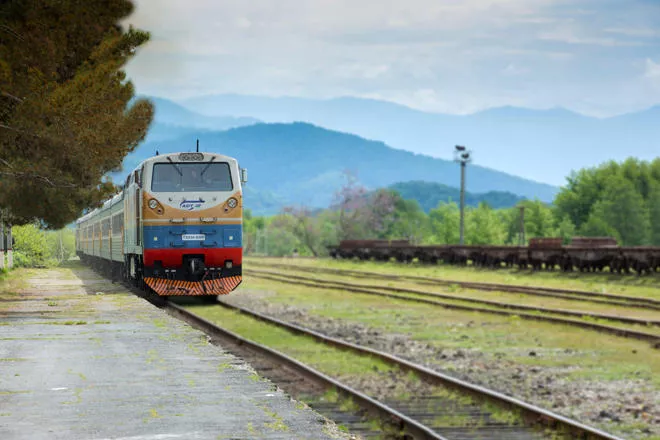
Photo credit: Azernews
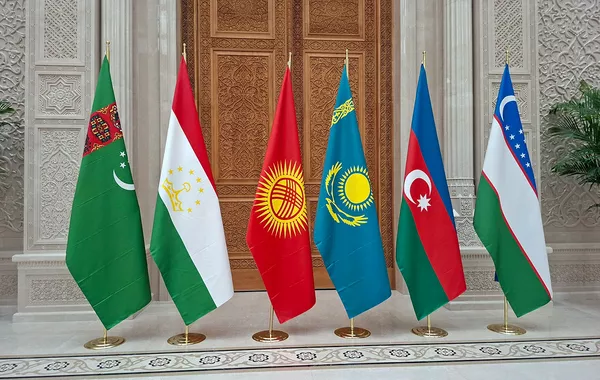
In Pashinyan’s reasoning, Russia’s control over strategic infrastructure objectively limits Yerevan’s maneuverability. If international investors are bypassing Armenia because of this factor, then the governance model must be reconsidered. The Armenian prime minister proposed a compromise: Russia could sell its concession rights to a country friendly to both sides. Among potential candidates, he mentioned Kazakhstan, the United Arab Emirates, or Qatar.
Such a proposal likely came as a surprise to Moscow. At the same time, it appears to be an attempt to reduce Russian influence while avoiding direct confrontation. Formally, this would not constitute a rupture but merely a reassignment of rights to a mutually acceptable partner. In practical terms, however, it would amount to a redistribution of control over key regional infrastructure.
Pashinyan has already been accused of “pressuring Moscow.” Supporters of this theory argue that if Russia does not promptly restore the border railway segments, Türkiye and Azerbaijan will continue building an alternative line bypassing Armenia. It is unclear which line is meant. The Baku-Türkiye railway via Georgia has long been operational. If the reference is to the line Türkiye is currently extending toward Nakhchivan, that is part of the Zangezur corridor, which would in fact pass through Armenia. Therefore, this opposition argument does not withstand scrutiny. Ultimately, what remains is Pashinyan’s intention to push Russia toward transferring the concession to another country - the central motive behind his statements.
Pashinyan is correct in noting that negotiations between Yerevan and South Caucasus Railway over such minor segments are unnecessary. As a concessionaire, the Russian company is obliged to invest in repairing these lines.
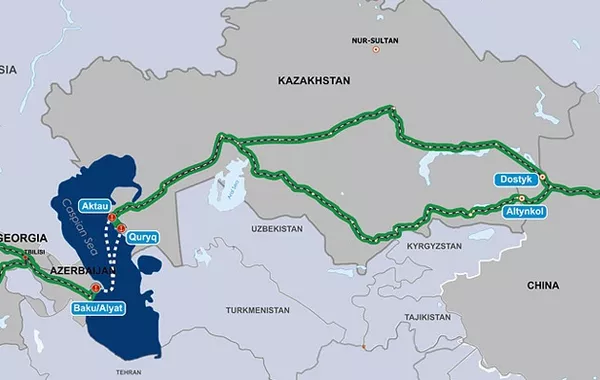
The pro-Russian opposition is also searching for additional subtexts in Pashinyan’s actions. Former Prime Minister Khosrov Harutyunyan argues that Pashinyan, acting in U.S. interests, is prioritizing the southern route via Meghri (TRIPP), while an alternative railway - Gazakh-Ijevan-Dilijan-Hrazdan-Yerevan-Gyumri - could, after restoration, become the shortest link between Azerbaijan and Türkiye. The cost of addressing the landslide near Aghartsin is estimated at around $17 million, far less than constructing 43 kilometers of track in Syunik.

Photo credit: Denis Belitsky/Shutterstock.
However, Harutyunyan appears to overlook the difference in total route length. The beneficiary of the Meghri route is Azerbaijan, and 43 kilometers through Armenian territory is far more attractive than several hundred kilometers through an unfriendly country. Moreover, the alternative route cited by the former prime minister is unsuitable for freight traffic, particularly the section between Hrazdan and Ijevan, which was deemed beyond restoration even under Armenia’s previous leadership.
China has also unexpectedly entered the discussion. Opposition-aligned experts argue that if Armenia integrates into overland routes between China and the EU, its strategic importance would rise sharply. Annual China-EU trade amounts to approximately €800 billion, and alternative land corridors are becoming increasingly relevant amid instability along maritime routes. At this point, the issue extends beyond RZD - it concerns who will control Armenian transit within the emerging Eurasian architecture.
Having effectively shown RZD the door, Pashinyan nevertheless stated that Armenia does not intend to act against Russia. However, if railway management becomes an obstacle to development, it must be changed. The logic is straightforward.
Ultimately, the RZD issue is less about transport connectivity and more about Armenian sovereignty. Russia and its companies operating in Armenia have increasingly become symbols of Yerevan’s limited autonomy. Pashinyan now appears intent on demonstrating to the former ally that Armenia is sufficiently independent to define its own transport and foreign policy strategy.
Whether Yerevan will move toward a real revision of the concession remains to be seen. What is already clear, however, is that railway management has become a symbol of a deeper process - Armenia’s effort to reduce dependency and assume a more active role in the evolving geopolitical configuration of the South Caucasus.
By Tural Heybatov