How Tehran Will Push Back Against the Zangezur Corridor – Rasanah Report
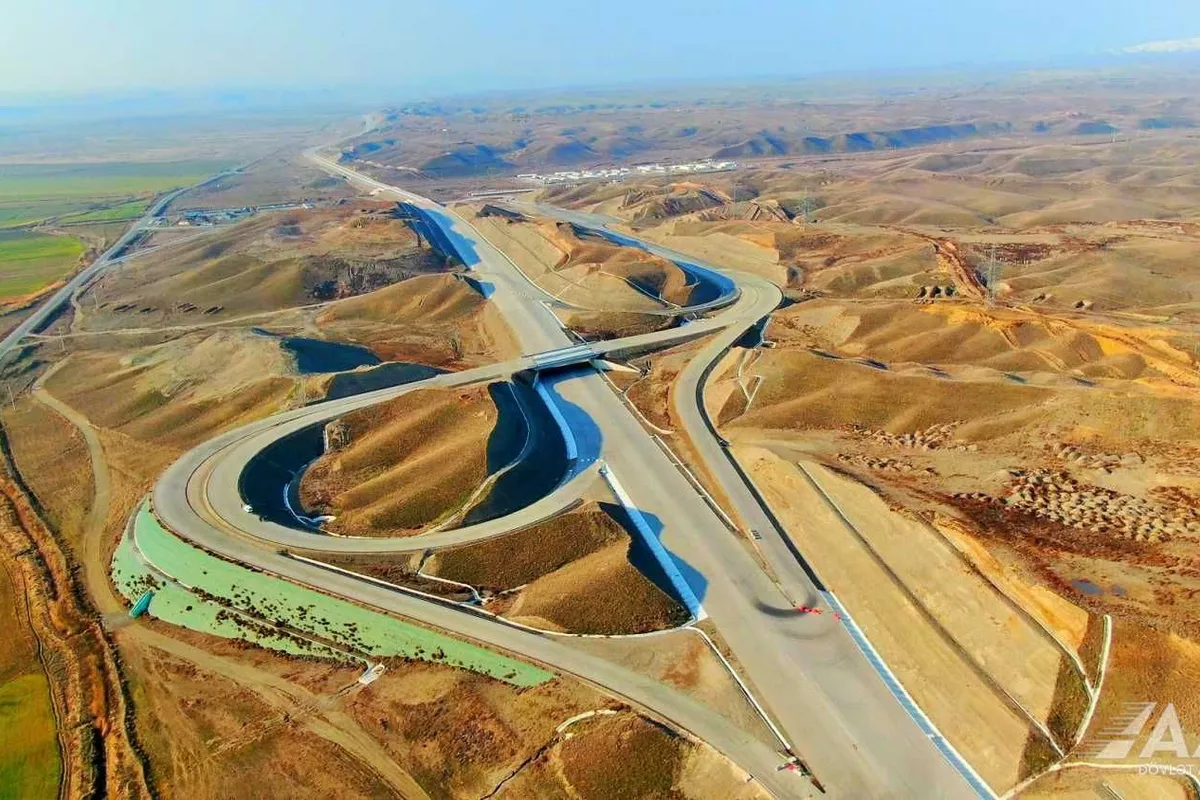
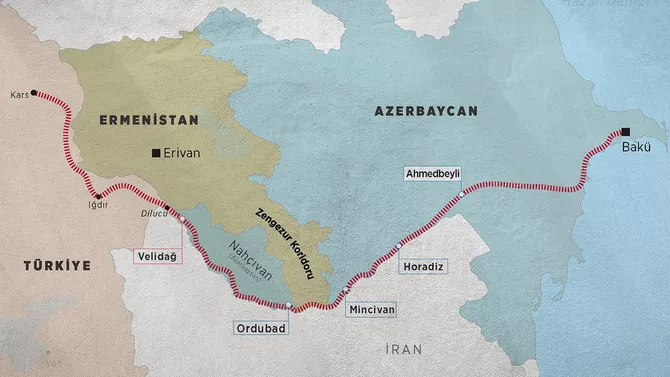
The International Institute for Iranian Studies, a Saudi-based analytical center also known as Rasanah, has released its 10th Annual Strategic Report (ASR) for 2025-2026, titled “Alliances of Necessity and Peace Through Strength.” The report examines prospects for a peace settlement between Azerbaijan and Armenia, as well as the geopolitical implications of implementing the so-called Trump Route for International Peace and Prosperity (TRIPP), including the Zangezur Corridor.
The report emphasizes that a key factor underpinning the sustainability of a potential Baku-Yerevan peace agreement is U.S. sponsorship. According to Rasanah, the United States remains the primary beneficiary of the deal and, at the same time, the most powerful actor in the international system across economic, military, and political dimensions.
Economically, Washington possesses the world’s largest nominal GDP and a far-reaching sanctions regime capable of paralyzing national economies. Militarily, the United States fields the most capable armed forces globally, backed by massive defense spending, technological superiority, and an extensive network of overseas bases. Politically, it leads the broadest alliance system in the world and wields unparalleled global influence.
From the authors’ perspective, American patronage can provide both security guarantees for the construction of the corridor and the institutionalization of the process with the involvement of other stakeholders. Despite the gradual shift toward multipolarity, Rasanah assesses that the United States continues to be the dominant global power capable of projecting influence worldwide.
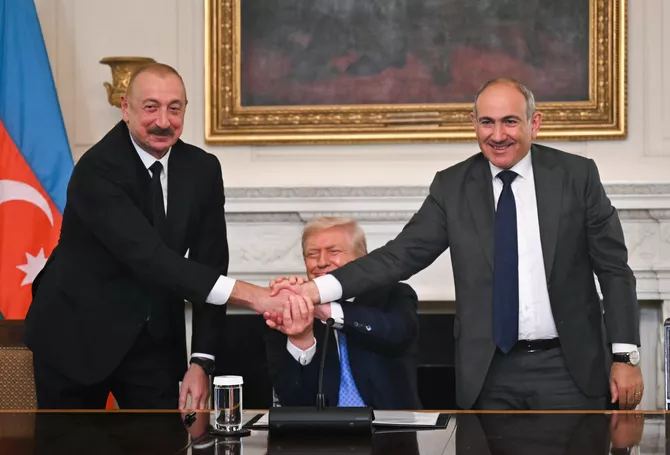
Photo: Azertac
The report separately highlights the convergence of interests between the two principal parties to the project - Azerbaijan and Armenia. Whereas Yerevan had previously been closely aligned with Iran and firmly opposed to the corridor, its position has shifted in response to regional and international changes.
Armenia has moved closer to the United States and increasingly views the corridor as an economic and security opportunity that could end its isolation, open access to new markets, and facilitate normalization with Baku. An additional driver, the report notes, is Armenia’s desire to reduce its dependence on Russia and Iran amid the war in Ukraine and the intensification of sanctions pressure on Tehran.
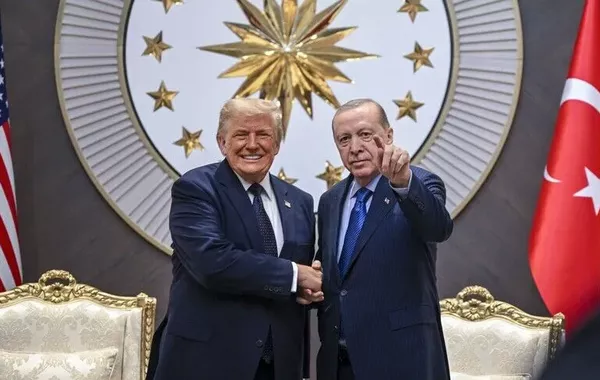
Türkiye’s support for the project is also examined in the context of a period of improved relations with Washington. Rasanah assesses that the corridor could significantly strengthen Ankara’s geopolitical position in the Caucasus by linking Türkiye to the Caspian Sea and Central Asia and transforming it into a key hub for energy transit and redistribution. This, in turn, could enhance Türkiye’s weight in European strategic calculations and potentially revive its long-term ambitions regarding EU membership, while also advancing Ankara’s broader vision of building a unified Turkic world through deeper Turkish-Azerbaijani connectivity extending toward the Caspian and Central Asia.
At the same time, the report outlines a range of challenges. These include financial and logistical difficulties stemming from the project’s high, yet still undisclosed, costs, as well as domestic political divisions within Armenia, where some factions view the corridor as a threat to sovereignty. Geostrategic complications arising from the intersection of the interests of major powers further add to the uncertainty.
Special attention is paid to Russia’s position. Although, in theory, ending the Azerbaijani-Armenian conflict would serve Moscow’s interests, U.S. sponsorship of the project is perceived as a serious challenge. The Caucasus has traditionally been regarded by Russia as a zone of privileged interests, and expanded American involvement raises concerns that NATO’s presence could follow.
In this context, the authors recall the Russia-brokered 2020 ceasefire agreement, which provided for a role for Russian border guards. Washington’s sponsorship of a new peace framework is therefore interpreted as a diplomatic setback for Moscow. This stance has been repeatedly articulated by Russia's Foreign Ministry spokesperson Maria Zakharova, who has stressed the continued validity of previously signed trilateral agreements.
AA Photo
According to the report, Iran views the corridor as a direct threat to its strategic interests. Among the scenarios outlined by Rasanah is the possibility that Tehran could attempt to create pockets of instability along the border, including acts of sabotage against personnel and facilities involved in construction.
In this context, the report cites statements by Ali Akbar Velayati, a senior adviser to Iran's supreme leader for international affairs, who has said that Iran will not allow the Zangezur Corridor to be developed by the United States “with or without Russia,” describing the project as a threat to regional security and an attempt to reshape the geopolitical map.
Another potential element of Iranian tactics could involve demands for tunnels, bridges, or alternative routes over or under the corridor in order to preserve land connectivity with Armenia and maintain transit flows.
In its conclusion, the report stresses that U.S. mediation between Azerbaijan and Armenia has marked a turning point, shifting the two countries from confrontation toward normalization. However, long-term success will depend on effective implementation of agreed provisions, particularly regarding border delimitation and other technical issues.
Rasanah forecasts that if the corridor is completed, the principal beneficiaries will be the United States, Türkiye, Azerbaijan, Israel, and Armenia, while Iran and Russia will emerge among the main losers. At the same time, a potential end to the Russia-Ukraine war and a possible new nuclear agreement between the United States and Iran could, over time, open the door for Moscow and Tehran to integrate into the project, provided sufficient guarantees are offered by Washington.