Ford Docks in the Region — Israel Moves Against Iran
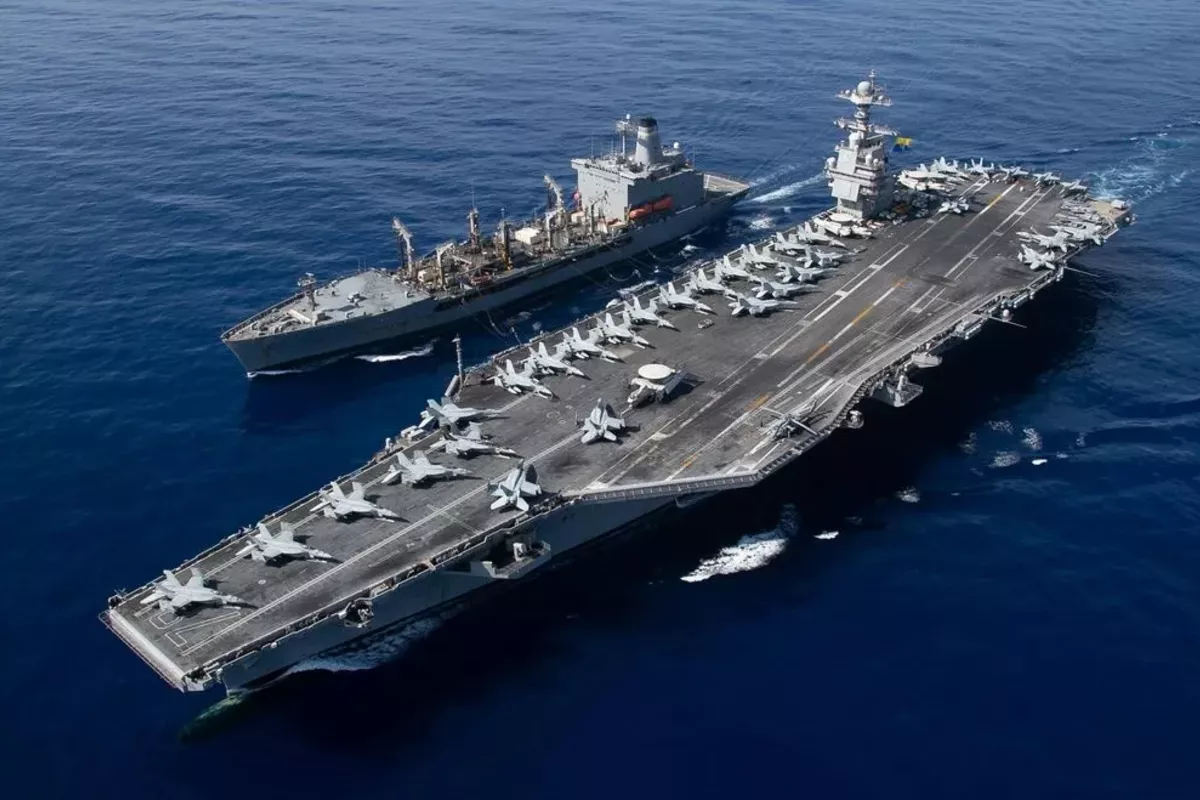
When the USS Gerald R. Ford entered the Eastern Mediterranean and approached the Israeli coast, the initial interpretation among analysts was familiar: deterrence. The deployment of the most advanced aircraft carrier in the U.S. Navy was seen as a calibrated signal meant to prevent escalation rather than trigger it. However, the sequence of events quickly altered that perception.
Almost immediately after the USS Gerald R. Ford reached operational proximity to Israel, Israeli forces began a new phase of strikes against Iranian-linked targets. The timing was impossible to ignore. Whether coordinated as part of broader strategic planning or coincidental within a rapidly evolving security environment, the arrival of the carrier and the onset of Israeli military action became part of the same strategic moment.
That shift transformed the meaning of the deployment.
The carrier was no longer viewed solely as a floating warning. It became part of the operational and political architecture surrounding the escalation.
To understand the significance, it is useful to recall precedent. In October 2023, following the October 7 Hamas attack, Washington dispatched the Gerald R. Ford Carrier Strike Group to the region to stabilize the situation. At that time, although tensions surged, full-scale U.S.-Iran war did not materialize. The carrier functioned as a strategic buffer - a visible insurance policy against uncontrolled escalation.
Today’s environment is more complex.
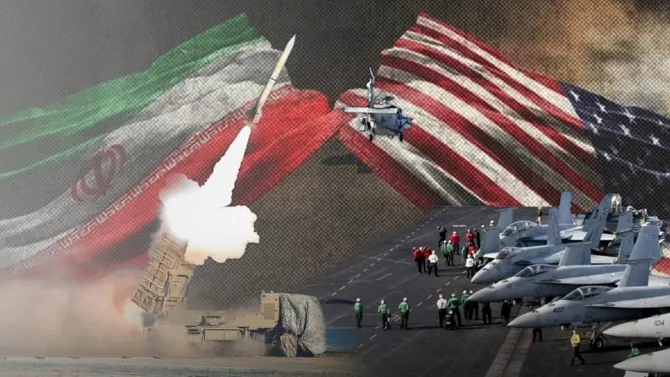
photo: Shutterstock
The Middle East has been operating in a state of layered confrontation: Israel-Hamas conflict, ongoing Israel-Hezbollah tensions, shadow warfare between Israel and Iran, and repeated militia attacks on U.S. positions in Syria and Iraq.
This is no longer episodic instability. It is structural volatility. In such conditions, deterrence becomes fragile. It depends not only on military capability but on political calculation.
When leaders determine that limited action is less risky than continued erosion of strategic balance, deterrence can transition into controlled force. The Israeli strikes that followed the carrier’s arrival suggest precisely such a recalibration. Yet escalation, so far, remains bounded.
Iran’s response has been measured relative to its rhetoric. Hezbollah has not opened a full-scale northern front. U.S. assets in the region remain under pressure but not under overwhelming assault. This suggests that while the carrier’s presence coincided with the onset of military action, it may simultaneously be functioning as an escalation-management platform, absorbing risk while preventing systemic expansion of the conflict.
The strategic logic is layered.
A carrier strike group offers immediate strike capability, missile defense coverage, intelligence integration, and rapid response flexibility. Its presence allows decision-makers to act while retaining options for containment. But the deployment carries significance beyond the Middle East.
To Tehran, it signals readiness and capability. To Moscow, it underscores that Washington can project high-end naval power near Russia’s operational sphere in Syria and the Eastern Mediterranean, reinforcing U.S. presence in a region where Russian influence remains active.
To Beijing, it demonstrates that the United States retains the capacity to deploy its most advanced naval assets rapidly across theaters - a message relevant not only to the Middle East, but to broader strategic calculations in the Indo-Pacific.
Thus, the USS Gerald R. Ford is not simply a regional asset. It is a geopolitical signal. The key distinction today is not whether the carrier prevented all use of force - it clearly did not. Military action followed its arrival.
The more relevant question is whether its presence is preventing escalation from exceeding certain thresholds. Modern deterrence in complex conflict environments no longer aims to eliminate confrontation entirely. It aims to shape and limit it.
The sequence of events - carrier arrival followed by Israeli strikes - illustrates how military posture and political decisions intertwine in real time. The carrier’s presence may have enabled action, but it may also be constraining reaction. For now, the region stands in a tense but controlled phase. The strikes have occurred. A broader interstate war has not yet erupted.
An aircraft carrier off the coast is always a signal. In this case, the signal evolved within hours - from warning, to backdrop, to strategic stabilizer in the midst of active escalation.
Whether this balance holds will depend not only on naval power, but on political restraint in Tehran, Jerusalem, Washington, and on how global competitors interpret the message.
The USS Gerald R. Ford is no longer merely a deterrent symbol. It has become a central node in managing a volatile moment that connects regional conflict to global power dynamics.
By Samir Muradov