Why would a possible military strike on Iran be riskier and far more complicated than the U.S. operation that captured Venezuelan leader Nicolás Maduro? In a new analysis for The New York Times, journalists Abdi Latif Dahir and Samuel Granados argue that Iran’s deep military capabilities, regional proxy networks and strategic position could draw the United States into a prolonged, costly confrontation rather than the swift, targeted mission seen in Caracas.
Iran’s extensive military abilities and network of regional proxies could draw the United States into a prolonged conflict, The Caspian Post republishes the article.
When President Trump said in January that a U.S. “armada” was heading to Iran, he compared it with the kind of force used in the military’s recent lightning operation in Venezuela, saying it was “able to rapidly fulfill its mission, with speed and violence.”
Now, as Mr. Trump weighs various options against the Iranian government, including limited strikes, experts caution that an attack on Iran would be significantly more complex than an operation in Venezuela, and could potentially draw the United States into a protracted conflict.
Iran’s leadership oversees extensive military abilities and a network of regional proxy forces that could help sustain a resistance.
And unlike the swift operation in Caracas, Venezuela’s capital, Mr. Trump is potentially contemplating more extensive military action without saying publicly what he wants to achieve. But he has said that he wants to prevent Iran from building a nuclear weapon and that regime change would be “the best thing” that could happen.
“There is no low-cost, easy, clean military option available in the case of Iran,” said Ali Vaez of the International Crisis Group, an organization focused on resolving conflicts.
“There is a real risk that there will be American lives lost,” Mr. Vaez said, adding that this will feature highly in Mr. Trump’s calculus, “especially in an election year.”
Iran can hit back.
Whereas Venezuela’s skies were relatively unprotected before the U.S. attack in January, Iran has one of the biggest and most varied missile stockpiles in the Middle East, according to regional experts. Its arsenal includes drones and anti-ship weaponry, though the current volume of Iran’s missile inventory remains unclear after its 12-day war with Israel in June.
Iran’s medium‑range ballistic missiles are capable of traveling over 1,200 miles, which includes American bases as far away as western Turkey and across the broader Middle East, including in Israel and the Gulf States.
Tehran’s strategy “is to quickly escalate and export instability in multiple theaters so that the cost is spread, the pain is spread,” said Sanam Vakil, the director of the Middle East and North Africa program at Chatham House, a policy institute.
The Gulf States, which are home to a number of American bases, are anxious that any American military strike could lead to blowback against them.
In January, Saudi Arabia and the United Arab Emirates, both of which are close U.S. allies, said they would not permit the United States to use their airspace for attacks. That stance may not ultimately shield them from Iranian retaliation, experts say.
An Iranian counterattack could strike major cities in Israel. The Israeli military used interceptors to shoot down the majority of Iran’s missiles during the war in June. Yet its supply of interceptors is running low after more than two years of fending off attacks from Hamas in Gaza and Hezbollah in Lebanon, intelligence officials say.
Ms. Vakil said that Iranian officials most likely believed that the “fear factor” of a larger regional war would help dissuade Mr. Trump from attacking.
Iran’s proxies could threaten U.S. forces and allies.
Iran operates an “axis of resistance” that uses proxy forces across the Middle East, including the Houthis in Yemen and Hezbollah in Lebanon. It has built and armed those groups to expand its influence and challenge adversaries in the region.
Though many proxies have been severely weakened, they could retaliate against American forces and allies, creating multiple fronts and amplifying the conflict beyond Iran’s borders.
At least one Iran‑aligned group in Iraq has pledged support for Tehran if the U.S. attacks, with its leaders warning they could order “martyrdom operations” as part of a broader conflict. Experts also say that the Houthis could resume targeting commercial shipping traffic in the Red Sea, as they did in late 2023 in support of Hamas during its war with Israel.
The groups backed by Iran “know it would be better off hanging together rather than hanging separately,” said Mr. Vaez of the International Crisis Group. “If the mother ship sinks, then they are all alone.”
Iran’s leadership is deeply entrenched.
The Iranian government is a theocracy in which the supreme leader is the main authority. That is enforced by the Islamic Revolutionary Guards Corps, a feared and powerful branch of the armed forces that is estimated to number about 150,000, who safeguard and advance the regime’s authoritarian agenda.
In Venezuela, the United States captured President Nicolás Maduro and his wife in a tightly coordinated raid that lasted just over two hours. But in Iran, removing the government is not as simple as ousting the supreme leader. Real power in Iran is driven by ideology, supported by political hard-liners and reinforced by a complex power structure solidified over nearly half a century.
Ms. Vakil said that “a copy-paste operation of Venezuela might be harder to achieve if the goal is decapitation.”
It remains unclear whether there would be an equivalent figure like Delcy Rodríguez - Mr. Maduro’s vice president and Venezuela’s current interim leader - for U.S. officials to work with if the supreme leader were removed from power.
Also, Tehran sits roughly 400 miles inland from the Persian Gulf. That would make it harder for American forces to directly reach and seize Iranian leaders compared with the operation in Caracas, which is about 10 miles from the Caribbean Sea, experts say.
The economic fallout would be widespread.
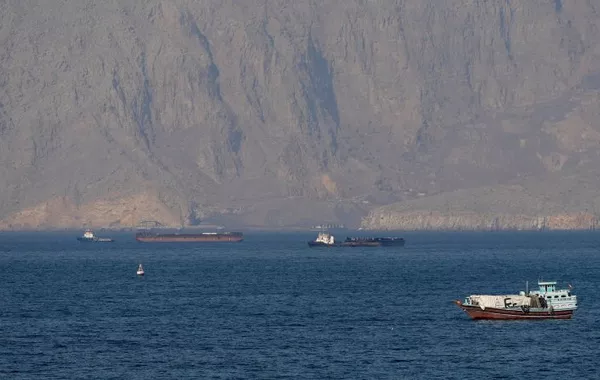
Iran has previously threatened to close the Strait of Hormuz, choking off one of the world’s most important energy shipping lanes. About a fifth of the world’s oil and liquefied natural gas travels through the channel.
Any disruption in the strait would send energy prices soaring, said Claire Jungman, the director of maritime risk and intelligence at Vortexa, a company that tracks oil and energy trade.
Iranian forces have conducted live drills in the strait in recent days, which some experts say is a signal that it could close the 90-mile-long waterway if war were to break out. Closing the channel would also harm Iran, restricting its ability to export oil to major customers like China.
“It will be like bringing down the roof on its head,” Mr. Vaez said.