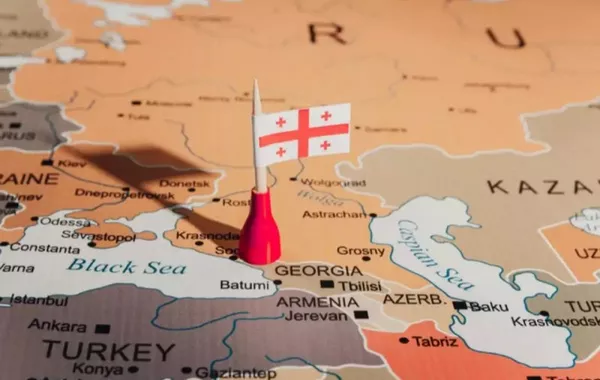
Azerbaijan Eyes Bigger Role in Balkan Energy Market Through Partnership with Serbia
The State Oil Company of Azerbaijan (SOCAR) and Serbia’s state-owned power utility EPS (Elektroprivreda Srbije) are expected to sign a shareholder agreement in the coming weeks to establish a joint venture for the construction of a gas-fired power plant in the Serbian city of Niš.
According to media reports, Serbian Minister of Mining and Energy Dubravka Đedović-Handanović announced the plans during a meeting with Niš Mayor Dragoslav Pavlović.
The Niš gas power plant is a strategic project being implemented within the framework of cooperation between Serbia and Azerbaijan. The relevant agreement was signed in February 2026 in Belgrade in the presence of the presidents of both countries. In early June, EPS and SOCAR signed the key terms of cooperation in Baku regarding the development, construction, and operation of the power plant, defining the main principles for establishing the joint company and the project's core commercial parameters.
Work on the project documentation is ongoing. The territorial development plan for the city of Niš has already been adopted and will serve as the basis for further project implementation. At the same time, negotiations are continuing on the shareholder agreement between EPS and SOCAR. Construction is expected to be completed by the end of 2030.
The decision to establish a joint venture between SOCAR and Serbia’s state-owned energy company EPS for the construction of the Niš gas power plant is far more significant than it may initially appear. This is not merely the construction of another energy facility in the Balkans. In reality, Azerbaijan is entering a new phase of its presence in Europe - moving from the role of an energy supplier to that of an investor and a full-fledged participant in the energy infrastructure of European states.
Over the past several years, Azerbaijan has steadily strengthened its position within Europe’s energy architecture. Today, the country supplies natural gas to numerous European nations, including Italy, Greece, Bulgaria, Romania, Hungary, Serbia, and others. However, the Niš project marks a new stage in SOCAR’s strategy. Whereas Baku previously acted primarily as a supplier of natural gas, the Azerbaijani state company is now becoming a co-owner of electricity generation assets in the European market. This enables it to control a much larger portion of the value chain - from gas production to electricity generation. Such a model has long been employed by the world’s leading energy corporations.
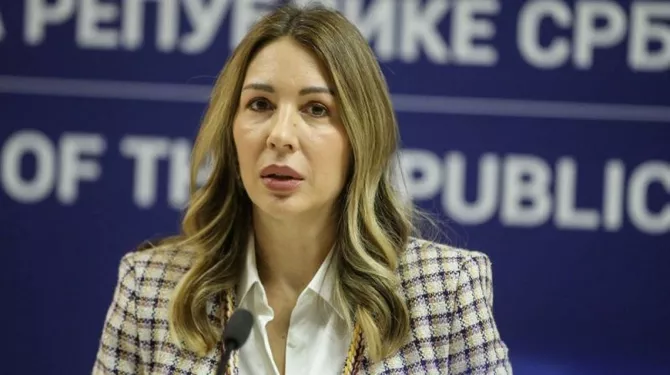
Serbian Minister of Mining and Energy Dubravka Đedović-Handanović. Getty Images
Serbia’s selection as a partner is no coincidence. Relations between Baku and Belgrade have experienced intensive growth in recent years. The presidents of Azerbaijan and Serbia maintain regular political dialogue, while energy cooperation has gradually become a central pillar of bilateral relations. Serbia seeks to diversify its energy sources. Previously heavily dependent on Russian supplies, the country has been compelled by geopolitical changes to seek additional options for ensuring its energy security. Azerbaijan has emerged as one of its most reliable partners.
Following the launch of the Serbia-Bulgaria interconnector, Belgrade gained access to Azerbaijani gas supplies through the Southern Gas Corridor. The new project now takes this cooperation to an entirely different level.
According to experts, Niš is becoming one of the key centers of Azerbaijan’s energy presence in the Balkans. Located in southern Serbia, the city has traditionally been regarded as one of the peninsula’s major transport and logistics hubs. Important road, railway, and energy corridors connecting Central Europe with the Eastern Mediterranean pass through the city. As a result, locating a modern gas-fired power plant there serves several purposes simultaneously, including strengthening the energy resilience of this part of Serbia, reducing reliance on outdated coal-fired facilities, improving the reliability of power supply for industrial zones, and optimizing the city’s district heating system.
It is worth noting that as the share of renewable energy continues to grow, European countries increasingly require backup generation capacity capable of rapidly compensating for fluctuations in solar and wind power production. Gas-fired power plants are widely viewed within the European Union as one of the most practical solutions to this challenge.
Against the backdrop of competing interests in the Balkans, Azerbaijan - a relatively small South Caucasus nation - is steadily transforming into an independent energy actor capable of offering regional countries not only energy resources but also long-term investment. Importantly, cooperation with Azerbaijan is particularly attractive for Serbia because a project with SOCAR allows Belgrade to diversify its foreign economic partnerships without being forced to choose between competing geopolitical centers of influence. Under different circumstances, Serbia might have faced precisely such a dilemma.
For Baku, meanwhile, the project serves as an additional instrument for strengthening not only its energy influence but also its political presence in the Balkans and expanding its network of strategic partnerships across Europe. It is no coincidence that the project agreement was signed with the direct involvement of the presidents of both countries. This demonstrates that the initiative is viewed not merely as a commercial transaction but as an element of a long-term interstate strategy.
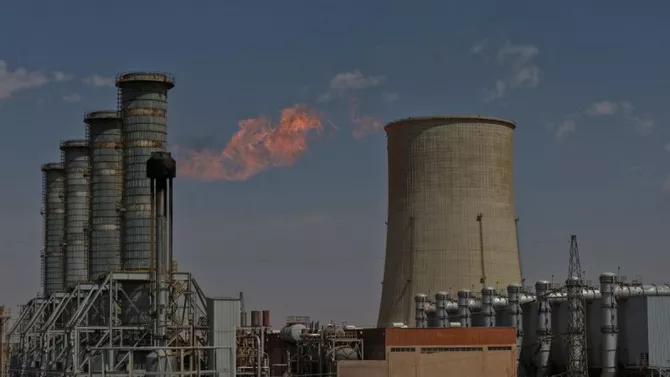
Photo: Getty Images
The European Commission has repeatedly described Azerbaijan as a reliable partner in ensuring Europe’s energy security. The memorandum signed between Baku and the European Union in July 2022 envisages a further increase in Azerbaijani gas supplies to the European market. The construction of the Niš power plant can therefore be seen as a logical continuation of that policy.
From an economic perspective, the project is important for both sides. For Serbia, it means attracting foreign investment, creating new jobs, modernizing energy infrastructure, and reducing the risk of electricity shortages. For Azerbaijan, it represents an expansion of its presence in the European market, guaranteed demand for Azerbaijani gas, and revenue streams not only from gas exports but also from electricity production based on those supplies.
The project will also strengthen SOCAR’s position on the international stage. If construction is completed by 2030 as planned, Niš could become only the first step in a broader Balkan strategy for the Azerbaijani state company. Similar initiatives may eventually be pursued in other countries that already receive, or plan to receive, Azerbaijani gas.
Thus, the construction of the Niš gas-fired power plant represents an important milestone in the development of the Azerbaijani-Serbian strategic partnership and in Azerbaijan’s transition to a new stage of energy cooperation with Europe.
By Tural Heybatov