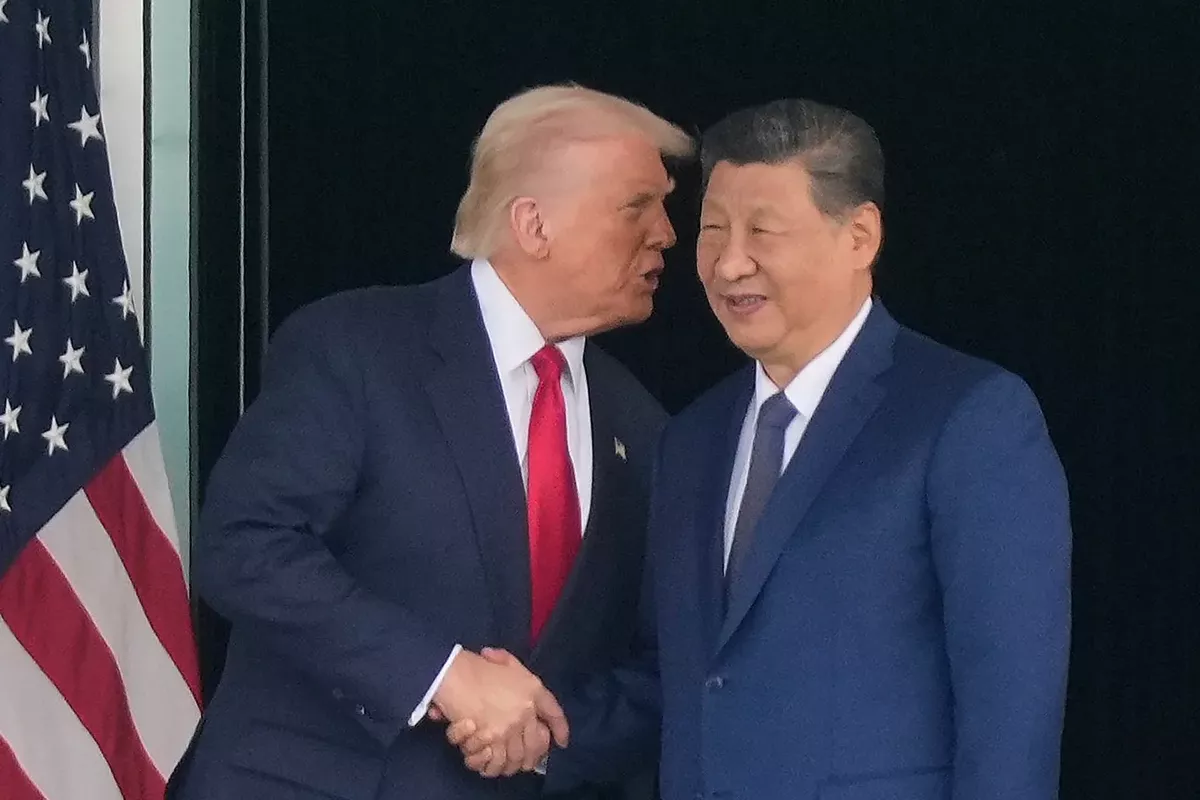
Donald Trump's renewed allegations of Chinese interference in US elections have come at a particularly sensitive moment, as Washington and Beijing seek to preserve a fragile pause in their trade and political confrontation. Ahead of a possible meeting between Trump and Chinese President Xi Jinping in September, the US president has reintroduced one of the most politically sensitive issues in bilateral relations: allegations that a foreign power sought to influence political change in the United States.
During a White House address on 16 July, Trump focused heavily on China while discussing election security and newly declassified intelligence material. The president claimed that Beijing had carried out what he described as one of the largest breaches of voter data in US history, allegedly obtaining information relating to approximately 220 million American voters.
According to the administration, the compromised data included names, addresses, telephone numbers, party affiliations and other personal information that could potentially be used for political influence, intelligence operations or criminal activity.
Trump described the alleged breach as an unprecedented threat to election security. He also claimed that Chinese authorities had established a dedicated unit to process the acquired data and argued that US intelligence officials had known about the scale of the incident but concealed the information from both him and the American public.
The most politically charged part of Trump's address concerned China's alleged efforts to prevent his re-election. He argued that the Chinese Communist Party viewed his presidency as a threat because of his confrontational approach towards Beijing, including tariffs, technological restrictions and efforts to reduce American economic dependence on China.
Trump cited intelligence reporting which, according to him, showed that by mid-2018 China had adopted a policy of mobilising domestic and international forces opposed to the US president in an effort to reduce his support, force him from office or prevent his re-election. He further alleged that Beijing sought to influence the 2018 midterm elections and later the 2020 presidential campaign.
The White House also released documents which, according to the administration, demonstrate the vulnerability of electronic voting systems, the scale of foreign cyber threats and Chinese access to American voter information.
However, an important distinction must be made between three separate issues: acquiring voter data, conducting political influence operations and directly manipulating votes or election results.
Even a major breach of voter databases does not, by itself, prove that a foreign government altered ballots, compromised vote-counting systems or changed the outcome of an election. Personal information may be used for disinformation, targeted political messaging, espionage or intimidation, but these activities are fundamentally different from direct interference in election infrastructure.
This distinction represents the central weakness in Trump's argument.
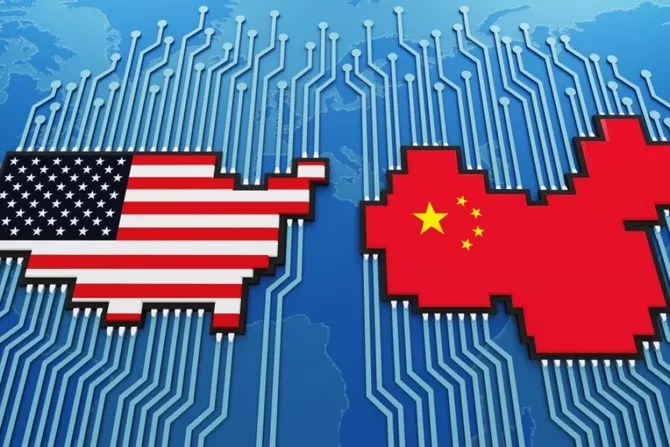
Source: South China Morning Post
A declassified assessment by the US intelligence community, published in March 2021, concluded with high confidence that China had not conducted an interference operation aimed at changing the outcome of the 2020 presidential election. The assessment also found no evidence that Beijing had attempted to manipulate election infrastructure or secretly finance candidates or political parties.
At the same time, the report acknowledged disagreement within the intelligence community. One senior cyber intelligence official argued that China had taken limited steps intended to damage Trump's re-election prospects.
In other words, there was some disagreement over whether Beijing had engaged in political influence operations, but no established evidence that China had altered votes or directly changed the election result.
That does not mean Chinese activity in the cyber and information spheres is an invented problem.
More recent US intelligence assessments have repeatedly described China as one of the most serious and persistent cyber espionage threats facing the United States. Washington has accused Beijing of attempting to shape public debate, pressure political figures, collect sensitive information and influence individual election campaigns, especially when candidates are viewed by the Chinese leadership as particularly hostile to China.
Such activities fall within the broader realm of political influence and strategic pressure. Moving from that category to the claim that China successfully manipulated a national election requires a much stronger and more transparent body of evidence.
Beijing predictably rejected Trump's allegations, describing them as politically motivated fabrications and reiterating its longstanding position that China neither interferes nor intends to interfere in US elections.
Behind the official rhetoric, however, Beijing will be assessing not only Trump's words but also whether the allegations lead to concrete measures.
China will be watching closely for new sanctions, investigations, restrictions targeting Chinese technology companies or attempts to revise trade arrangements reached during recent negotiations. As long as Trump's allegations remain primarily rhetorical and directed at a domestic audience, Beijing may choose to limit its response to official condemnations.
The situation would change considerably if the administration translated the allegations into policy.
Trump has not yet announced any punitive measures against China in connection with the alleged election interference. His address appeared to be aimed primarily at a domestic audience as the country moves closer to the November congressional elections.
The president once again called for stricter election rules, stronger citizenship verification and broader voter identification requirements. Within this political narrative, China serves two purposes.
First, the alleged foreign threat allows Trump to present election reform as a national security issue rather than merely a partisan dispute. Second, it reinforces his image as a leader confronting both an external adversary and what he portrays as an unaccountable domestic establishment.
Yet even domestically driven rhetoric can have serious foreign policy consequences.
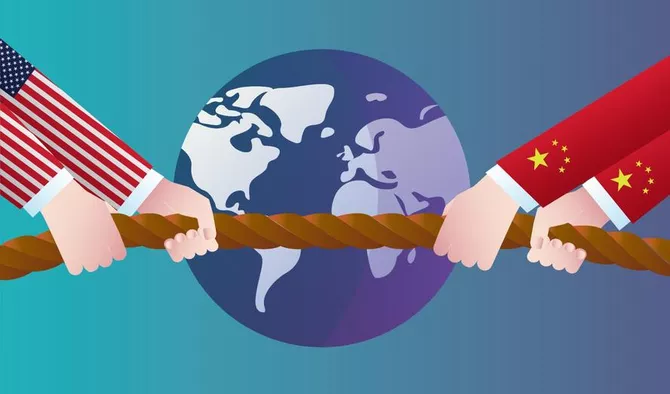
Following the sharp escalation in the trade conflict, Washington and Beijing managed to establish a temporary pause. The United States stepped back from some of its most severe tariff threats, while China eased restrictions on the export of rare earth materials essential to American manufacturing, electronics and defence production.
Source: rand.org
The truce did not resolve the structural disputes between the two powers. Fundamental disagreements remain over technology restrictions, industrial subsidies, Taiwan, semiconductors, market access, supply chains and military competition in the Indo-Pacific.
Nevertheless, the pause reduced the immediate risk of another damaging round of economic escalation.
Previous talks between Trump and Xi also failed to produce a major breakthrough. The two leaders demonstrated a willingness to maintain dialogue and reached several limited understandings, but the underlying sources of tension remained unresolved.
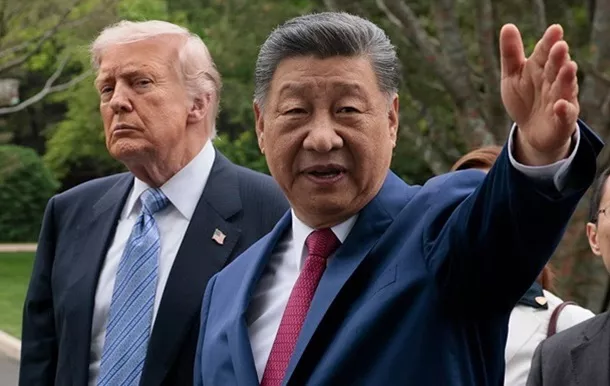
Against this backdrop, a possible Trump-Xi meeting in September has taken on greater significance. Such a summit could provide an opportunity to extend the trade truce, establish new negotiating mechanisms and prevent political disputes from escalating into another tariff confrontation.
However, Trump's election interference allegations create a political dilemma for Xi Jinping.
If Xi travels to meet Trump shortly after the US president publicly accused China of undermining American democracy, critics within China could portray the visit as a sign of weakness. Chinese nationalism and the Communist Party's emphasis on sovereignty make it difficult for Beijing to appear to ignore accusations of this magnitude.
On the other hand, postponing or cancelling the meeting would eliminate one of the few remaining channels of personal diplomacy capable of stabilising the relationship.
Beijing may therefore pursue a middle course: firmly rejecting the allegations while avoiding an immediate link between the controversy and ongoing trade negotiations. Chinese leaders are likely to wait and see whether Trump's rhetoric develops into concrete policy.
Trump also faces a contradiction of his own.
He frequently emphasises his personal relationship with Xi, describes the Chinese president as a strong and capable negotiator, and believes direct leader-to-leader diplomacy can produce economic concessions. At the same time, his domestic political strategy depends on demonstrating toughness towards China.
The result is a two-track approach: public confrontation for American voters and transactional diplomacy behind closed doors.
This approach can work only as long as Beijing is willing to separate rhetoric from action.
China may tolerate harsh statements if they are not accompanied by measures that directly harm its strategic interests. But if pressure from Congress, Trump's political base or national security officials leads to new sanctions, financial restrictions or additional technology controls, the scope for compromise will narrow rapidly.
Beijing could respond by tightening export controls, reducing purchases of American goods, restricting access for US companies or suspending preparations for the September meeting.
At the same time, a complete rupture remains undesirable for both sides.
The Trump administration needs relative stability in prices, supply chains and industrial production ahead of the congressional elections. China, meanwhile, needs predictable access to the American market and wants to avoid another wave of tariffs and technological restrictions at a time when its economy is under significant pressure.
This mutual vulnerability remains the strongest safeguard against immediate escalation.
Trump's speech should therefore be viewed not as the formal announcement of a new China policy but as a politically significant signal.
Source: korrespondent.net
The president appears to be using the issue of foreign interference to mobilise supporters and advance his domestic election agenda without completely closing the door to negotiations with Xi. Yet relations between major powers rarely allow domestic rhetoric to remain entirely separate from foreign policy.
The more frequently China is used as a tool in American political disputes, the more difficult it becomes for Beijing to maintain even the appearance of strategic trust.
The possible September summit, should it take place, will test not only the personal relationship between Trump and Xi but also whether the world's two largest economies can manage their rivalry without resolving it.
Washington and Beijing may extend the trade truce if both conclude that the economic cost of renewed confrontation would be too high. However, allegations that China attacked the legitimacy of the American political system go far beyond disputes over tariffs and exports.
They touch on sovereignty, state legitimacy and the international reputation of the Chinese government-issues on which Beijing is far less likely to compromise.
Trump is probably calculating that Xi will distinguish between campaign rhetoric and actual policy. That may indeed prove to be the case.
But the current truce remains fundamentally fragile because it is not based on stable institutions, enforceable agreements or shared rules. Instead, it rests on personal understandings, temporary pauses and a mutual desire to avoid the economic costs of renewed confrontation.
A single new sanction, an unexpected escalation or a cancelled summit could quickly return the United States and China to confrontation, undoing the fragile diplomatic pause they have managed to establish.
By Murad Samedov