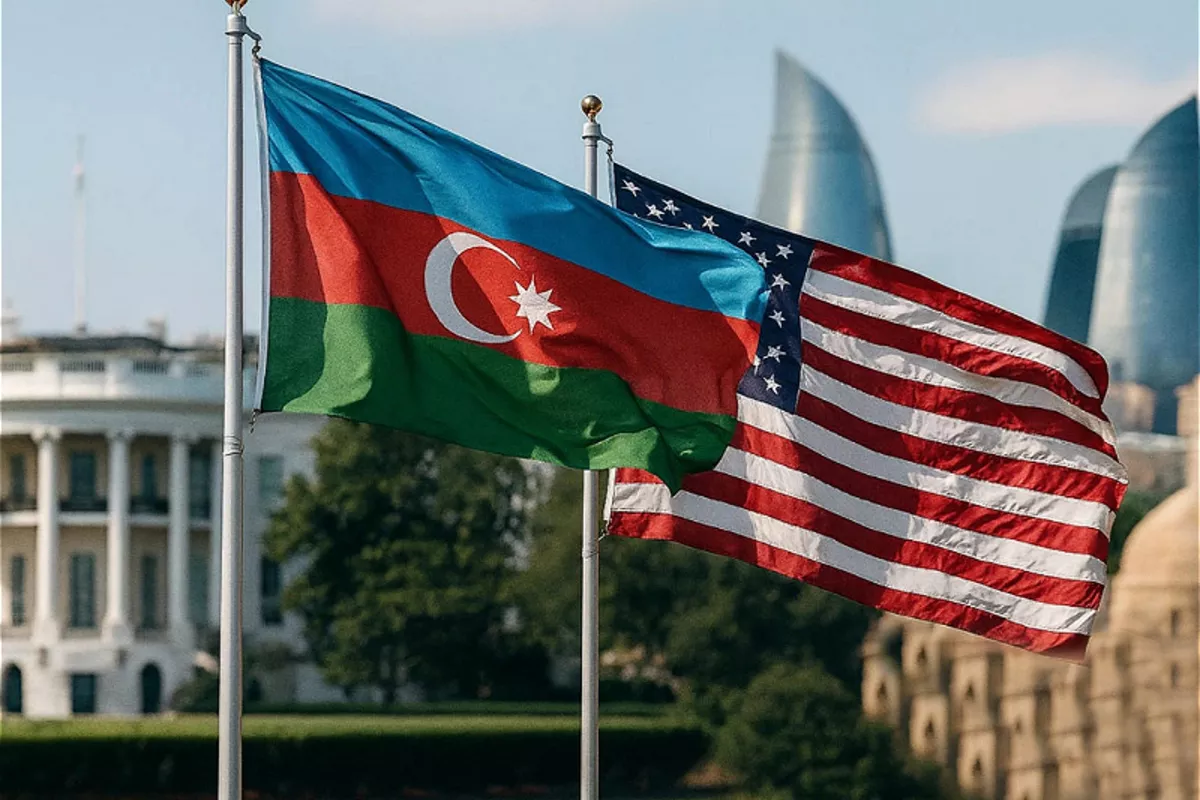
President Ilham Aliyev’s address at the 4th Shusha Global Media Forum marked an important political statement on a qualitatively new stage in relations between Baku and Washington. Responding to questions from foreign journalists, the head of state spoke at length about the development of Azerbaijani-American cooperation, the role of the Donald Trump administration in strengthening bilateral dialogue, and the need for the complete repeal of the discriminatory Section 907 of the Freedom Support Act.
A turning point in relations between the two countries came with President Ilham Aliyev's historic visit to the United States in August 2025. The visit extended well beyond protocol meetings and the customary exchange of diplomatic statements. It laid the foundations for elevating Azerbaijani-American relations to the level of a strategic partnership and opened a new chapter in cooperation between Baku and the Donald Trump administration.
The agreements reached in Washington demonstrated that both sides were prepared to move from ad hoc engagement to a systematic, long-term partnership. The new agenda placed political dialogue, energy security, transport connectivity, trade, investment, digital technologies, artificial intelligence and defence cooperation at its core. As a result, the United States began to view Azerbaijan not only as an important regional partner but also as an independent actor shaping the future of the South Caucasus and the wider Eurasian region.
A logical continuation of the agreements reached during Ilham Aliyev's visit was US Vice President JD Vance's subsequent visit to Baku. The signing of the Joint Statement on the Establishment of a Strategic Partnership confirmed the seriousness of both sides' intentions and demonstrated that the agreements reached by the presidents of Azerbaijan and the United States were being translated into practical action.
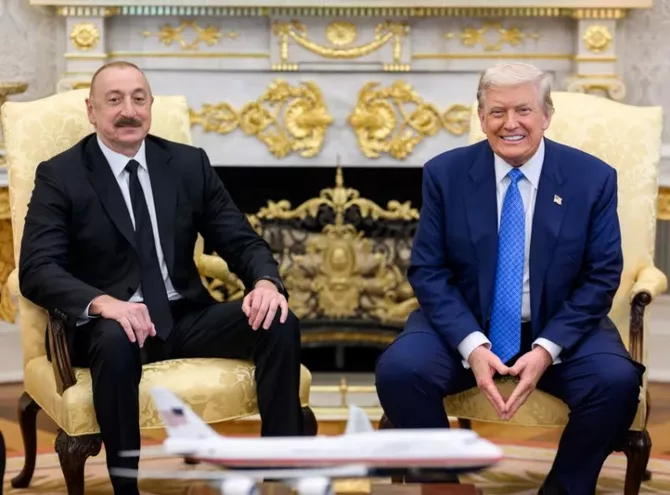
Photo: AZERTAC
For the first time in many years, Azerbaijani-American relations began to be built on the principles of mutual respect, shared interests and the implementation of concrete commitments. This distinguishes the current stage from earlier periods, when cooperation often depended on Washington's immediate priorities and was accompanied by political restrictions widely regarded in Azerbaijan as unfair.
One of the clearest examples of this injustice was Section 907 of the Freedom Support Act. Adopted by the US Congress in 1992, it restricted direct US government assistance to Azerbaijan on the grounds that Baku was allegedly imposing a blockade on Armenia.
From the outset, the amendment lacked an objective basis. In reality, Azerbaijan had been subjected to the occupation of its internationally recognised territories, the displacement of hundreds of thousands of its citizens, and the destruction of its towns and villages. Yet instead of sanctioning the aggressor, US lawmakers imposed restrictions on the country that had become the victim of occupation.
Section 907 became a striking example of double standards and political discrimination. Azerbaijan was the only former Soviet republic subjected to such restrictions by the United States. For decades, this fuelled mistrust of Washington's policy within Azerbaijani society.
The role of former US President Joe Biden in the adoption of the amendment is also noteworthy. While serving as a senator, he supported measures directed against Azerbaijan. His administration later pursued policies that caused serious damage to Azerbaijani-American relations.
Washington repeatedly demonstrated that it regarded Section 907 not as a principled legal mechanism but as an instrument of political pressure. When the United States required Azerbaijan's support for operations in Afghanistan, the restrictions were waived. Azerbaijan provided vital transport and logistical support, while Azerbaijani servicemen served alongside their American counterparts.
However, following the withdrawal from Afghanistan, the Biden administration reverted to a more restrictive policy. In Baku, this was widely viewed as a sign of inconsistency and ingratitude. It reinforced the perception that the previous US administration was willing to cooperate with Azerbaijan when doing so served its immediate interests, but was unwilling to rectify what Azerbaijan regarded as a fundamental injustice in bilateral relations.
Today, Section 907 has lost even its formal justification. Azerbaijan has unilaterally removed all transit restrictions affecting Armenia. Goods now transit through Azerbaijani territory, transport links are expanding, and Baku continues to demonstrate its readiness to normalise economic and humanitarian ties.
The arguments used more than three decades ago to justify the adoption of the amendment have therefore been overtaken by events. Azerbaijan is not obstructing transit to Armenia; on the contrary, it is facilitating regional connectivity and promoting the conditions necessary for lasting peace.
Against this backdrop, the complete repeal of Section 907 has become a matter of political responsibility for the US Congress. American lawmakers now have an opportunity to acknowledge past mistakes, abandon an outdated and discriminatory measure, and align US legislation with today's geopolitical realities.
Retaining an amendment that has lost both its legal and political rationale runs counter to the spirit of the strategic partnership between Azerbaijan and the United States. Its repeal would not constitute a concession to Baku, but rather the correction of a legislative anomaly that has persisted for more than three decades.
President Ilham Aliyev also devoted considerable attention to President Donald Trump's approach to conflict resolution. The Azerbaijani leader described him as a statesman committed to peace and determined to help resolve conflicts in different parts of the world. Trump has made a significant contribution to resolving eight conflicts, including helping bring negotiations between Azerbaijan and Armenia to their final stage.
The current US president's approach differs fundamentally from that of the previous administration. The Biden administration's policies effectively preserved the South Caucasus as a region marked by unresolved conflicts, mutual distrust and persistent confrontation. Such conditions enabled outside powers to retain leverage over the countries of the region while hindering the emergence of an independent regional security architecture.
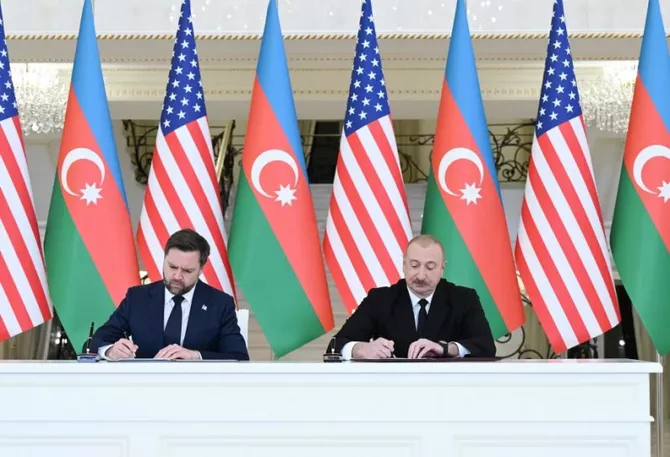
Photo: AZERTAC
By contrast, Donald Trump views peace not as a threat to influence but as a catalyst for new economic and political opportunities. The resolution of conflicts creates opportunities for transport corridors, trade, investment, energy cooperation and stronger regional stability.
This vision closely aligns with Azerbaijan's own strategic priorities. Baku has consistently advocated transforming the South Caucasus into a region defined by peace, economic development and connectivity.
Azerbaijan has little interest in perpetuating confrontation. Instead, it possesses the resources and geographical advantages needed to develop the region into a major transport, energy and trade hub linking East and West.
President Ilham Aliyev's address in Shusha demonstrated that relations between Azerbaijan and the United States are undergoing a profound transformation. The previous era of sanctions, double standards and political pressure is giving way to a strategic partnership founded on mutual respect and shared interests.
To consolidate this new phase, the US Congress must now take the decisive step of fully repealing Section 907. Doing so would close one of the most contentious chapters in the history of bilateral relations and demonstrate that Washington is genuinely committed to building an equal, long-term partnership with Azerbaijan.