A succession of crises along the world’s most important maritime routes is changing the very meaning of transport security. Only a few years ago, the Middle Corridor was viewed mainly as a promising but more expensive alternative to routes through Russia and the Suez Canal. Today, the question is framed differently: states and companies are beginning to calculate not only the cost of transportation, but also the price of complete dependence on a single route.
Attacks on tankers near Novorossiysk, the disruption of traffic through the Strait of Hormuz and threats to shipping around the Bab el-Mandeb Strait have shown that several critical energy and trade arteries can come under pressure at the same time. For Kazakhstan, Azerbaijan and the wider Central Asian region, this is not an abstract global crisis but a direct warning: an export model built around one dominant route is becoming strategically vulnerable.
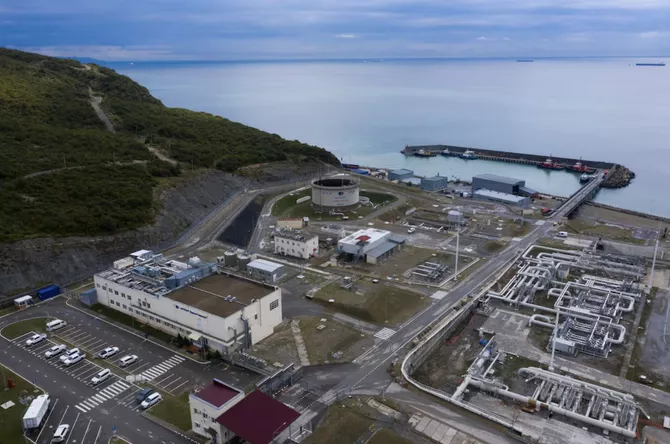
This problem became particularly visible after oil loading operations at the Caspian Pipeline Consortium terminal near Novorossiysk were suspended. The CPC transports more than 80% of Kazakhstan’s oil exports through a pipeline stretching more than 1,500 kilometres from the Tengiz field across Russian territory to the Black Sea.
Credit: Reuters
The system carries crude not only from Kazakh producers but also from international energy companies including Chevron, ExxonMobil, Eni, Shell and TotalEnergies.
Following drone attacks on tankers and the temporary closure of the terminal, Kazakhstan was forced to sharply reduce production. According to Reuters, oil and gas condensate output fell on one day to approximately one million barrels per day, compared with an average June level of 2.16 million barrels per day.
The shutdown of an export terminal therefore almost immediately translated into production restrictions inside Kazakhstan itself.
This is the central danger of Kazakhstan’s dependence on the CPC. The country can increase production at Tengiz, Kashagan and Karachaganak, attract tens of billions of dollars in investment and expand its role in the global energy market, but its physical ability to sell that oil still depends heavily on the security and uninterrupted operation of a single terminal on Russia’s Black Sea coast.
The vulnerability existed long before the latest attacks. CPC operations have repeatedly been restricted by adverse weather, technical damage, Russian regulatory inspections and attacks on infrastructure.
In late 2025 and early 2026, Kazakhstan was already forced to redirect part of its crude to China, through the Atyrau-Samara pipeline, via the Baku-Tbilisi-Ceyhan route and to domestic refineries. Yet these measures allowed Kazakhstan to redistribute only limited volumes rather than fully replace the CPC.
The statistics illustrate the scale of the imbalance. In the first half of 2025, only 5.9% of Kazakhstan’s oil exports bypassed Russian ports. During that period, Kazakhstan exported 32.6 million tonnes of oil, while only 785,000 tonnes, or roughly 34,000 barrels per day, were transported through the Baku-Tbilisi-Ceyhan route.
For the whole of 2025, Kazakh oil shipments through BTC amounted to around 1.263 million tonnes. By comparison, normal CPC flows are measured at more than one million barrels per day.
Even a multiple increase in Trans-Caspian shipments would therefore be unable to fully compensate for a shutdown of the Russian route in the near future.
The main bottleneck is not necessarily the Baku-Tbilisi-Ceyhan pipeline itself. Its design capacity is approximately 50 million tonnes per year, or close to one million barrels per day.
The more serious limitations emerge earlier in the supply chain: transporting oil from Kazakhstan’s fields to Aktau, the capacity of port infrastructure, the availability of tankers on the Caspian Sea, weather conditions, transshipment procedures in Baku and crude quality requirements for oil entering the BTC system.
This is why discussions about the Middle Corridor require an important clarification. The route cannot be viewed as a single pipeline capable of replacing the CPC overnight.
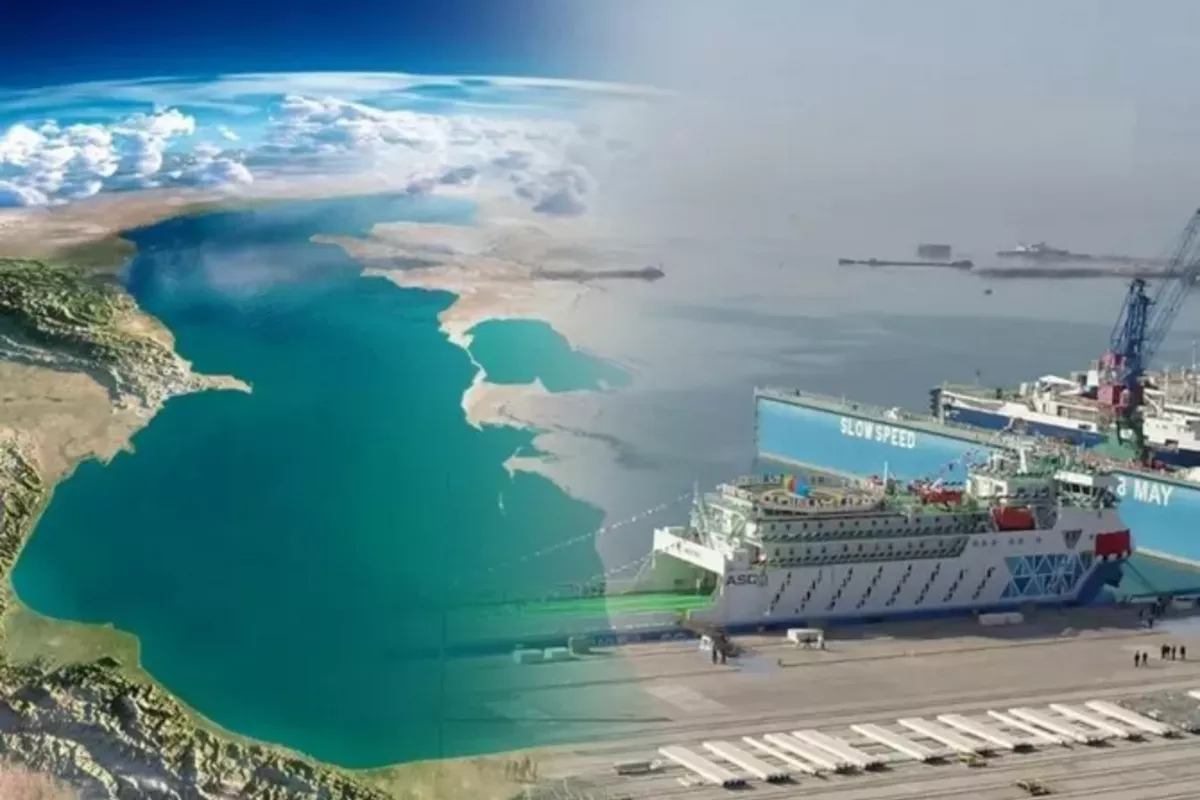
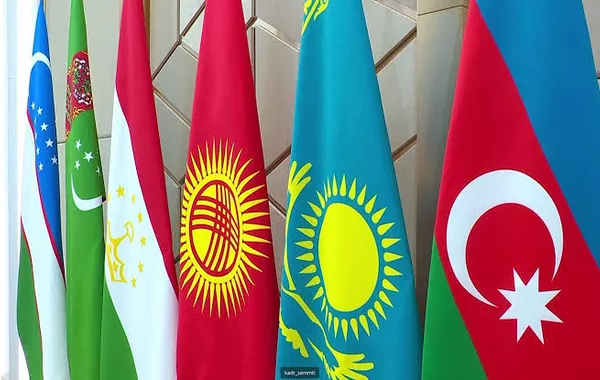
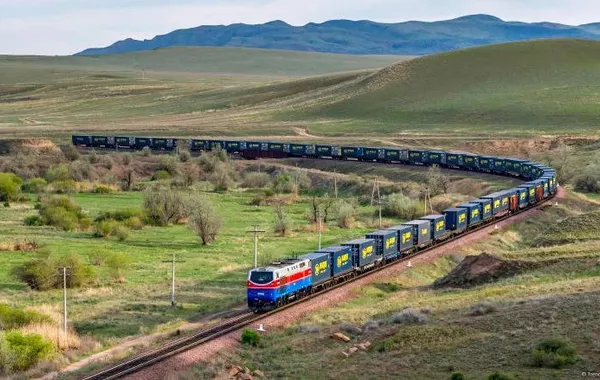
The Middle Corridor is a broader system of railways, ports, highways, ferry services and energy infrastructure connecting China and Central Asia with Azerbaijan, Georgia, Türkiye and European markets.
Its value lies not in immediately replacing existing routes, but in creating several complementary channels.
Oil can move across the Caspian and then through the BTC pipeline. Containers can be transported through Aktau or Kuryk to Baku and then by rail across the South Caucasus. Other cargoes can move through Georgian ports or directly along the Baku-Tbilisi-Kars railway into Türkiye and Europe.
The crises in the Strait of Hormuz and Bab el-Mandeb are increasing the importance of this system far beyond Kazakhstan.
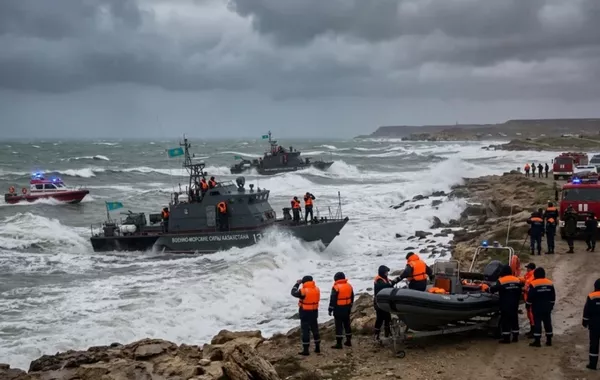
Because of security threats, vessels have been forced to reroute, switch off transponders, wait for conditions to improve or sail around Africa.
For oil transported from Saudi Arabia’s Yanbu port to Asia, an alternative route through the Suez Canal, the Mediterranean, Gibraltar and the Cape of Good Hope could increase the length of a voyage from 19 to 48 days.
Fuel costs alone could rise from $1.26 million to $2.87 million, excluding approximately $1 million in Suez Canal transit fees.
The Middle Corridor cannot replace the Strait of Hormuz as a route for Middle Eastern oil exports. It can, however, absorb a share of containerised and high-value cargo moving between China and Europe that would normally travel by sea through the Indian Ocean, the Red Sea and the Suez Canal.
The higher the insurance premiums, freight costs and risk of maritime delays become, the more competitive the land-and-sea route through Central Asia and the South Caucasus appears.
Growth is already visible. Cargo volumes along the Trans-Caspian International Transport Route increased from 2.76 million tonnes in 2023 to 4.48 million tonnes in 2024.
In 2025, the figure stood at 4.12 million tonnes, while container traffic reached approximately 77,000 TEU. The target is to increase this figure to 300,000 TEU by 2029.
Yet these volumes remain small compared with global maritime trade or the northern railway route through Russia.
The Middle Corridor is still highly multimodal. Cargo must be transferred several times between railways and ships. Every additional transshipment raises costs, creates a risk of delays and requires coordination between operators in several countries.
There are also significant infrastructure limitations. The combined capacity of the Aktau and Kuryk ports is estimated at around 22 million tonnes per year, but this capacity is divided among oil, containers, ferry traffic and other cargo.
The first phase of a container hub in Aktau, with a capacity of 140,000 TEU per year, has already been launched. Following the second phase, scheduled for 2027-2028, capacity is expected to rise to 240,000 TEU.
Kazakhstan has also ordered six new container vessels, but the first four are not expected to be delivered until 2027, with another two scheduled for 2028.
This means political demand for the Middle Corridor is growing faster than its physical capacity.
Without expanding the Caspian fleet, modernising railway approaches, digitalising customs procedures and introducing coordinated tariffs, the route may face congestion precisely when global markets need it most.
Investment is gradually increasing. In February 2026, the World Bank approved an $846 million guarantee intended to mobilise $1.41 billion in long-term financing for the development of Kazakhstan’s section of the Middle Corridor.
The project includes the construction of the 322.3-kilometre Moyynty-Kyzylzhar railway line. It is expected to shorten the route by 149 kilometres, remove a major detour and increase network capacity.
According to the World Bank, if the necessary investments and reforms are implemented, freight volumes along the Middle Corridor could triple to around 11 million tonnes by 2030, while delivery times could be cut by half.
Even this scenario, however, would not transform the route into a complete substitute for maritime trade or the CPC.
Its primary function is diversification and resilience, not the displacement of all other routes.
For Kazakhstan, the strategic objective should not be to completely abandon the Russian route, which would be technically and economically unrealistic in the foreseeable future.
Instead, Astana should gradually reduce its critical dependence on it.
Even the ability to redirect 15-20% of exports during an emergency would give Kazakhstan significantly more room for manoeuvre than under the current model, in which the shutdown of a single terminal can lead to a dramatic fall in national production.
Azerbaijan, meanwhile, has an opportunity to strengthen its role as the principal transport and energy hub connecting Central Asia with Europe.
Baku possesses the BTC pipeline, the Baku-Tbilisi-Kars railway, the Port of Alat and access to Georgian and Turkish infrastructure.
An increase in Kazakh and Uzbek cargo could transform these assets from national infrastructure into the foundation of a much broader Eurasian network.
Türkiye, in turn, is becoming the final connecting link, providing access both to the Mediterranean through Ceyhan and to the European railway system.
For this reason, the expansion of the Middle Corridor is not merely a logistics project. It is part of a broader redistribution of geoeconomic influence among Russia, Central Asia, the South Caucasus and Türkiye.
The route also faces risks of its own.
It crosses the Caspian Sea, depends on political stability in the South Caucasus and requires coordinated action by Kazakhstan, Azerbaijan, Georgia and Türkiye.
A further escalation in the Black Sea could affect Georgian ports, while political crises or border closures could disrupt overland sections.
The Middle Corridor is not a completely risk-free route. It merely spreads risk across several directions instead of concentrating it at a single point.
This is the principal lesson of the crises in Novorossiysk, the Strait of Hormuz and Bab el-Mandeb.
In today’s world, there are no fully protected transport arteries. Security is not achieved by searching for one perfect route, but by creating a network of alternatives through which cargo can be quickly redirected.
The Middle Corridor is not yet capable of fully replacing the Russian route for Kazakh oil or the maritime routes connecting Asia and Europe.
But it is no longer a secondary project.
It is becoming a strategic insurance mechanism for states that do not want their exports, budget revenues and economic growth to depend on the security of a single port, a single strait or a single political decision.