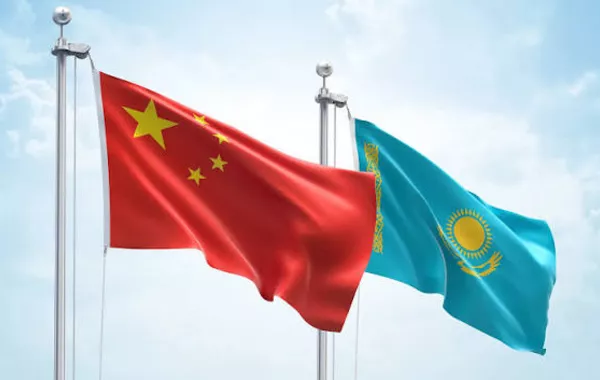
The state visit to Kazakhstan by Sultan Haitham bin Tariq of Oman on 6 October 2026 may initially appear to be another step in Astana’s growing engagement with the Gulf states. Yet the substance of the talks points to something more significant. Kazakhstan and Oman are attempting to build a relationship around three mutually reinforcing elements: capital, resources and connectivity.
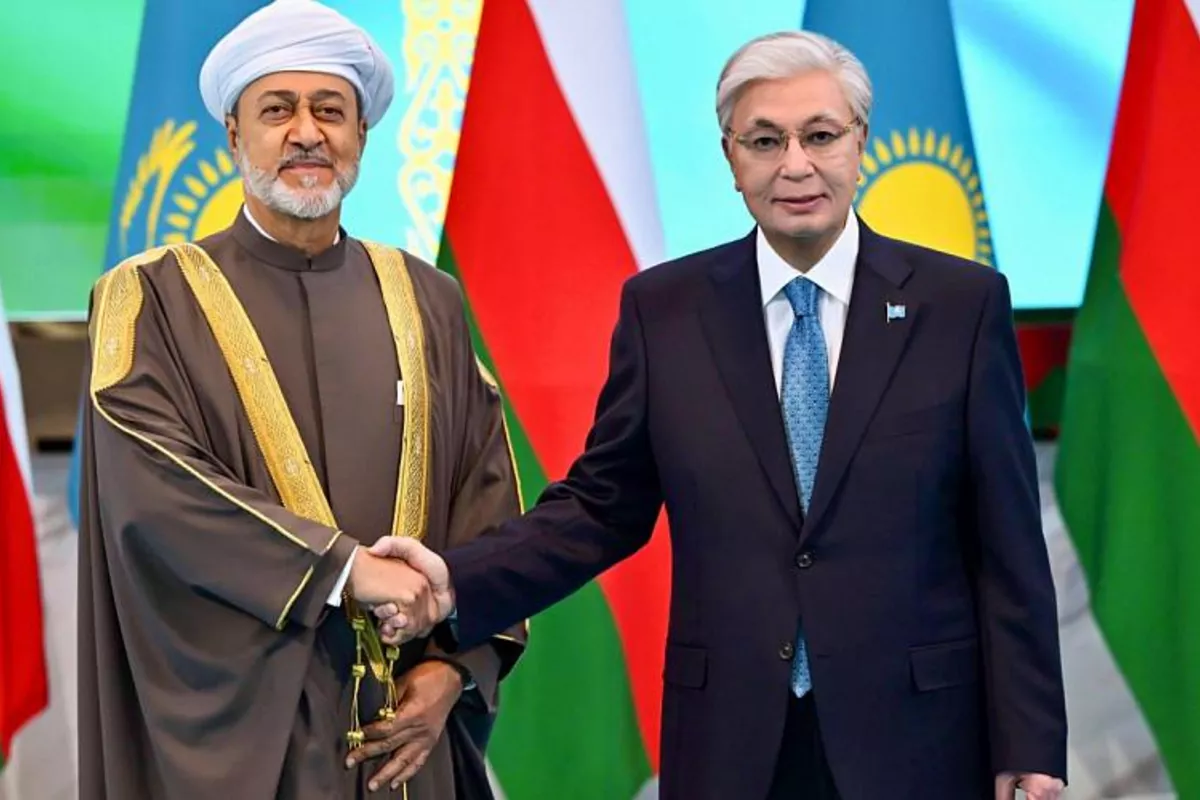
The visit marked the Omani Sultan’s first trip to Kazakhstan and his first visit to Central Asia as head of state. The negotiations produced a broad package of agreements covering investment, energy, transport, aviation, business cooperation and several other sectors.
The number of documents signed, however, is less important than the changing nature of the relationship itself.
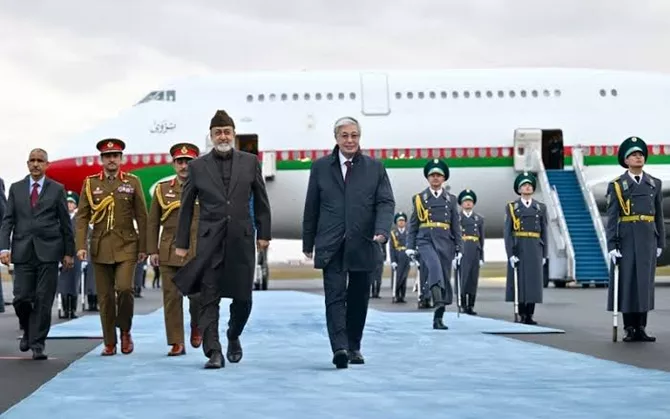
photo: Kazinform
Why Are Kazakhstan and Oman Moving Closer Now?
Kazakhstan has been steadily expanding its economic engagement with the Gulf states. The logic is pragmatic. The country needs new sources of long-term capital, technology and alternative routes to international markets.
Oman, meanwhile, is pursuing its own economic diversification strategy and looking for opportunities beyond the traditional markets of the Middle East. Central Asia represents a relatively new economic frontier for Muscat, and Kazakhstan - with the region’s largest economy, substantial natural resources and a strategic position between China, Russia, Europe and the Caspian Sea - is a natural entry point.
The October visit therefore should not be viewed as an isolated diplomatic event. It represents a transition from political engagement towards the creation of mechanisms through which economic cooperation can be implemented.
Investment as the Foundation of the Relationship
One of the most important outcomes was an agreement on the promotion and reciprocal protection of investments. At the same time, Kazakhstan and the Oman Investment Authority moved towards establishing a joint investment mechanism.
This is significant because it shifts the relationship away from isolated projects towards a more institutionalised model of capital allocation.
Potential areas of cooperation already include natural resources, manufacturing, food production, healthcare, renewable energy, logistics, tourism, mining and artificial intelligence.
For Kazakhstan, this offers another potential source of long-term Gulf capital at a time when Astana is actively seeking to diversify its investment base.
Nevertheless, expectations should remain measured. Investment agreements and joint funds create infrastructure for future capital flows; they do not automatically generate them. The real test will be how quickly these political commitments translate into financed projects.
Oil Remains Important
Energy formed another major part of the negotiations.
KazMunayGas and OQ Exploration & Production agreed to develop cooperation in oil and gas exploration and production. The Dunga oil field also occupied an important place in the broader economic agenda.
The project matters beyond the value of a single oil asset. For foreign investors, the resolution of long-running issues surrounding Dunga can serve as an indicator of Kazakhstan’s ability to resolve complex disputes involving major resource projects and return them to a new investment cycle.
At the same time, Kazakhstan-Oman energy cooperation is beginning to extend beyond conventional hydrocarbons. Agreements also cover renewable energy and the application of artificial intelligence to geological exploration.
This is an important distinction. The emerging partnership is not simply another oil relationship between a Central Asian producer and a Gulf state. It is gradually expanding into technology, exploration and new energy.
The Most Strategic Issue May Be Logistics, Not Oil
In the longer term, the transport dimension of the negotiations may prove even more important.
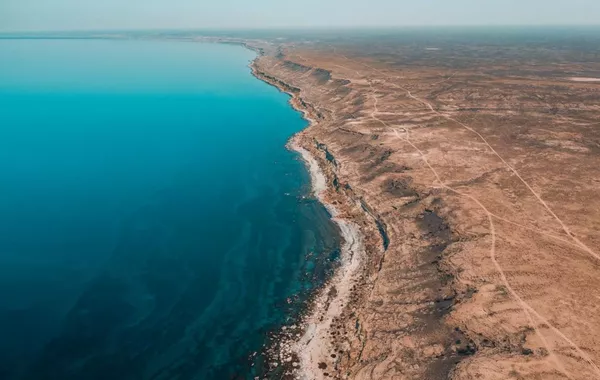
Kazakhstan’s geography is both an advantage and a structural limitation. The country sits at the centre of major Eurasian trade routes but has no direct access to the world’s oceans.
Oman faces almost the opposite geographical reality.
Its ports provide direct access to the Indian Ocean and, from there, to South Asia, the Gulf and East Africa.
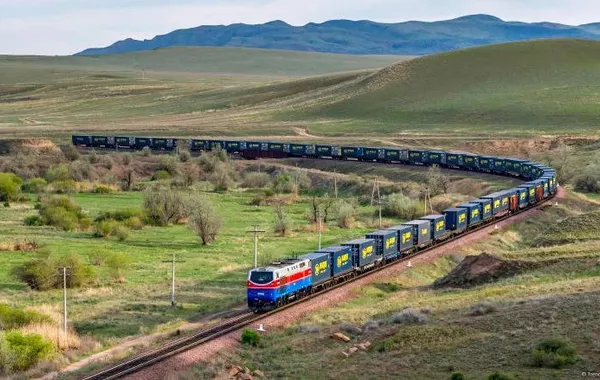
This complementarity explains the interest in developing trade routes linking Kazakhstan with Omani ports and connecting them to existing international transport corridors.
For Astana, this could become another component of its strategy to diversify external trade routes.
It should not be interpreted as a replacement for existing connections through Russia, China, the Caspian Sea or the Trans-Caspian International Transport Route. Kazakhstan is instead gradually constructing a network of alternatives that gives exporters greater flexibility depending on destination, commodity and geopolitical circumstances.
Within such a network, Oman could potentially become one of Kazakhstan’s southern maritime gateways.
A viable connection through Iran towards Omani ports could provide Kazakhstan with additional access to the Indian Ocean and improve connectivity with India, the Gulf states and East Africa.
This is also the area where the distance between political ambition and commercial reality remains greatest. A transport corridor only becomes economically meaningful when competitive tariffs, predictable customs procedures, sufficient cargo volumes and reliable rail and port infrastructure are in place.
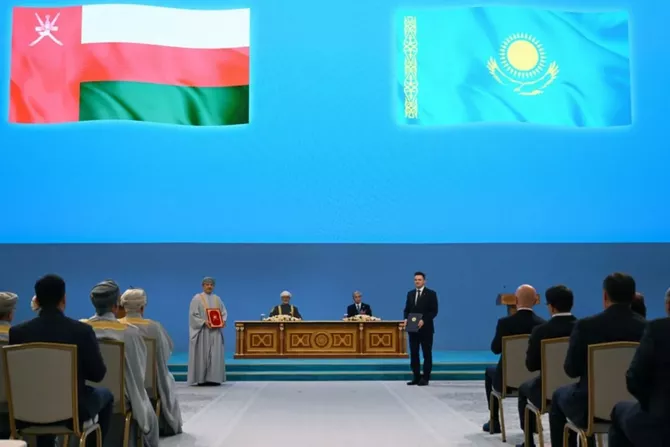
photo: Kazinform
From Governments to Businesses
The establishment of a Kazakhstan-Oman Business Council is therefore another important element of the visit.
Until now, bilateral economic relations have largely been driven from the top down - by governments, sovereign funds and national companies.
That model can launch major projects, but it is insufficient for building diversified trade.
A permanent business platform could help move the relationship towards direct contacts between private companies, particularly in agriculture, manufacturing, logistics and services.
This is particularly relevant for Kazakhstan’s non-resource exports.
Oman itself is not a very large consumer market. Its strategic value for Kazakhstan may instead lie in its ability to serve as a commercial and logistical gateway to the wider Gulf and Indian Ocean region.
What Does This Mean for Kazakhstan?
The results of the visit fit several broader Kazakh economic objectives.
First, Kazakhstan is continuing to diversify its sources of foreign capital. Astana is widening its investor base beyond its traditional partners and increasingly looking towards the sovereign wealth and investment institutions of the Gulf.
Second, Kazakhstan gains another potential partner in energy, mining and geological exploration.
Third, the geography of Kazakhstan’s transport policy is expanding. The country is increasingly looking beyond the traditional China-Europe axis and developing a second strategic dimension connecting Central Asia with the Gulf, South Asia and the Indian Ocean.
Finally, cooperation with Oman fits Kazakhstan’s broader multi-vector economic strategy.
The objective is not to replace one major partner with another. It is to increase the number of economic relationships, investment channels and transport options available to the country.
Why Does It Matter for Central Asia?
The regional implications may ultimately be more important than the bilateral ones.
For decades, Central Asia’s external economic geography was defined by a relatively limited number of corridors. That structure is now becoming considerably more complex.
The development of the Trans-Caspian route strengthens westward connectivity. Expanding trade with China reinforces the eastern direction. At the same time, Kazakhstan, Uzbekistan and other Central Asian states are increasingly exploring southern access through Iran, Afghanistan, Pakistan and the Gulf.
Oman could become part of this emerging geography.
If connections with Omani ports become commercially viable, the opportunity would not necessarily be limited to Kazakh exports. Kazakhstan could also strengthen its role as a transit hub for goods originating elsewhere in Central Asia and moving towards the Indian Ocean.
This gives Sultan Haitham bin Tariq’s first visit to Central Asia a broader significance.
Oman is entering a region where Gulf states are becoming increasingly visible investors and economic partners. Competition for opportunities in infrastructure, energy, agriculture, logistics and technology is likely to grow.
For Central Asian governments, this creates another source of capital and another opportunity to diversify their external economic relations.
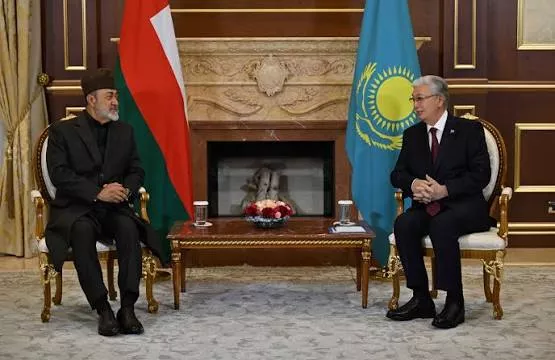
photo: Akorda
What Comes Next?
The Kazakhstan-Oman agreements should not yet be described as an economic breakthrough. Much of the architecture created during the visit remains at an early stage.
But this is precisely why the visit matters.
In a single negotiating cycle, the two countries connected investment, hydrocarbons, renewable energy, geological exploration, artificial intelligence, aviation, business cooperation and transport infrastructure within a relatively coherent economic framework.
The next stage will determine whether that framework produces measurable results.
If the joint investment mechanism begins financing projects, cooperation between OQ and KazMunayGas expands into new assets, and the proposed transport links through Oman acquire a viable commercial model, relations between Astana and Muscat could develop well beyond a conventional bilateral partnership.
For Kazakhstan, this would mean another source of capital and another route towards global markets.
For Oman, it would offer an opportunity to establish a stronger position in Central Asia’s largest economy and gain access to emerging Eurasian trade networks.
For Central Asia as a whole, the development reflects a broader transformation. The region is gradually moving away from being viewed merely as a space between larger powers and is increasingly becoming an economic junction in its own right - connecting Europe, China, the Gulf and South Asia.
The Kazakhstan-Oman partnership is still at an early stage. But its significance lies precisely in the direction it points: towards a Central Asia with more investors, more routes to global markets and greater room for economic manoeuvre.