Relations between Azerbaijan and Turkmenistan are gradually moving beyond diplomatic contacts and cultural affinity. Their practical substance is increasingly shaped by transport, energy and the search for new routes to international markets. For Baku, cooperation with Ashgabat forms part of a broader policy of engagement with Central Asia. For Turkmenistan, Azerbaijan is of interest primarily as a link in the transport infrastructure connecting the eastern shore of the Caspian Sea with the South Caucasus, Türkiye and Europe.
Yet the intensity of political engagement still considerably exceeds the scale of bilateral trade. This gap between diplomatic activity and economic results helps explain the current state of relations and the challenges the two countries face.
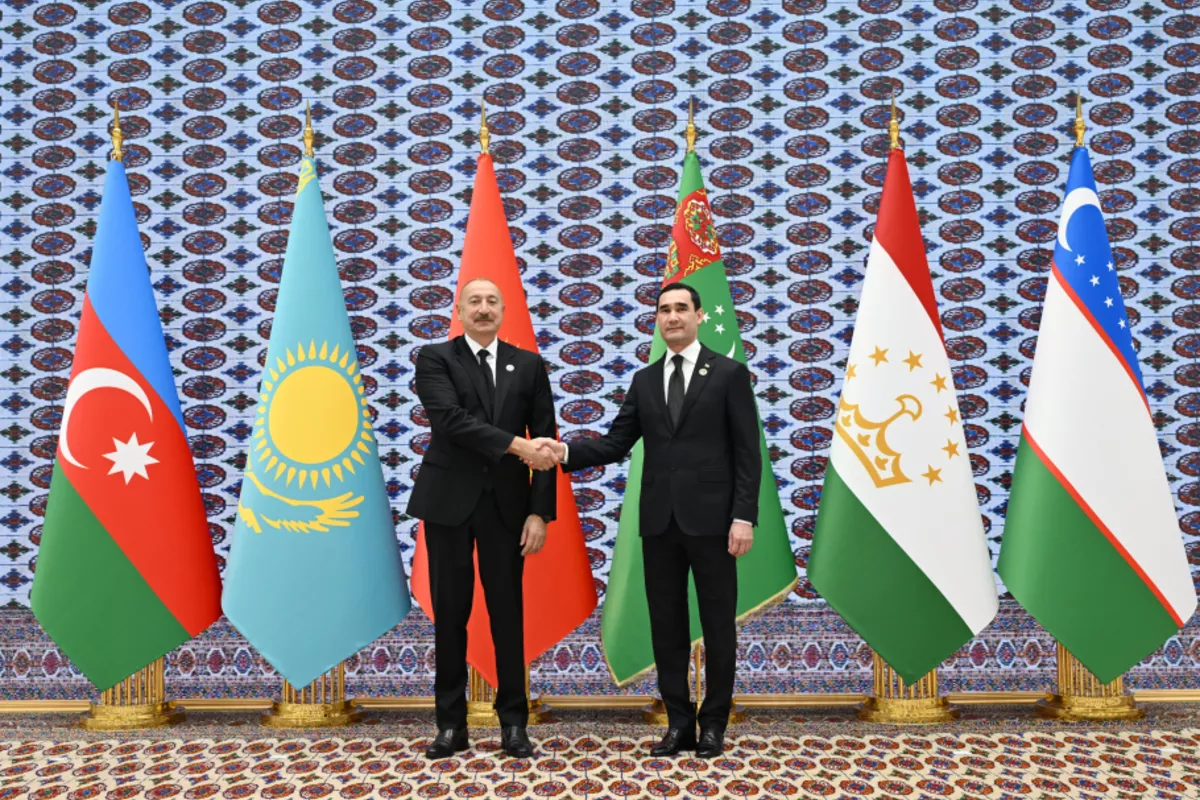
President Ilham Aliyev’s working visit to Turkmenistan on 8-9 October, which includes participation in multilateral meetings and talks with his Turkmen counterpart Serdar Berdimuhamedov, fits this pattern. Its significance will depend primarily on how far the resulting agreements advance the implementation of specific projects.
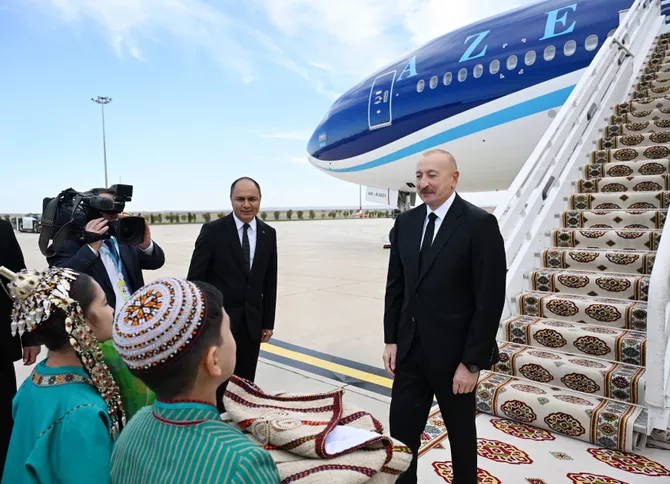
Photo: AZERTAC
Transport Is Becoming the Foundation of Cooperation
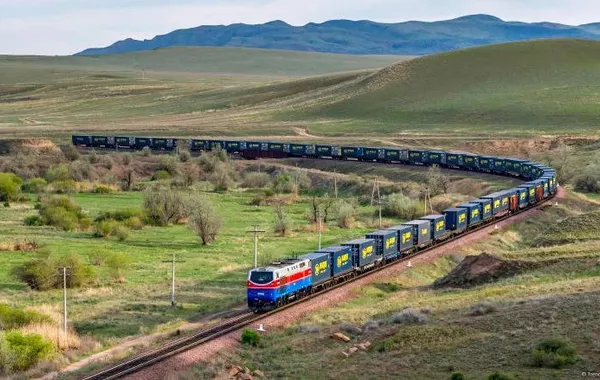
The most telling figures in the information provided concern transit. In 2025, transit cargo volumes between Azerbaijan and Turkmenistan reached 2.344 million tonnes, an increase of 15%. In January-August 2026, volumes totalled 2.029 million tonnes, up 38% from the same period a year earlier.
This growth points to rising demand for transport across the Caspian. However, the figures alone do not explain which cargo categories drove the increase, how regular the shipments are or what proportion involves goods from third countries. Without that detail, it is premature to describe the route as an established, reliable transport corridor.
For shippers, a route’s appeal depends on specific conditions: delivery costs, vessel waiting times, cargo handling speeds at ports and predictable customs procedures. Political support can help coordinate these issues, but it does not, by itself, make freight services competitive.
The next stage of cooperation should therefore focus on reliable connections between ports, coordinated tariffs and shorter delays. If these issues are addressed, transit growth could become a lasting trend. If the increase instead reflects a temporary shift in cargo flows, its pace may prove less sustainable.
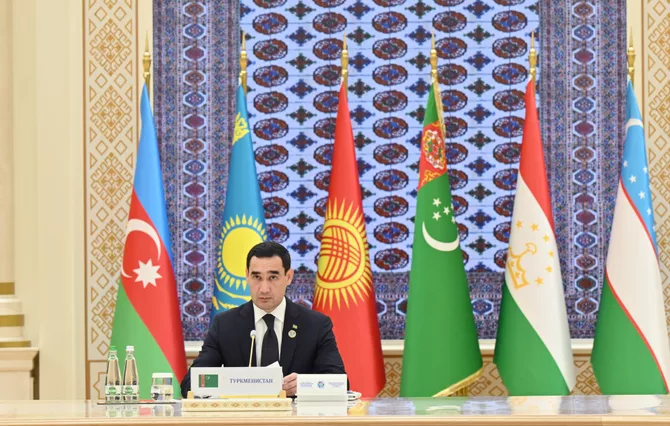
Photo: AZERTAC
Trade Still Lags Behind Political Dialogue
Bilateral trade totalled $208.39 million in 2025 and $63.35 million in January-July 2026. These figures cover different periods, so a direct comparison cannot establish an annual decline. Nevertheless, they indicate that commercial ties remain limited in scale.
The 108 documents signed between the two countries demonstrate the breadth of their framework for cooperation, but they do not establish its economic returns. Assessing those returns requires information on investments actually made, joint ventures, the composition of trade and the implementation of existing agreements.
Transit and bilateral trade can also develop at different speeds. Significant volumes of goods owned by foreign companies may pass through the two countries even while direct links between Azerbaijani and Turkmen businesses remain relatively modest.
This raises a practical question: can Baku and Ashgabat turn transport cooperation into a broader economic relationship? Doing so requires clear payment arrangements, access to information about potential business partners and the ability to conclude long-term contracts. The intergovernmental commission matters primarily insofar as it helps remove such obstacles.
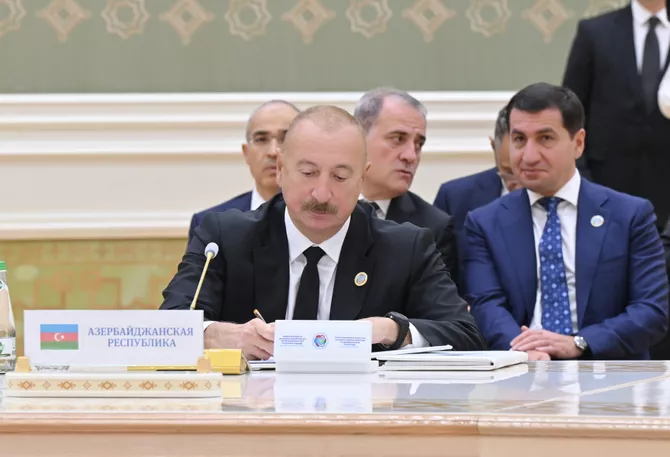
Photo: AZERTAC
Energy: Opportunities and Limits
One of the most significant steps was the signing in 2021 of a memorandum on the joint development of hydrocarbon resources at the Dostlug field in the Caspian Sea. The agreement created a basis for cooperation in a sensitive area where the two countries’ interests directly intersect.
A memorandum, however, is only an initial step. Bringing such projects into commercial operation requires agreement on technical specifications, investment commitments, risk allocation and the terms under which production will be sold. The information provided does not establish how far this work has progressed.
Azerbaijan can also play a role in transporting Turkmen energy resources to international markets. Here, it is important to distinguish between oil and gas. The Baku-Tbilisi-Ceyhan pipeline is relevant to oil transportation, but its existence does not resolve the question of exporting Turkmen gas across the Caspian.
Gas exports would require separate infrastructure, financing and commitments from buyers. Close political relations should therefore not automatically be interpreted as evidence that large-scale gas deliveries are imminent.
The transfer to Turkmenistan of the Dostlug tanker, built at the Baku Shipyard, demonstrates practical cooperation in shipbuilding and maritime oil transport. It is a tangible result, although its impact on overall cargo flows will depend on how the vessel is used.
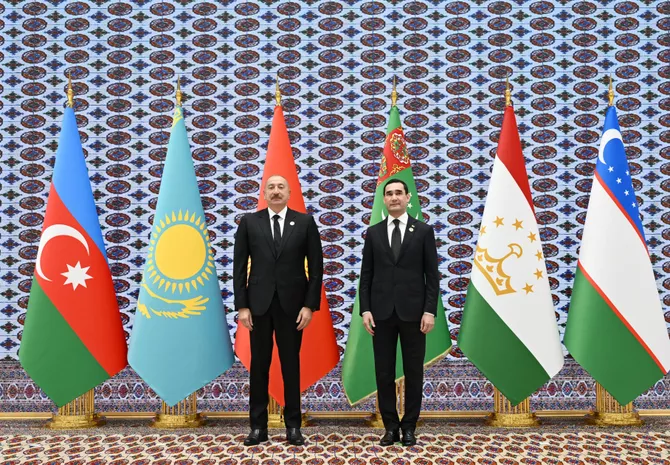
Photo: AZERTAC
Closer Ties Without Binding Geopolitical Commitments
Engagement with Turkmenistan strengthens Azerbaijan’s involvement in Central Asian affairs. Geographically, the Caspian separates the two countries; economically, it can connect them within a shared transport network.
For Ashgabat, cooperation with Baku offers an additional route to international markets. Access to several routes increases export flexibility and reduces dependence on conditions along any single corridor. This does not necessarily imply a move away from existing partners.
Turkmenistan’s permanent neutrality also shapes the relationship. It allows the country to develop trade, transport and humanitarian ties while remaining cautious about political and military commitments. The strategic partnership is therefore best assessed through the substance of its projects and the durability of its agreements, rather than speculation about the emergence of a new alliance.
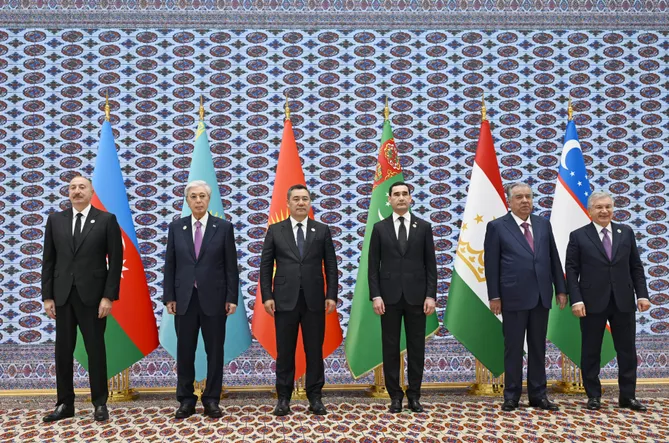
Photo: AZERTAC
Humanitarian Ties Support the Relationship
Cultural events, interparliamentary contacts and cooperation between charitable foundations provide an additional basis for dialogue. Turkmenistan’s construction of a mosque complex in Fuzuli has symbolic significance while also making a concrete contribution to the city’s reconstruction.
Humanitarian projects, however, are not a measure of economic integration. Educational cooperation remains modest: 73 Turkmen citizens studied at Azerbaijani universities in the 2025/2026 academic year.
University agreements could expand these links, particularly if accompanied by exchanges, joint research and training for specialists in transport, energy and management. Their effectiveness will become clearer through the number of active programmes and participants.
Azerbaijan-Turkmenistan relations enjoy sustained political support and rest on numerous agreements. Their clearest measurable achievement at present is the growth in transit cargo volumes. Bilateral trade, investment cooperation and educational exchanges remain less developed.
The central question for the next stage is how successfully the two countries can move from agreed intentions to regular joint activity. Predictable logistics, the implementation of energy projects and stronger direct business ties will indicate whether that transition is taking place. These results will ultimately reveal the depth of Azerbaijan-Turkmenistan rapprochement.