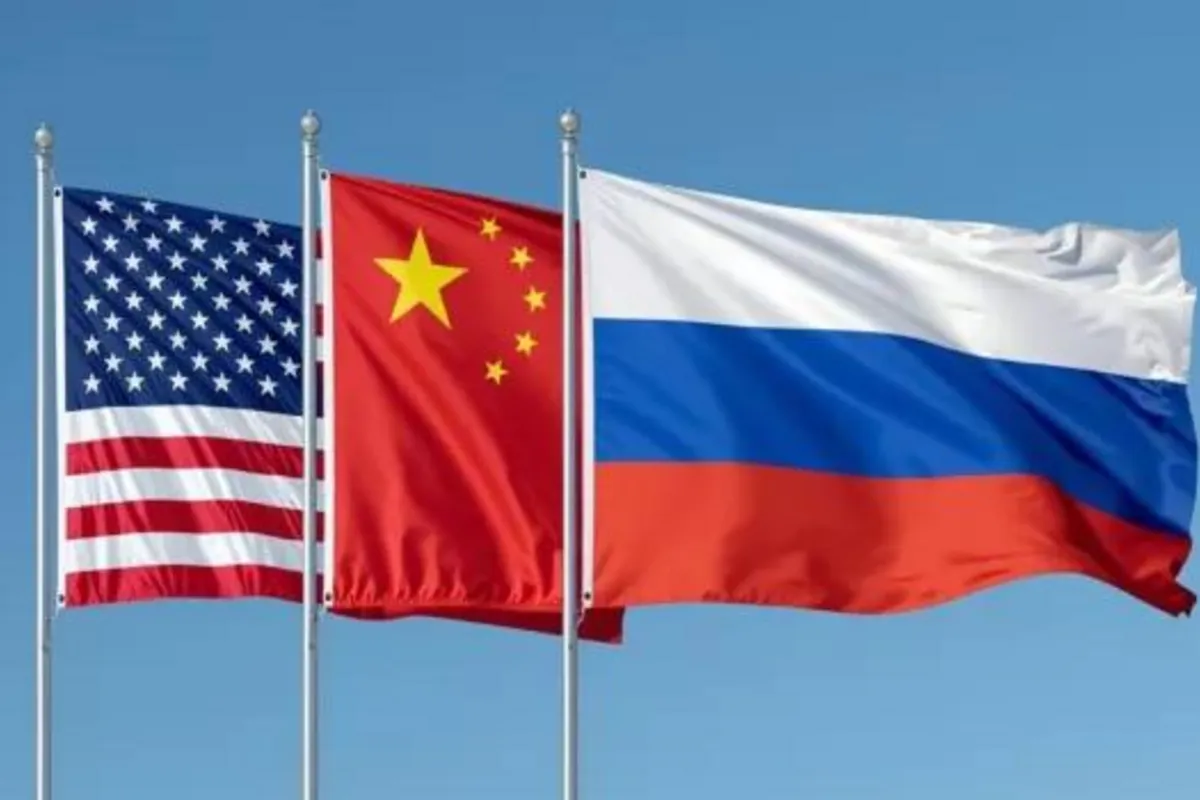
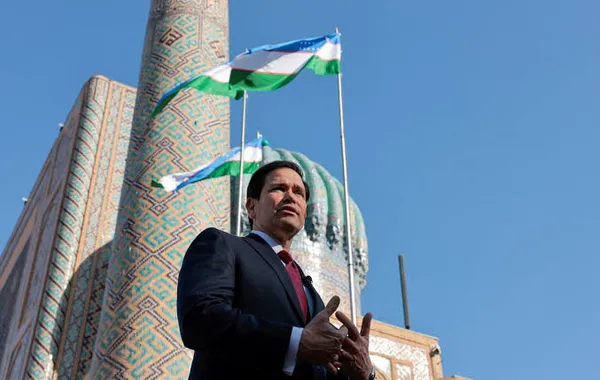
As is well known, a struggle is unfolding in Central Asia between the US, China and Russia for the resources of this region of the planet. Recently, US Secretary of State Macro Rubio visited Uzbekistan. There, he met with the foreign ministers of all five Central Asian states in the “5+1” format. Washington's growing interest in this resource-rich region is being noted. What does each of these major countries want from the Central Asian region - resources, markets, transport routes or something else? Notably, Kazakhstan and Uzbekistan are using this competition to their advantage. Will the Central Asian countries be able to maintain an independent foreign policy under these conditions?
The main goal of the US in the region remains to displace the influence of China and Russia. It has already managed to achieve this goal to some extent. It has largely succeeded in weakening Russia's influence, as the main issue that still links Russia and the Central Asian countries (primarily Uzbekistan, Kyrgyzstan and Tajikistan) is the problem of labour migrants. (More will be said about this below.) On most other issues, however, Russia has dropped out of the group of countries that genuinely influence the situation in Central Asia. In this direction, the US established the regional diplomatic platform C5+1 back in 2015. The platform's working groups cover the economy, energy, the environment and security. Essentially, the US has done much in this direction to bring together the goals and objectives of all five Central Asian states (Kazakhstan, Uzbekistan, Tajikistan, Kyrgyzstan and Turkmenistan). The main coordinating body remains the C5+1 Secretariat, established in 2023. In September 2023, during another C5+1 summit, the B5+1 platform was established, with the aim of bringing the goals and objectives of both the economies of the Central Asian countries and their private businesses closer together.
Under Trump, Sergio Gor, a native of Tashkent, became the US Special Envoy for Central Asia. In September 2025, the US brought together the leaders of all five Central Asian countries in Washington so that they could express their goals and wishes to the American leadership. The Central Asian leaders were very pleased with the crushing blow dealt by the Republicans to USAID, NED and Radio Liberty, as the latter often criticised their policies and supported the local opposition. In gratitude, during the meeting they praised Trump personally and his policies to the skies. For example, Kazakh leader Kassym-Jomart Tokayev stated: Trump is “a great leader and statesman sent by heaven to restore common sense and the traditions we all share to US domestic and foreign policy”. The US managed to sign an agreement with Kazakhstan and Uzbekistan that is potentially expected to bring the US billions of dollars in revenue.
Following the meeting, Kazakhstan announced that it would join the Abraham Accords, which will significantly bring the country closer to the US's main ally in the world, Israel. The US is interested in supplies of oil and gas from this region and in obtaining a number of important minerals, primarily uranium and lithium. There is also a trend towards a broader US understanding of this geographical region. American analysts are now increasingly including Azerbaijan, located on the opposite shore of the Caspian Sea but gradually expanding its ties with the countries of this region, in it. An important component of US policy in the region remains monitoring compliance with sanctions against Russia, as some countries in the region, Kyrgyzstan in particular, have often allowed Russia to circumvent them.
Although the US invests in the oil and gas sector, IT technologies and other developing areas of this region, it is becoming an increasingly attractive market for American industrial and consumer goods, but major US businesses are still wary of the region, remembering that asset seizures have been practised here more than once, although so far this has involved Russian and Chinese investors.
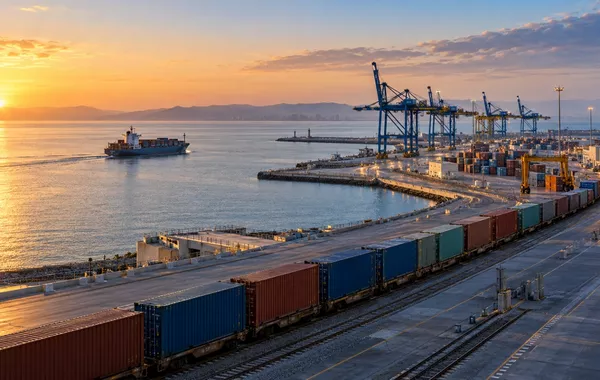
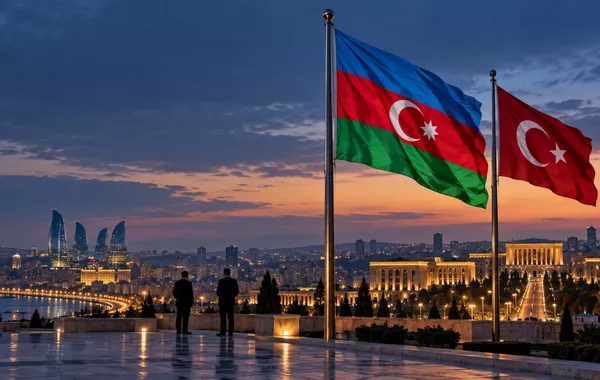
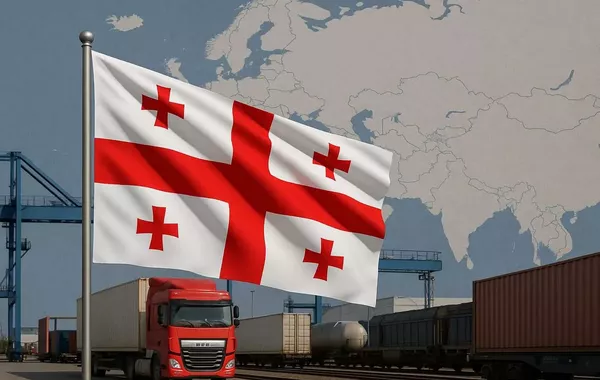
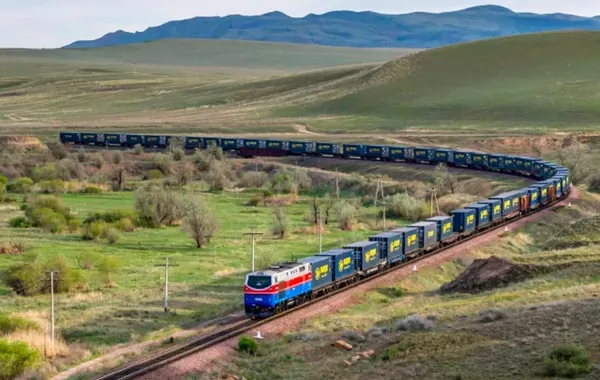
The US is actively promoting alternative logistics routes that bypass Russian territory. The main US project in this area is the Trans-Caspian (Middle) Corridor, which is intended to link Central Asia with European markets via the Caspian Sea, Azerbaijan, Georgia and Türkiye. Its implementation has been under way since 2014, when the Trans-Kazakhstan railway was opened, followed by the start of construction of the Baku-Tbilisi-Kars railway. The US is also promoting the CASA-1000 and Lapis Lazuli Corridor projects here, which envisage the creation of an electricity transmission system and trade routes bypassing not only Russia but also China. The US is working with some success against any attempts by Russia to introduce its own major energy projects in the region, in particular, a gas union with Uzbekistan and Kazakhstan, as this would give Russia control over gas flows from the region.
Another important task of the US in the region is to maintain regional stability, preserve border security and successfully counter external threats, including those emanating from Afghanistan. The US is countering Islamic extremism in the region and helping Central Asian countries integrate Islamic militants into the public life of these states. The US has already invested around $100 million in this area, setting up mobile border posts, providing professional training for border service personnel and customs officers, etc. The US also supports various programmes for the development of public administration, interaction with local businesses and educational initiatives that promote the development of national historical scholarship in each of the Central Asian countries, the publication of works showing the colonial and assimilationist policies of Tsarist Russia and the USSR in the region, and the suppression by the authorities of both the Russian Empire and the communist Soviet Union of any sprouts of national-patriotic movements.
Unlike the US, China's goals regarding the Central Asian region are much more local and concern the protection of its own position in Xinjiang. To this end, the Chinese authorities resolutely oppose Islamic terrorism, extremism and separatism and take active measures to counter them, seeking by all means to expand their own presence in the region by strengthening ties with local authorities. This is particularly important for China, since large-scale protests against the strengthening of Chinese influence in the region have repeatedly taken place in Kazakhstan, for example. China mainly implements its economic projects for the region within the framework of the SCO (Shanghai Cooperation Organisation), but, unlike the US, it engages much less with the local population and is not interested in their opinion regarding the promotion of these projects.
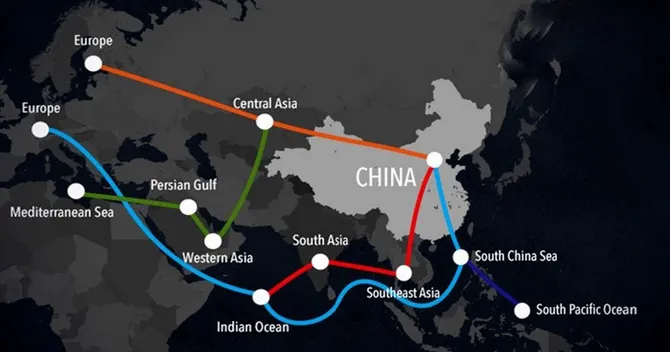
photo: getty images
China is actively pursuing its Belt and Road Initiative strategy in the region, which is aimed at turning the country into a global leader and transforming Central Asia into a sphere of its own exclusive economic and political influence. China is investing economic resources in Central Asia and developing infrastructure, in particular, building roads and power grids, modernising agriculture and introducing green subsoil resource management, which contributes to the development of these states. China is constantly increasing mutual trade turnover, investing in the industry and high technologies of the countries in the region, seeking in return to gain control over Central Asia's mineral and other resources. This is in sharp contradiction with the interests of the US and the political elites of Central Asia, which are trying to manoeuvre between the US and China on such issues. Seeking to reduce its dependence on oil and gas from Iran, China is striving to diversify its supplies of oil and natural gas by importing them from Turkmenistan, Kazakhstan and Uzbekistan. In addition, seeking to eliminate its dependence on maritime routes for the delivery of raw materials - one of China's key vulnerabilities, as these routes can be blocked relatively easily by the US and its allies - China has begun actively using Central Asia for these purposes.
Within the framework of the China-Central Asia format, China has decided to establish a centre for combating poverty, a centre for exchanges and cooperation in education, a centre for combating desertification, and a platform for creating favourable conditions for mutually beneficial trade, with the aim of improving the well-being of the countries in the region. China intends to expand the practice of establishing numerous Chinese cultural centres in the region, which will explain various aspects of China's domestic life and its socio-economic achievements, as well as branches of Chinese universities. This will lead to the integration of Central Asian residents into the Chinese education system, making them not only a source of replenishment for Chinese universities but also turning graduates of these universities into promoters of China's “soft power” both in the region and throughout the world.
At the same time, however, China exports surveillance and population control technologies to the region. This has already resulted in anti-Chinese protests in Kazakhstan and Kyrgyzstan, when local residents, trade unions and the independent press jointly raised grievances against Chinese companies, particularly those operating in the mining sector. Although, at meetings with the Chinese leadership, the leaders of Central Asian countries express full support for Chinese plans and publicly thank Beijing for its large-scale assistance, they nevertheless seek to maintain a balance and prevent their countries from turning into obedient vassals of China, striving to pursue a multi-vector foreign policy.
Russia is building its influence in Central Asia by relying on areas of common interest that have survived since Soviet times. In particular, since the threat of Islamic terrorism is equally unacceptable to all the countries of the region and Russia, the latter proposes to block its spread by maintaining its own military bases in Tajikistan and Kyrgyzstan, as well as through regional organisations in which it participates - the CSTO and the SCO. Economically, Russia is trying to offer projects as alternatives to those of the US and China, in particular, the construction of nuclear power plants in Kazakhstan and Uzbekistan, the development of hydropower, and its own gas and oil pipelines for supplying these resources from the region.
Until the start of Russia's war against Ukraine, the policy of drawing these countries into its sphere of interests through the EAEU also played a certain role. However, as a result of the large-scale Western economic sanctions against Russia, all the real and imaginary advantages of the EAEU have practically disappeared, and the countries of the region are now hardly interested in this dying integration project.
In the field of transport and road networks, Russia seeks to use the transport network created back in Soviet times as logistics corridors for accessing Asian markets, but these projects have also failed to generate much interest among the countries of the region in recent years, given the processes of economic stagnation and decline that have begun in Russia itself.
Undoubtedly, the Russian language and, to a lesser extent, the maintenance of cultural and historical ties through this language remain important means of preserving Russia's influence in the region. However, unlike Russia, which regards the Russian language as a means of keeping the countries of the region within its orbit, the Central Asian states themselves view it quite differently - for purely practical purposes. Since Central Asia continues to have a relatively high birth rate (compared with Russia itself), and there is an acute shortage of jobs and decent wages for the local population, the countries of the region have maintained ties with Russia, among other reasons, to successfully rid themselves of a critical mass of discontented people within their own countries by sending them to work in Russia. This has led to the emergence of sizeable migrant communities in various regions of Russia, exerting an increasingly significant influence on the socio-political and economic life of these regions, while at the same time making Russia itself dependent on Central Asian labour, as these workers are usually willing to take jobs that are paid considerably less. However, because of the Russian-Ukrainian war, which is diverting enormous financial and human resources and worsening Russia's own economic situation, migrants' interest in this country has also begun to decline.
Thus, amid the active confrontation in the region between three “centres of power” - the US, China and Russia, which is gradually withdrawing but still retains considerable influence - the main condition for preserving an independent foreign policy is to manoeuvre skilfully and thoughtfully between them and build strategic, long-term and mutually beneficial relations that contribute to the socio-economic development of all the Central Asian states.