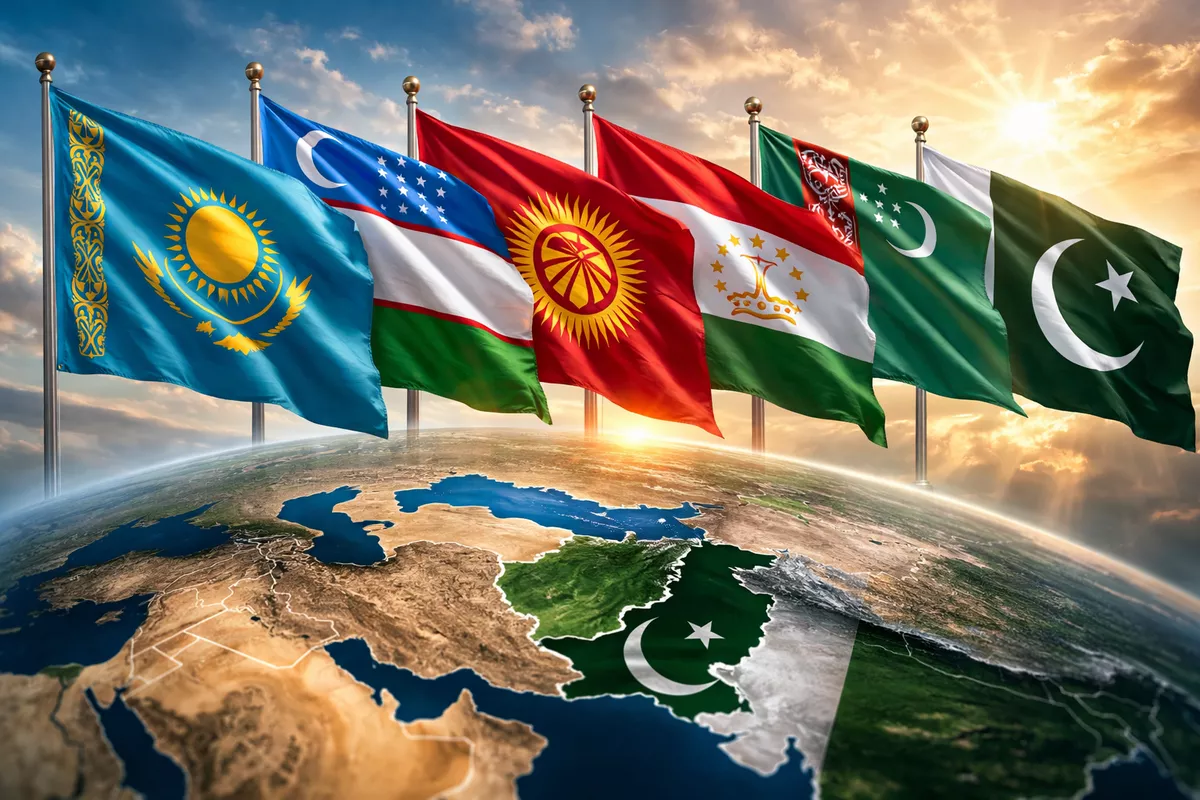
In early February, Kazakhstan’s President Kassym Jomart Tokayev conducted the first state visit to Islamabad in 23 years, followed by Uzbek President Shavkat Mirziyoyev. Both leaders were awarded Pakistan’s highest civilian honour, the Nishan-e-Pakistan, highlighting the symbolic importance of these engagements.
Pakistan’s access to the Indian Ocean has further enhanced its position in Eurasian geoeconomics, especially for Central Asia, amid geostrategic shifts and supply chain disruptions stemming from conflicts. For New Delhi, which considers Central Asia strategically vital, the deepening ties between the region and Pakistan pose a significant concern. While this outreach is widely interpreted as a risk-mitigating strategy, it may also have adverse strategic consequences for India's extended neighbourhood policy in general and Eurasia in Particular.
The partnership between Central Asian states and Pakistan has grown significantly in recent years. It is structured around greater engagement across five pillars: political, economic, energy, connectivity, and military cooperation, as outlined in Islamabad’s 2021 Vision Central Asia strategy. Since 2021, the Pakistani leadership has built strong political ties with these nations, as evidenced by regular summit meetings. Prime Minister Shehbaz Sharif has met with four Central Asian leaders and, in December 2025, travelled to Turkmenistan to strengthen their partnership and agreed to enhance connectivity. In the same month, Kyrgyz President Sadyr Japarov visited Pakistan for the first time in two decades, leading to the signing of 15 agreements covering energy, geosciences, trade, education, and law.
New Impetus to Trade and Connectivity
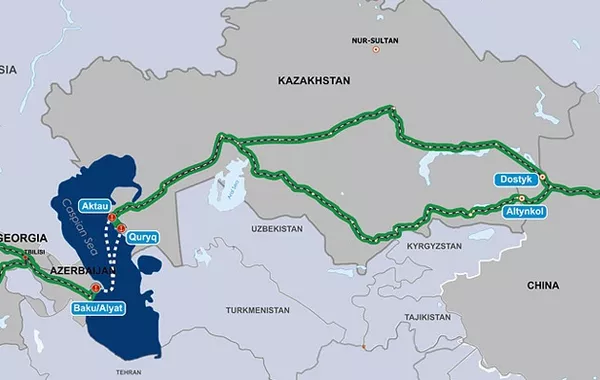
Recent high-level visits indicate a growing commitment to expanding economic cooperation between Pakistan and the Central Asian states. Both Tokayev and Mirziyoyev set up ambitious bilateral trade targets of US$1 billion and US$2 billion, respectively. Kazakhstan and Uzbekistan signed 37 and 28 memoranda of understanding (MOUs), respectively, focusing on investment, trade, and connectivity, which remain central to Pakistan’s engagement with Central Asian countries. The Aktau International Sea Port of Kazakhstan and the Karachi Port Maritime Administration of Pakistan signed an MOU to enhance maritime logistics. Additionally, Islamabad and Tashkent agreed to promote maritime trade and to preferential port arrangements for Karachi, Gwadar, and Qassim. Both parties emphasised the strategic significance of the Uzbekistan-Afghanistan-Pakistan rail project with an estimated cost of US$4.8 billion and described it as a “game changer” for the region.
The Taliban’s consolidation in Afghanistan has increased Pakistan’s importance in Central Asia’s strategic planning. Despite persistent tensions along the Afghanistan-Pakistan border, which affect the Kazakhstan-Turkmenistan-Afghanistan corridor and the future of the Uzbekistan-Afghanistan-Pakistan (UAP) rail project, Central Asian countries have maintained engagement with the Taliban, viewing the regime’s stability as foundational for economic cooperation and regional security. In 2024, Kazakhstan, Turkmenistan, and Afghanistan signed an agreement to establish a logistics centre at Torghundi and to extend the railway line to Herat and Kandahar, with further extension to Spin Boldak on the border with Pakistan. In April 2025, Kazakhstan committed US$500 million to initiate construction, and the railway line to Herat is expected to be completed by 2027. Trade between Afghanistan and Uzbekistan reached US$1.6 billion in 2025, and Kazakhstan is the major supplier of food grains to Afghanistan.
Strategic Importance and Deadly Insurgency
The Russia-Ukraine conflict has already disrupted key trade routes in Central Asia, including the northern corridor. Tightening sanctions and supply chain disruptions are affecting the region's hydrocarbon and rare-earth industries, which have limited market access and rely mainly on China. The ongoing conflict has compelled these states to seek new regional partners for both geostrategic and geoeconomic purposes, including India. Central Asian countries view India's Chabahar Port as a crucial gateway to the Indian Ocean. The majority of Central Asian trade transits through Iran’s Bandar Abbas and Chabahar ports. Despite US sanctions, Iran has established reliable rail and road connections, making these routes increasingly viable. That said, US strikes on Iranian nuclear sites in June 2025 and rising domestic unrest have significantly impacted Iran's economy and its Central Asian ambitions.
Escalating geopolitical competition and reduced Russian interest in the region, driven by the war in Ukraine and negotiations with the US, have reduced the impetus for connectivity projects involving Iran. Concerns about US sanctions have led Central Asian countries to adopt a cautious approach. Additionally, the United States' revocation of the sanction’s exemption for the strategic Chabahar port in September 2025 not only impeded India’s connectivity ambitions in Eurasia but also forced Central Asian countries to identify alternative partners for access to the Indian Ocean for trade and commerce. The Chabahar port holds significant strategic importance for New Delhi in countering China’s influence across Eurasia and in limiting Beijing's expanding power in the Indian Ocean.
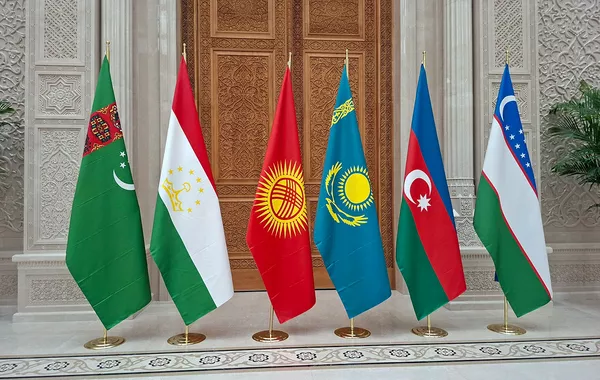
Central Asian countries are establishing alternative connectivity routes, such as the Middle Corridor under the Organisation of Turkic States, to enhance cooperation among Turkic-speaking nations and strengthen trade and logistics links between Europe and China. As principal actors in China’s Belt and Road Initiative, these Central Asian nations also regard Chinese BRI investments in Pakistan and in ports such as Gwadar as potential new transit routes to the Indian Ocean. The China-led Gwadar port, which serves as the focal point of the China-Pakistan Economic Corridor and has raised concerns regarding India's sovereignty and territorial integrity, is located approximately 170 kilometres from Chabahar port.
The strategic importance of Gwadar port and the resources in Balochistan have been undermined by persistent political instability and violent insurgency. Gwadar, leased to China for 40 years, is often regarded by the Baloch population as a gated proxy colony. The intensified exploitation of natural resources by Chinese firms and the Pakistani government, without tangible benefits for the local population, has resulted in Chinese nationals becoming targets for insurgent groups. In recent years, local grievances, reports of human rights violations, and perceived economic exploitation have prompted many young and educated Baloch, including women, to join the insurgency. Similarly, relations between Taliban-led Afghanistan and Pakistan deteriorated significantly last year, with bilateral trade declining by approximately 40 percent to US$1.77 billion. Over the past two years, interactions between the Taliban and Pakistan have grown increasingly confrontational, particularly regarding security, trade, and terrorism. Since the Taliban assumed power in Afghanistan, attacks by Tehreek-e-Taliban Pakistan (TTP) have risen substantially. Insurgency along the Afghan border has also disrupted infrastructure and increased transit times. The Khyber Pakhtunkhwa province, which borders Afghanistan, has witnessed a 279.8 percent rise in terror-related incidents, increasing from 572 in 2021 to 2,173 in 2024.
Conclusion
Intensifying geopolitical competition in Central Asia could affect New Delhi’s strategic interests, particularly as Pakistan’s influence expands. Relations between India and Central Asian states have stagnated in recent years, despite modest increases in trade. India has experienced several setbacks, such as its formal withdrawal from Ayni and the biennial India-Central Asia summit-level meetings not being held since 2022. With the International North-South Transport Corridor (INSTC) sidelined and sanctions hindering India’s activities in Chabahar, Central Asian countries are exploring alternative connectivity options, although many remain impractical.
Central Asian countries face a strategic dilemma about whether to cooperate with Pakistan to secure access to the Indian Ocean via the Chinese BRI infrastructure, given that great-power rivalries constrain alternative connectivity routes. A more transactional approach would be to diversify their foreign partnerships and to counterbalance and leverage them against other powers as a bargaining chip. Although these states currently have greater leverage than Pakistan in negotiations with the Taliban, they are well placed to encourage Afghanistan to strengthen its relations with Islamabad. Nevertheless, persistent internal instability in Pakistan is likely to undermine these initiatives over time.
Find the original article here