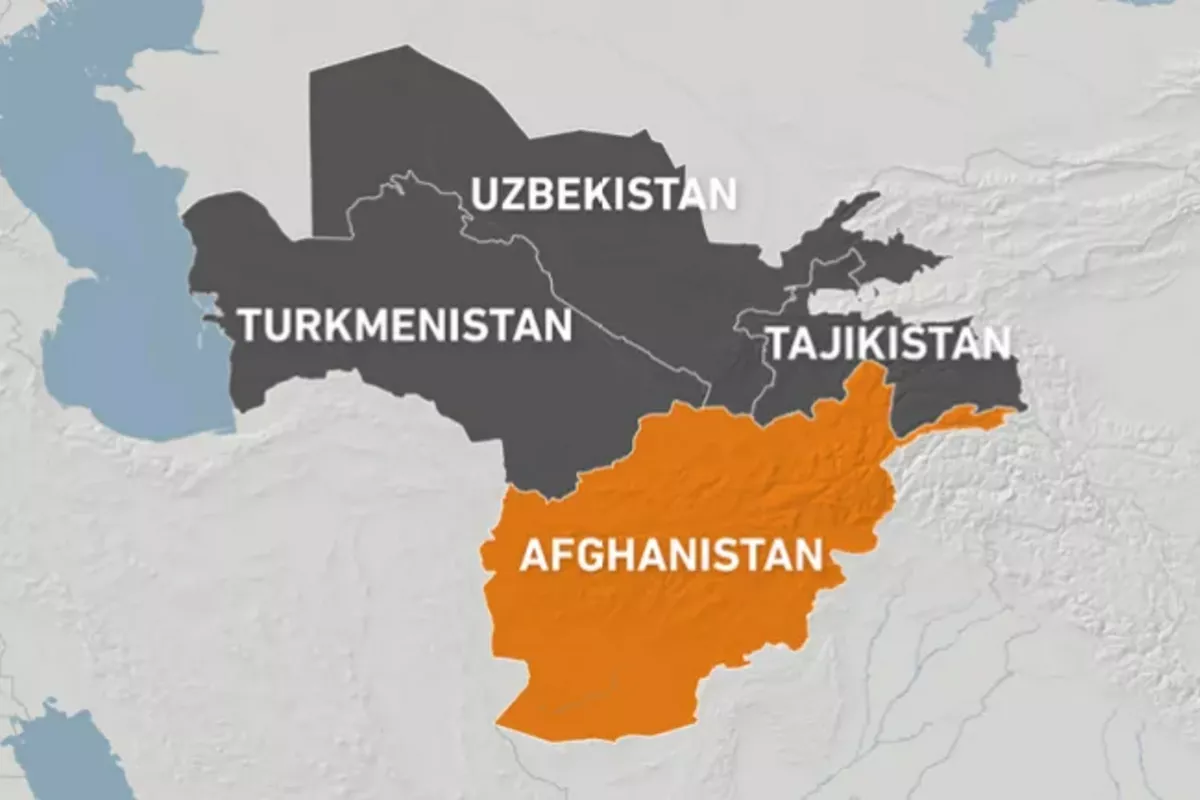
The Times of Central Asia (TCA) has published an article examining the ongoing security challenges between Afghanistan and the Central Asian countries.
The Caspian Post republishes the article.
Over the past year, Afghanistan has become neither markedly more stable nor dramatically more dangerous, despite how it is often portrayed in public discourse. There has been neither the collapse that many feared, nor the breakthrough that some had hoped for. Instead, a relatively unchanged but fragile status quo has persisted, one that Central Asian countries confront daily.
For the C5 countries, Afghanistan is increasingly less a topic of speculative discussion and more a persistent factor in their immediate reality. It is no longer just an object of foreign policy, but a constant variable impacting security, trade, humanitarian issues, and regional stability. As such, many of last year’s forecasts have become outdated, based as they were on assumptions of dramatic change, whereas the reality has proven far more inertial.
Illusion #1: Afghanistan Can Be Ignored
The belief that Afghanistan can be temporarily “put on the back burner” is rooted in the assumption that a lack of public dialogue or political statements equates to a lack of interaction. But the actions of Central Asian states show that ignoring Afghanistan is not a viable option, even when countries intentionally avoid politicizing relations.
Turkmenistan offers a clear example. Ashgabat has maintained stable trade, economic, and infrastructure ties with Afghanistan for years, all with minimal foreign policy rhetoric. Energy supplies, cross-border trade, and logistical cooperation have continued despite political and financial constraints, and regardless of international debates over the legitimacy of the Afghan authorities.
This quiet pragmatism stands in contrast to both isolationist strategies and symbolic or ideological engagement. Turkmenistan may avoid making public declarations about its relationship with Afghanistan, but it nonetheless maintains robust cooperation. This calculated calmness reduces risks without signaling disengagement.
Importantly, this approach does not eliminate structural asymmetries or deeper vulnerabilities. But it dispels the illusion that distancing reduces risk. On the contrary, sustained economic and logistical ties foster predictability, without which attempts to “ignore” a neighboring country become a form of strategic blindness.
In this sense, Turkmenistan’s experience affirms a broader regional truth: Afghanistan cannot be removed from Central Asia’s geopolitical equation by simply looking away. It must be engaged pragmatically or dealt with later, in potentially more destabilizing forms.
Illusion #2: Security Is Achieved Through Isolation
Closely related to the first is the illusion that security can be ensured by building walls. Security in Afghanistan, and in the broader Afghan-Pakistani zone, is often seen as an external issue, something that can be kept out by sealing borders or minimizing engagement. Yet in practice, security is determined less by geography and more by the nature of involvement.
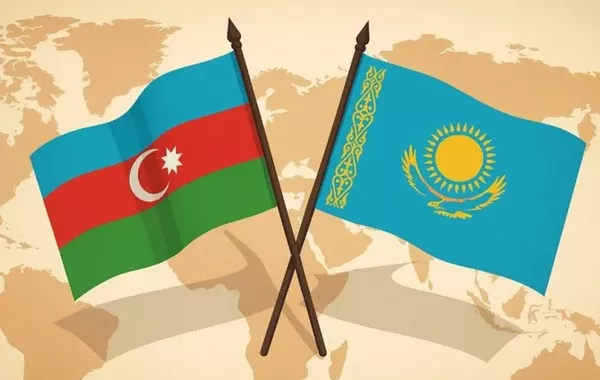
This is reflected in the recent decision by Uzbekistan and Kazakhstan to participate in U.S. President Donald Trump’s “Board of Peace” initiative. While the initiative focuses on resolving crises outside Central Asia, both countries have framed their participation as essential to their own national and regional security interests.
As Abdulaziz Kamilov, advisor to the President of Uzbekistan, explained, Tashkent’s involvement stems from three factors: its own security needs, its foreign policy principles, and the recognition that the Middle East remains a region of vital interest to Uzbekistan.
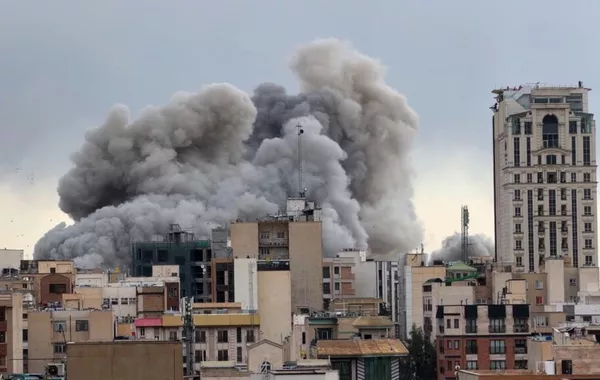
Uzbekistan’s past experience supports this logic. During periods of conflict in the Middle East, Uzbeks and other Central Asians were drawn into international terrorist networks, posing significant security threats upon their return.
The interconnection between Afghanistan, the Middle East, and Central Asia is clear. According to the Uzbek authorities, terrorist organizations entered Afghanistan from elsewhere, primarily conflict zones in the Middle East. Given this framing, Uzbek officials have argued that Afghanistan often functions as a transit environment rather than the source of extremist threats.
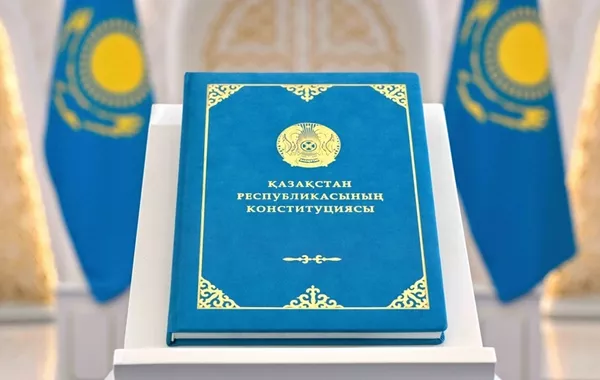
Kazakhstan’s recent move to join the Abraham Accords, a diplomatic framework aimed at reducing tensions in the Middle East, is similarly revealing. Though at first glance the decision may appear to lie outside Central Asia’s immediate interests, it reflects an understanding that regional instability is contagious.
In an era when radical ideologies and transnational threats ignore borders, participation in conflict-mitigation mechanisms, even those based outside the region, is no longer symbolic. It is a form of pre-emptive security.
Security today is less about hard boundaries and more about proactive engagement. In this light, efforts to isolate are not only ineffective but they may also prove counterproductive, depriving states of influence in regions where risk is incubated.
Illusion #3: Recognition Equals Control
Another persistent illusion is that formal recognition of Afghanistan’s government confers control or influence, while its absence renders engagement difficult or illegitimate. But diplomatic practice paints a different picture.
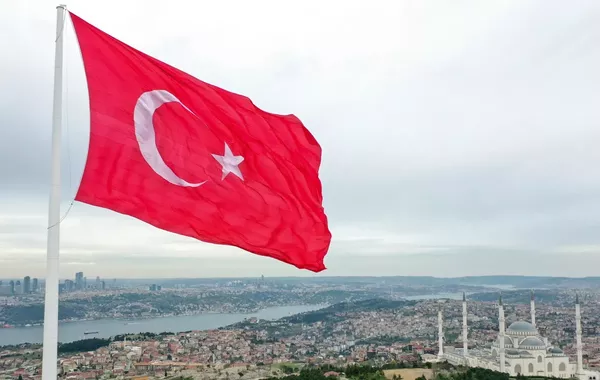
As of February 2026, multiple foreign diplomatic missions are active in Afghanistan, including embassies from all Central Asian countries. Other nations with diplomatic representation include Russia, China, India, Iran, Pakistan, Turkey, the Gulf states, Japan, and the European Union.
Beyond Kabul, multiple provinces also host consulates. Mazar-i-Sharif hosts several regional consulates, including those of Russia and Turkmenistan, along with other neighboring states. Iran, Turkey, and Turkmenistan are present in Herat, and Pakistan maintains a consulate in Nangarhar.
This broad diplomatic presence is not merely symbolic.
These missions underscore a critical reality: formal recognition has not been a prerequisite for functional engagement. Instead, countries have pursued de facto diplomacy, addressing issues such as security, trade, logistics, humanitarian aid, and border management. This blurs the once-binary view of “recognition vs. isolation.”
In effect, the continued presence of Central Asian missions in Afghanistan suggests that pragmatic engagement now outweighs normative debates. Influence and risk management come through sustained presence and open channels, not formal status.
From Illusions to Realism
The common flaw in many approaches to Afghanistan is the tendency to treat it as a project, whether political, economic, or integrational. This perspective breeds unrealistic expectations and inevitable disappointment.
Afghanistan is not a project for Central Asia. It is a permanent geopolitical factor. It cannot be “switched off” from regional dynamics. The task for Central Asia is not to solve Afghanistan but to coexist with it, based on pragmatism, not illusion.