While indirect talks between the U.S. and Iran regarding Tehran's nuclear facilities continue, the military operation code-named “Epic Fury” launched by the U.S. and Israel against Iran on Feb. 28 has seriously shaken the balance of power in the Middle East.
In the first phase of the operation, targets included key members of Iran's leadership, air defense capabilities, communications and intelligence centers, missile bases, the infrastructure of the Islamic Revolutionary Guard Corps (IRGC) and the navy.
Among the leaders who were killed were Iranian Supreme Leader Ayatollah Ali Khamenei, the Iranian defense minister, the chief of staff and the commander of the IRGC. U.S. President Donald Trump announced that since the large-scale combat operations started, 48 leading figures had been killed in the attacks.
Following that, with Tehran retaliating by launching attacks across the Middle East, the war has rapidly escalated into a regional conflict. The Iranian military carried out attacks with ballistic and hypersonic missiles and unmanned aerial vehicles (UAVs) against Israel and U.S. military bases in Jordan, Saudi Arabia, Qatar, Bahrain, Kuwait, Oman, southern Cyprus and Iraq.
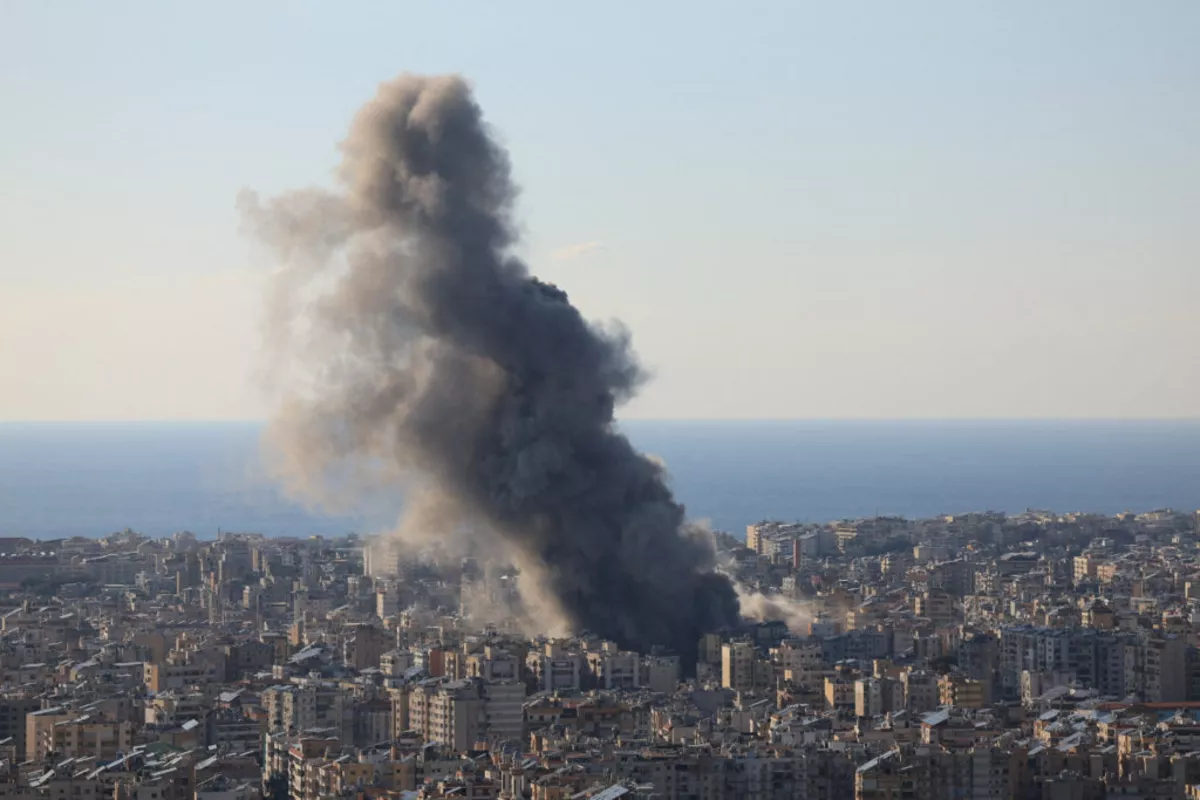
On the other side, Israel, citing Hezbollah's attacks as justification, launched operations across Lebanon, targeting southern Beirut. Israeli Defense Minister Israel Katz announced that Prime Minister Benjamin Netanyahu had authorized the army to advance into Lebanon and seize additional strategic points.
U.S.-Israeli Tactics
Unlike the 1991 Gulf War and the 2013 Iraq and Afghanistan Wars, the Pentagon used bases in the territories of Arab allies in the Gulf as forward attack platforms.
While the U.S. destroyed missile bases and launch pads in southern and central Iran, Israel focused on the north of the country, showing a clear division of labor.
As the Israeli Air Force attacked with 200 fighter jets to destroy Western Iran's air defenses, the U.S. Army targeted the Revolutionary Guard Navy in the first wave to prevent the Iranian Navy from launching retaliatory attacks against international shipping and U.S. Navy vessels in the Strait of Hormuz. U.S. President Donald Trump stated that the operation against Iranian targets had destroyed and sunk nine Iranian warships and was going after the rest, adding that Iran's naval headquarters had also been largely destroyed.
As these developments are unfolding, the U.S. and Israel aim to support the Iranian opposition with intense attacks and firepower pressure, to bring about a planned mass uprising and implement a plan to change the regime.
When developments are carefully analyzed, it is my opinion that U.S.-Israeli intelligence sought to force the IRGC, Basij, Hezbollah, Quds Force, proxy forces and security organizations to lay down their arms through internal turmoil and strategically aim to divide the country using a Trojan Horse tactic and seize control.
However, the American public, which strongly supported the 1991 and 2003 Iraq wars, is reluctant to support this option, relying on their accurate intuition that no one knows what the consequences in Iran will be. In this context, polls conducted in February 2026 showed that only 21% of Americans supported attacks on Iran, while 49% considered them unnecessary and costly, and 30% were undecided.
Trump, on the other hand, seems to believe that attacking Iran would be a political victory or at least distract attention from the Epstein files. U.S. Representative Ted Lieu stated that the entire Epstein file contains information about Trump, so he started a world war to distract the American public from his crimes.
Following a closed-door session, U.S. Senator Brian Schatz stated: "There are times when you go into a classified session, and you walk out with a better understanding about the gravity of the situation and the rationale behind the military action. This is not one of those times. We remain as confused as the American people are.”
Another senator, Ed Markey, said, ”I just came out of a closed briefing on Iran, and it only confirmed what we already knew: Donald Trump is waging an illegal war and has no plan for how to end it."
These statements reveal a serious rift between the legislative, executive and military branches of the U.S. government and point to the possibility of a new “Vietnam Syndrome” in the future, which is one of the most critical messages of this article.
Indeed, as discussions about whether the “Crusades” are returning to the U.S. military come to the fore, events on the U.S. military front are leading to debates not only about a religious dispute but also about the systematic processing of a global “Armageddon” scenario within the military.
Meanwhile, the U.S., considering the losses incurred after Iranian missile attacks, is closing its embassies in Saudi Arabia and Kuwait and calling on Americans to leave 14 countries, following the first-ever downing of some F-15 fighter jets in combat by friendly fire from U.S. F-18 fighter jets.
Iran's Retaliation
Iran is directing its retaliation not only at Israel but also at the U.S. military bases in the Gulf countries and British bases on the divided island of Cyprus draw reaction.
Despite Iranian Foreign Minister Abbas Arakchi saying that Iran was not attacking its neighbors but rather the U.S. presence in these countries, Iran's targets included high-rise buildings, ports and oil infrastructure in densely populated Gulf cities.
Among all the targets, Iran has particularly focused on destroying the U.S. 5th Fleet in Bahrain, which has an extensive database of intelligence and logistics, warships, destroyers, submarines, aircrafts and aircraft carriers, with a total of 15,000 personnel and thousands of advanced missiles.
However, Iran's attacks seem to be doing the opposite of creating a rift between the U.S. and its Gulf Arab allies. Gulf Arab countries, except Oman, issued a joint statement with the U.S., confirming their “unity” against Iran's attacks.
From a political-military perspective, the priority for Iran is to ensure the survival of the state.
To overcome the shock of the initial attacks, maintain sufficient military and political unity and prolong the war to preserve the will to fight, it is necessary to initiate a new-scale “Tanker War” in the Persian Gulf, as seen in the Iran-Iraq War of the 1980s. This would aim to quickly secure a cease-fire with the support of the rest of the world amid a global energy crisis.
Targeting the Gulf's oil and natural gas infrastructure, including successful attacks on Saudi Arabia's Ras Tanura refinery, oil tankers near the Strait of Hormuzand Qatar's liquefied natural gas (LNG) facilities, could affect the hydrocarbon export capabilities of the Arab Gulf states.
In response to Iran's attacks, Qatar has suspended LNG production. This critical development has caused European gas prices to rise by 50%.
As images circulate of Iranian UAVs crashing into tall buildings, the potential damage to their reputation as safe havens for investors and tourists could pose a long-term challenge to the Gulf countries' economic diversification vision.
Even though Iran's missile war against U.S. bases and Israel has caused serious damage in Israel, resulting in numerous deaths and injuries, Iran's inventory of missiles, ammunition and launchers is insufficient to sustain the war against the heavy bombardment and absolute air superiority of American warplanes. It is also important to note that during the 12-Day War, the Iranian Air Force and air defense had already proved its inadequecy.
Therefore, Iran is not fighting to achieve a victory against the U.S.-Israel onslaught in the context of traditional military doctrine, but rather to sustain the regime's existence.
Exceptionally, China is providing with continuous signals intelligence (SIGINT) and terrain mapping using its fleet of over 500 satellites. This support helps Iran track the movements of U.S. naval forces in the Persian Gulf in real time.
International Reactions
While the war is undoubtedly viewed with concern around the world, Ankara, as a neighboring country, is following developments with concern and maintaining contact with the parties for a diplomatic solution.
President Recep Tayyip Erdoğan stated that they are striving for a diplomatic solution and said, “We are mobilizing all our resources to free our region from this stranglehold.” Describing the attacks launched by the U.S. and Israel against Iran as “Netanyahu's provocation,” Erdoğan called for common sense to prevent the region from being dragged into a ring of fire.
Erdoğan said: “As neighbors and brothers, we share the pain of the Iranian people. Our entire stance on the illegal attacks targeting Iran is in this direction. Iran is our neighbor. Our priority is to secure a cease-fire and open the door to dialogue. For this, the fire must be extinguished before it grows any further.”
Foreign Minister Hakan Fidan also stated that Türkiye has the capacity to defend itself and that the possibility of the war spreading to Türkiye is low. Fidan also noted that the duration of the attacks on Iran is uncertain, but that Türkiye is preparing for possible scenarios. Fidan stated that the necessary measures have been taken to ensure the safety of Turkish citizens in the region and that there is currently no possibility of migration from Iran to Türkiye.
On the international front, the U.N., NATO and the European countries have called for an end to the war.
China asserted that attacking Iran was part of the plan from the outset and that it was the U.S., not Iran, that closed the Strait of Hormuz. According to Beijing, Trump secured Venezuelan oil in advance, knowing that it would destabilize West Asia.
Russian Foreign Minister Sergey Lavrov stated that Moscow had seen no evidence that Iran was developing nuclear weapons regarding the U.S. and Israeli attacks on Iran.
Five scenarios for the future
The first scenario that stands out is that the airstrikes against the Iranian state's instruments could lead to popular uprisings and regime change. As a consequence, the U.S. could reach an agreement with the new administration on Gulf security and administrative reforms. Nuclear activities, missiles and military capacity would be weakened so as not to threaten Israel, leading to commercial cooperation in bringing Iranian oil and gas resources to world markets. Türkiye could take on the role of mediator for a cease-fire at this point.
According to the second scenario, Iran may increasingly target energy infrastructure in Gulf countries. This would aim to impose costs on international markets to force the U.S and its allies into a cease-fire before achieving their goal of overthrowing the regime. Iran's attacks on Gulf energy infrastructure could lead to retaliation and involvement in the conflict by Gulf countries.
The third scenario is also energy-focused, whereby Iran could disrupt gas and oil shipments in the Persian Gulf, using the economic pressure of energy prices on the U.S. to reestablish a cease-fire and return to the negotiating table. However, Trump's statement that the U.S. Navy will escort oil tankers through the Strait of Hormuz and his order for Washington to provide insurance for shipping could signal the start of a new “Tanker War.”
Fourthly, within the framework of international law and Article 2 of the U.N. Charter, this conflict, based on legally controversial grounds, risks causing chaos in the Middle East and killing thousands of civilians, as well as potentially paving the way for new global-scale terrorist attacks against U.S. citizens in the coming years.
In the fifth and worst-case scenario, the U.S. may announce that the “big wave” of attacks on Iran is yet to come, not ruling out the possibility of sending U.S. ground troops to Iran. This would lead to a war that causes long-term instability in the whole Middle East. Although Israeli Prime Minister Benjamin Netanyahu stated that the conflict with Iran would not be an “endless war,” but could continue for some time, his attacks on Lebanon and Iran's strike on British bases on the island of Cyprus could lead to the war expanding. This pessimistic scenario could result in mass refugee flows, disruptions to trade and energy supplies, and unrest within Iran, potentially triggering the PKK's territorial demands.
Find the original article here