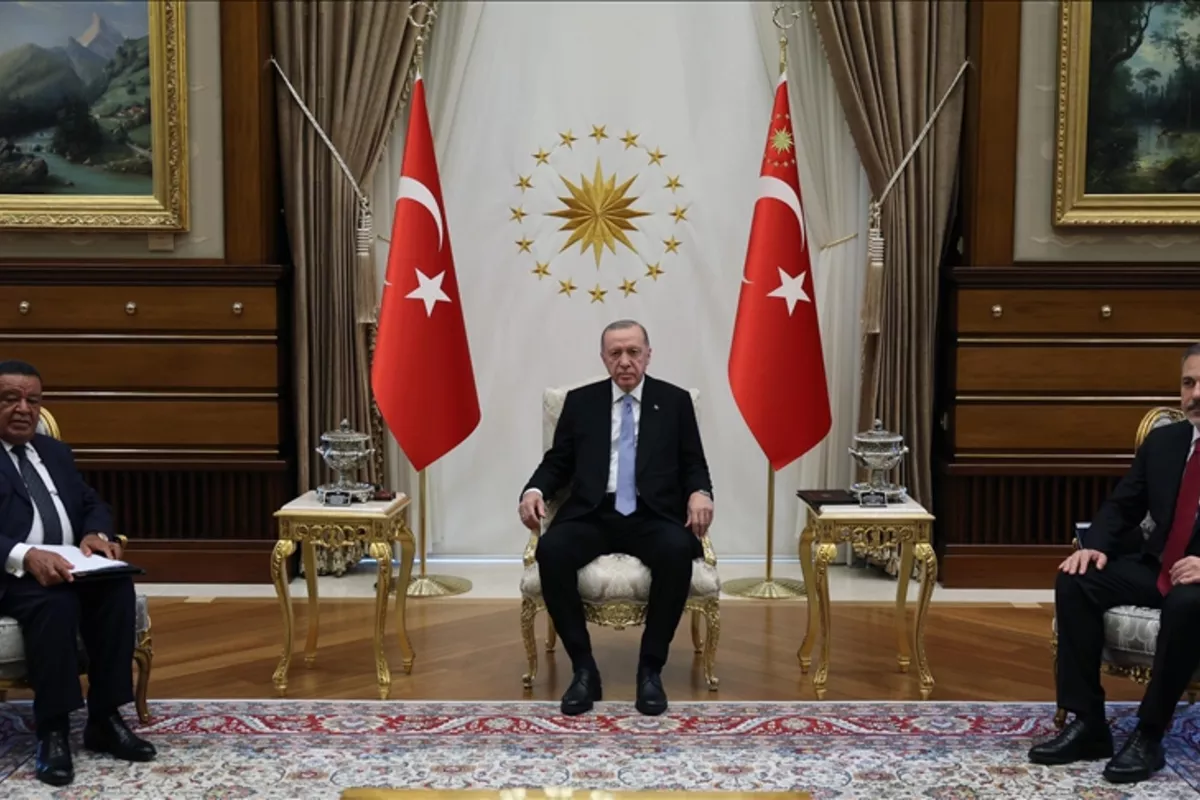
Anadolu Agency has published an analytical article highlighting Turkish President Erdogan's visit to Ethiopia and Ankara's growing reputation in the Horn of Africa.
The Caspian Post republishes the article.
Türkiye and Ethiopia boast the longest-standing diplomatic ties on the African continent. The first diplomatic contact, established in 1896 between Sultan Abdulhamid II and Menelik II, was further elevated by the opening of a Turkish Consulate in Harar in 1912. The relationship assumed a formal institutional character in 1926 with the inauguration of Türkiye's first resident embassy in Sub-Saharan Africa, located in Addis Ababa.
In the ensuing years, a series of 35 exchanges by letter and telegram between Mustafa Kemal Ataturk and Haile Selassie I underscored the continuity and institutional depth of political dialogue between the two nations. In March 1936 -- mere months before the Italian occupation of Addis Ababa -- the signing of the 'Ethiopia-Türkiye Treaty of Friendship and Commerce' immediately followed the appointment of Nizameddin Ayazli as ambassador, further consolidating the legal and diplomatic foundations of their bilateral relations.
During the same period, the voluntary presence of Mehmet Vehip Pasha, Faruk Pasha, and Tarik Pasha on the front lines alongside the Ethiopian army in its struggle against Italy served as a concrete manifestation of solidarity and shared destiny between the two nations.
Seven decades later, on March 1, 2005, the official visit to Addis Ababa by then-Prime Minister Recep Tayyip Erdogan marked the first prime ministerial-level visit to Sub-Saharan Africa. The trip produced tangible results in short order. On April 12, 2005, Türkiye attained observer status within the African Union, and the Embassy of the Republic of Türkiye in Addis Ababa was subsequently accredited to the union. In this new era initiated with Ethiopia, Türkiye’s "Africa Initiative" moved beyond rhetoric and assumed a structured, practice-oriented institutional character.
Beyond this historical background, Ethiopia's geopolitical, economic, and demographic characteristics play a decisive role in bilateral relations. As Africa's most populous landlocked country, with a population of approximately 128.7 million, Ethiopia has a median age of 19. With a fertility rate of roughly four births per woman as of 2024, the nation possesses one of the continent's fastest-growing youth populations. Having demonstrated one of the strongest economic growth performances in Africa over the last two decades, Ethiopia's Gross Domestic Product (GDP) increased by 7.2% in the 2023-2024 period, surpassing the continental average of 5% for the same timeframe.
Current Market Position of Türkiye in Ethiopia
This potential has sustained an upward trajectory in commercial relations for many years. In 2020, Türkiye ranked among the top three countries in Ethiopia's imports with a 5.7% market share.
With more than 150 Turkish companies operating across various sectors -- primarily textiles, construction, and manufacturing -- and an investment volume of approximately $2.5 billion, Türkiye became the second-largest foreign investor in Ethiopia. However, according to data from the Turkish Exporters Assembly (TIM), bilateral trade volume has recently begun to decline.
During the same period, a significant shift in Ethiopia's foreign trade partnerships has become evident. In 2024, the United Arab Emirates (UAE) emerged as the clear leader in Ethiopia's trade, with exports exceeding $1 billion and imports totaling $853 million, creating a gap more than double that of Ethiopia's next closest partner, the United States.
On the import side, China ranked first with approximately $3 billion, followed by the US and the UAE. Recent data indicate that Ethiopia has entered a new phase of economic engagement centered particularly on the UAE-China axis. Addis Ababa's recent foreign policy orientation toward China and the UAE is directly linked to these developments.
Ethiopia's Quest for Maritime Access and Regional Realities
The geopolitical implications of these economic trends are most visible in Ethiopia's pursuit of access to the sea. Conducting approximately 90% of its foreign trade through Djibouti, Ethiopia aims to reduce its structural dependence on a single access point. At the same time, it seeks to establish a new de facto foothold via Somaliland, leveraging the UAE to secure maritime access.
Since 2017, the Berbera Port in Somaliland has been operated by the UAE-based DP World. This route, providing access to the Bab al-Mandab Strait, is a strategic component of the Asia-Europe trade corridor, which accounts for approximately 12% of global trade volume, or roughly $5 trillion.
Israel's recognition of Somaliland on Dec. 26, 2025, is closely linked to the regional and global significance of this maritime corridor.
Turkish Diplomatic Engagement in the Somaliland Crisis: A Call for Regional Consensus
In this context, the memorandum signed between Ethiopia and Somaliland in January 2024, publicly known as the "Ethiopia-Somaliland Protocol", drew significant attention. The initiative proposed granting the Ethiopian Navy 20 kilometers of maritime access in exchange for formal recognition of Somaliland as a sovereign state. The move stood in direct opposition to Somalia's unitary structure and the unitary Somalia policy supported by Türkiye. To address the issue through dialogue, Türkiye initiated a mediation process in Ankara, culminating in the signing of the "Ethiopia-Somalia Ankara Declaration" on Dec. 12, 2024.
After Israel's recognition of Somaliland on Dec. 26, 2025, Ethiopia’s position on the Somaliland issue has yet to be clarified within a definitive framework. President Erdogan's visit, therefore, serves as a preemptive move in light of any potential diplomatic steps Ethiopia might take toward Somaliland. The geopolitical consequences of such a step are being carefully calculated in Addis Ababa.
The country has endured a period of severe internal conflict, notably the Tigray War from 2020 to 2022, followed by renewed tensions with Eritrea. By 2024, violence had intensified in the Oromia region, and since January 2025, the activities of Fano militias in Amhara have become increasingly prominent. The centralization reforms launched by Prime Minister Abiy Ahmed in 2018 have reached a stage where they are beginning to strain the nation's federal structure.
How Will a Nation of 130 Million Escape its "Geographical Prison"?
Abiy Ahmed's assertion that "a population of 130 million cannot live in a geographical prison" underscores that, for Ethiopia, maritime access is viewed not merely as an economic objective but as a strategic and existential imperative. However, as Ankara has emphasized, this objective can only be achieved through regional consensus rather than a unilateral fait accompli. President Recep Tayyip Erdogan's visit to Ethiopia is particularly significant as it coincides with a period in which regional geopolitics are being fundamentally reshaped.
A deepening strategic partnership between Türkiye and Ethiopia in this new era could unlock opportunities for cooperation in the defense industry, infrastructure projects, and commercial investments across the Horn of Africa. The partnership also has the potential to exert direct or indirect influence over Somalia's territorial integrity, the trajectory of the internal conflict in Sudan, tensions along the Ethiopia-Egypt axis, and the containment of Israel’s regional expansionist policies.
In alignment with a foreign policy vision consistent with Türkiye's historical experience, President Erdogan’s visit to Ethiopia can be regarded as a strategic step toward establishing and sustaining inclusive alliances centered on regional security.