Kyrgyzstan has entered 2026 with a notable acceleration in investment activity, signaling growing confidence in its economic trajectory.
According to data from the National Statistics Committee, total investments in fixed capital reached 77.319 billion soms in January-March 2026, marking a 25.5% year-on-year increase. Even more striking is the performance of foreign capital inflows, which expanded by 1.5 times compared to the same period last year. While domestic investment also rose-by about 1.2 times-the sharper rise in external financing highlights Kyrgyzstan’s strengthening appeal to international investors.
This trend reflects not only short-term capital inflows but also deeper structural developments in the country’s investment environment. The National Investment Agency has played a central role in this shift, focusing on improving investor confidence, enhancing regulatory predictability, and supporting strategic sectors of the economy.
Strong Growth in Fixed Capital Investment and Economic Signals
The 25.5% increase in total fixed capital investment during the first quarter of 2026 suggests that Kyrgyzstan’s economy is experiencing renewed expansion in productive assets. Fixed capital investment typically reflects spending on long-term assets such as infrastructure, industrial facilities, and energy projects, making it a key indicator of future economic capacity.
The growth to 77.319 billion soms indicates that both public and private sector actors are increasing their commitments to long-term development. The fact that domestic investment rose by roughly 1.2 times shows that internal capital formation is also strengthening, though at a more moderate pace compared to external inflows.
However, the most significant driver of overall momentum remains foreign investment. The 1.5-fold increase in foreign capital signals renewed international attention toward Kyrgyzstan as a destination for real sector and infrastructure investment. This divergence between domestic and foreign growth rates suggests that while internal investors are steadily expanding their activities, external investors are accelerating engagement more aggressively, likely responding to improved macroeconomic stability and targeted policy reforms.
Foreign Investment Acceleration and Structural Drivers
The rise in foreign capital inflows is particularly important in understanding Kyrgyzstan’s evolving investment profile. A 1.5-fold increase in foreign investment in just one quarter demonstrates strong short-term momentum and potentially shifting regional investment patterns.
Several structural factors help explain this trend. First, Kyrgyzstan’s continued efforts to improve the investment climate-through legal reforms, administrative simplification, and regulatory stabilization-are beginning to yield measurable results. The National Investment Agency has emphasized systematic work to increase transparency and reduce barriers for investors, which likely contributes to greater confidence among foreign stakeholders.
Second, global investors are increasingly seeking opportunities in emerging markets with relatively untapped infrastructure and resource potential. Kyrgyzstan fits this profile, particularly in sectors such as mining, energy, and logistics. As global supply chains diversify and energy transition investments expand, countries with resource bases and strategic geographic positioning become more attractive.
Third, the scale of investment inflows suggests that Kyrgyzstan is moving beyond small-scale or exploratory foreign projects toward more capital-intensive commitments. This is particularly relevant in sectors that require long-term planning and significant upfront capital, such as hydropower and transport infrastructure.
Sectoral Allocation: Where Investment Is Flowing
The structure of fixed capital investment reveals important insights into Kyrgyzstan’s development priorities. According to the data, investment is being directed primarily toward mining, processing industries, transport and logistics, and energy infrastructure.
The mining sector continues to be one of the key destinations for both domestic and foreign capital. Kyrgyzstan’s mineral resource base makes it a natural focus for extraction and exploration activities. Increased investment in this sector suggests continued interest in expanding production capacity and improving extraction efficiency.
The processing industry is also receiving growing attention, reflecting a gradual shift toward value-added production. This is a critical development, as economies that move from raw material extraction to processing typically achieve higher productivity and stronger export competitiveness.
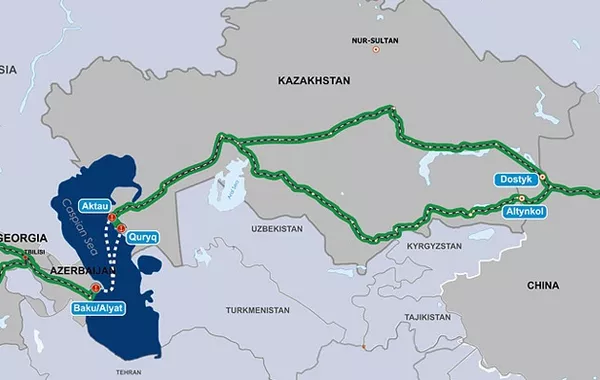
Transport and logistics infrastructure is another major recipient of investment. Given Kyrgyzstan’s landlocked geography, improvements in connectivity are essential for trade expansion and integration into regional supply chains. Investments in this sector may include road networks, logistics hubs, and cross-border transport facilities, all of which enhance the country’s role as a transit corridor in Central Asia.
Energy infrastructure, particularly in the context of hydropower potential, remains a strategic priority. Investment in this sector not only supports domestic consumption needs but also opens opportunities for electricity exports, which could become an important long-term revenue source.
Implications for Economic Outlook and Investment Climate
The overall investment dynamics observed in early 2026 point to a cautiously optimistic economic outlook for Kyrgyzstan. The combination of rising total investment, accelerating foreign inflows, and diversified sectoral allocation suggests that the country is gradually strengthening its economic foundations.
One of the most important implications of these trends is improved investor confidence. Foreign capital growth, in particular, is often sensitive to perceptions of political stability, regulatory consistency, and institutional reliability. The reported increase indicates that ongoing reforms and investment promotion efforts are beginning to reshape external perceptions of Kyrgyzstan’s business environment.
At the same time, the data also highlights the importance of sustaining this momentum. While growth rates are positive, long-term investment sustainability will depend on continued improvements in governance, infrastructure quality, and financial sector development. Maintaining a stable legal framework will be essential for ensuring that current inflows translate into durable economic gains.
Another key implication is the potential multiplier effect of infrastructure-led investment. As capital flows into transport, energy, and industrial sectors, the broader economy is likely to benefit through job creation, improved productivity, and enhanced regional integration. This could, in turn, attract additional rounds of investment, creating a reinforcing cycle of growth.
Overall, Kyrgyzstan’s 2026 investment performance reflects a transitional phase in which the economy is gradually shifting toward greater openness and capital intensity. If current trends continue, the country may further solidify its position as an emerging investment destination in Central Asia, particularly in infrastructure and resource-driven sectors.