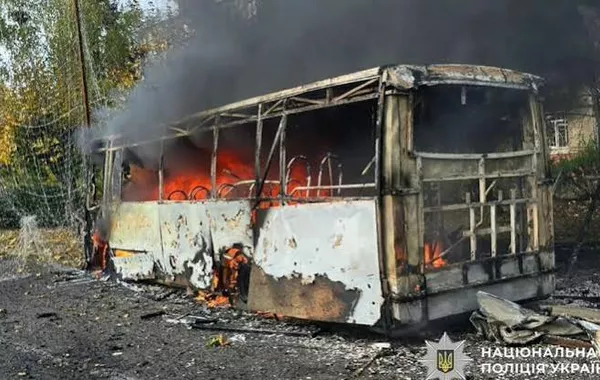
The war that broke out in the Middle East on February 28, when the Israeli-US coalition launched its attack on Iran, inflicted severe damage on critical energy infrastructure throughout the region. Oil and natural gas fields, liquefied natural gas (LNG) facilities, refineries, oil tankers, petroleum export terminals, ports, thermal power plants, and even nuclear power plants all became targets of direct strikes or the threat thereof.
The Middle East hosts around 50 percent of the world's proven oil reserves and accounts for roughly 30 percent of global oil production. It also holds about 40 percent of natural gas reserves and 20 percent of production.
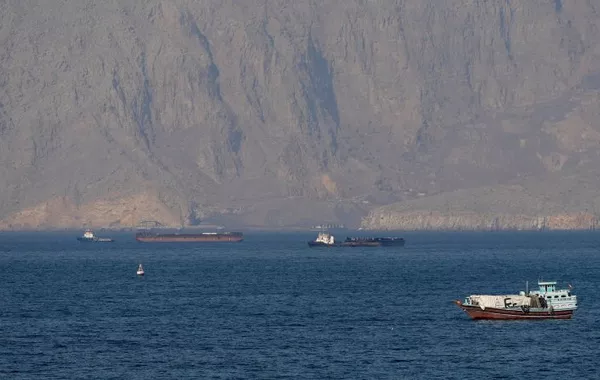
Given this concentration, the war’s impact on global energy markets was widely expected. Before the conflict, 35 percent of daily global oil shipments and 20 percent of LNG trade passed through the Strait of Hormuz, and its closure was inevitably going to plunge the world into a deep energy crisis.
In the month after the Israeli-US coalition began its strikes on Iran, the price of Brent crude surged by roughly 55 percent, while European gas prices jumped by 60 percent. Steep gasoline price hikes hit countries around the world, and governments imposed caps on fuel sales.
The International Energy Agency (IEA), which moved to release 400 million barrels from strategic petroleum reserves, called it "the worst energy crisis in history."
The crisis put Türkiye's long-standing energy independence and security strategies to a serious test. Over the years, Türkiye had taken strategic steps under its supply diversification policy: broadening the mix of sources for primary energy consumption and electricity generation, expanding the pool of energy suppliers, and investing in storage capacity and reliable energy infrastructure.
Türkiye's Energy Supply
Natural gas accounts for roughly a quarter of Türkiye's primary energy consumption and electricity generation. As of 2026, Türkiye imports pipeline gas from three countries and LNG from more than ten. Crucially, Gulf LNG exporters such as Qatar, Oman, and the United Arab Emirates (UAE) are absent from Türkiye's supplier list, which has effectively shielded the country from supply disruptions originating in the conflict zone.
If pipeline flows from Iran -- which account for 13 percent of Türkiye's gas imports and whose energy infrastructure has come under direct attack -- were permanently severed, the shortfall could be compensated through pipeline gas from Russia and Azerbaijan, LNG imports, and draws from underground storage.
The Tuz Gölü (Salt Lake) and Silivri underground natural gas storage facilities, both vital to Türkiye's energy supply security, have a combined capacity of 6.3 billion cubic meters, covering more than 10 percent of the country's annual gas consumption.
Beyond the pipeline gas and LNG imported from supplier countries, Türkiye produces around 10 million cubic meters of gas per day from the Sakarya Gas Field in the Black Sea, and there are plans to double that output.
The Trans-Anatolian Natural Gas Pipeline (TANAP) and TurkStream, with a combined capacity approaching 50 billion cubic meters, play a critical role in the energy supply security of Türkiye and the wider European market.
On top of its two onshore LNG terminals, Türkiye operates three Floating Storage and Regasification Units (FSRUs), bringing its daily LNG regasification capacity to over 160 million cubic meters.
As a result of this expanding pipeline and LNG infrastructure, Türkiye comfortably meets its annual gas consumption of 60 billion cubic meters and, through export agreements signed by the Petroleum Pipeline Corporation (BOTAŞ) in recent years, has begun supplying gas to neighboring countries such as Bulgaria.
As of 2026, Türkiye sources its crude oil and petroleum products -- which account for a third of its primary energy consumption -- from 20 different supplier countries. Of these, the only one situated directly in the crisis zone is Saudi Arabia, with a 9 percent share of Türkiye's oil imports.
In recent years, as part of its broader energy independence strategy, Türkiye has been scaling up domestic production from high-yield fields in oil, just as it has in gas. The Turkish Petroleum Corporation (TPAO) now produces over 80,000 barrels per day from the Gabar oil field, and a further increase in domestic output is anticipated in the coming period.
Beyond its traditional areas of operation in Azerbaijan, Iraq, and Russia, TPAO is poised to carry out exploration activities in the Turkish Republic of Northern Cyprus (TRNC), Somalia, Afghanistan, and Libya. In the post-crisis landscape, both TPAO and BOTAŞ stand to further expand their international footprint by establishing new energy partnerships abroad.
The Search for Alternatives
Türkiye is fast entering the ranks of nuclear energy-producing nations, driven by its push to diversify energy sources and the imperatives of what is increasingly being called the "age of nuclearization." The Akkuyu Nuclear Power Plant, built by Russia's Rosatom with an installed capacity of 4,800 megawatts, is expected to cover around 10 percent of Türkiye's electricity demand once it reaches full capacity. While the strategic goal of diversifying foreign partners remains a priority, the new nuclear projects planned for Sinop and Thrace are likely to gather further momentum in the post-crisis period.
The deployment of small modular reactors (SMRs), each with a capacity of up to 300 megawatts, also carries strategic significance for Türkiye, and there is considerable potential to build domestic manufacturing capability in this field. The ultimate goal is to bring Türkiye's nuclear capacity to 20,000 megawatts by 2050.
Renewables now make up more than 60 percent of Türkiye's total installed power capacity, which reached 124,000 megawatts in 2026, with solar and wind alone accounting for a third of that figure.
The Renewable Energy Resource Area (YEKA) model has helped raise the domestic production share of renewable energy technologies, including solar panels. Türkiye's ability to manufacture homegrown technology and key components in the solar and wind sectors could create openings for Turkish firms in the European market once the crisis subsides. Additionally, estimated reserves of around 700 million tons of rare earth elements stand to strengthen Türkiye's regional and global geoeconomic position and bargaining power throughout the energy transition.
Turning the crisis into opportunity: Türkiye's strengthening energy policy
The 2026-2030 period could give Türkiye the strategic momentum it needs to fulfill its goal of becoming a "central country in energy" and a "regional hub." As conflicts destabilize the northern and southern energy routes, a window of opportunity may be opening for alternative corridors running through Türkiye to gain real traction.
In this new chapter, Türkiye could leverage proactive foreign energy policy and energy diplomacy to pursue a number of key objectives: routing Turkmen natural gas across the Caspian to Türkiye and on to Europe, reinforcing the energy dimension of the Middle Corridor, the Zangezur Corridor, and the Development Road, establishing regional cooperation and interoperability frameworks to protect critical energy infrastructure against asymmetric threats, and capping dependence on any single supplier at below 30 percent across all energy sectors. Türkiye has both the foundation and the potential to maintain its strategic energy trajectory -- by building on the steps already taken and by treating each crisis as an opportunity.
See the original article here