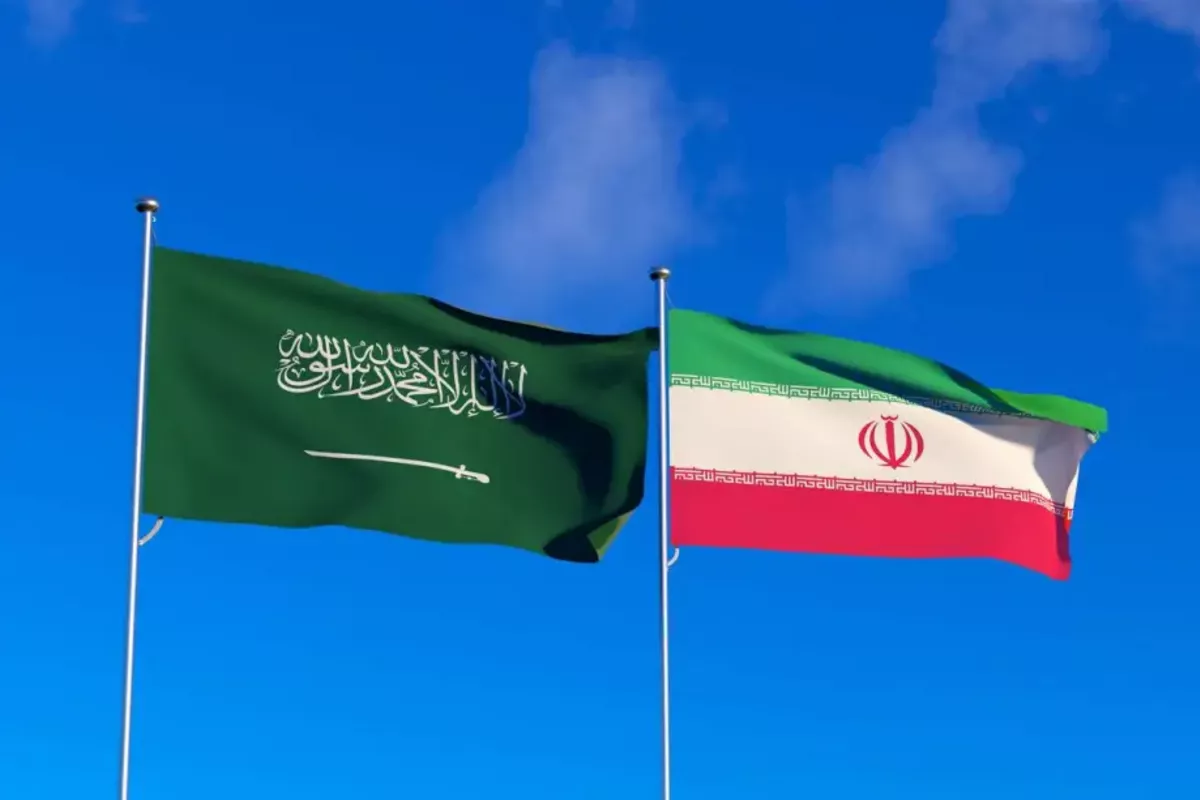
Saudi Arabia’s reported proposal for a regional non-aggression pact involving Iran and other Middle Eastern states marks one of the most ambitious diplomatic initiatives in the Gulf in recent years.
According to the Financial Times, Riyadh is promoting a framework inspired by the 1975 Helsinki Accords - the Cold War-era agreement that helped reduce tensions between the Soviet bloc and Western nations through confidence-building measures, respect for sovereignty, and commitments to peaceful coexistence.
The proposal reportedly has gained support from several European Union countries and institutions, which view it as a potential mechanism to prevent future regional wars and provide Iran with assurances against external military attacks. European officials have also encouraged Gulf Arab states to back the initiative, seeing it as a way to stabilize one of the world’s most volatile geopolitical regions.
The timing of the proposal is significant. The Middle East has spent years trapped in overlapping confrontations involving Iran, Saudi Arabia, Israel, the United States, and a network of armed non-state actors stretching from Lebanon to Yemen. While direct Saudi-Iranian relations have improved since the Chinese-brokered normalization agreement in 2023, mistrust remains deep. The question now is whether Riyadh can transform a temporary de-escalation into a durable regional security arrangement.
Why Saudi Arabia Is Pushing the Initiative
Saudi Arabia’s motivation is rooted in both economic necessity and strategic calculation. Crown Prince Mohammed bin Salman’s Vision 2030 reform program depends heavily on long-term regional stability. Riyadh’s ambition to diversify its economy away from oil, attract foreign investment, develop tourism, and position itself as a global business hub cannot succeed under the constant threat of regional conflict.
The 2019 attacks on Saudi oil facilities at Abqaiq and Khurais exposed the kingdom’s vulnerability to asymmetric warfare. Although Yemen’s Houthi movement claimed responsibility, Saudi and Western officials linked the operation to Iran. The strikes temporarily disrupted nearly half of Saudi oil production and demonstrated how quickly regional tensions could threaten global energy markets.
Since then, Riyadh has increasingly shifted from confrontation toward diplomacy. The restoration of ties with Tehran in 2023 represented a major turning point. Saudi Arabia also adopted a more pragmatic approach toward regional crises, including negotiations over Yemen and efforts to reduce tensions in Iraq, Syria, and Lebanon.
A non-aggression pact would serve several Saudi interests simultaneously. First, it could reduce the likelihood of attacks on Gulf infrastructure and shipping lanes. Second, it would position Riyadh as a leading diplomatic power capable of shaping a new regional security architecture. Third, it would allow Saudi Arabia to balance relations between the United States, China, Europe, and regional actors without being drawn into another prolonged conflict with Iran.
The Helsinki Accords model is particularly revealing. During the Cold War, the accords did not eliminate rivalry between NATO and the Soviet Union, but they created diplomatic mechanisms that lowered the risk of direct confrontation. Saudi Arabia may hope to establish a similar framework in the Middle East - not necessarily based on trust, but on mutual deterrence and structured dialogue.
The Obstacles Facing a Regional Agreement
Despite the diplomatic momentum, the barriers to a Middle Eastern non-aggression pact remain substantial. The central challenge is that the region’s conflicts are not limited to disputes between governments. Much of the instability stems from proxy networks, militia groups, and ideological rivalries that are difficult to regulate through traditional state agreements.
Iran’s regional influence relies heavily on allied armed groups such as Hezbollah in Lebanon, the Houthis in Yemen, and various militias in Iraq and Syria. Gulf Arab states and Western governments have long argued that Tehran uses these groups to project power while maintaining plausible deniability. Even if Iran formally agrees to non-aggression principles, skepticism would remain over whether its regional allies would comply.
Another major complication is Israel. Unlike the Helsinki process in Europe, the Middle East lacks an inclusive regional security framework involving all major military powers. Israel views Iran as its primary strategic threat and has repeatedly warned that it will not allow Tehran to strengthen its missile or nuclear capabilities unchecked. Without Israeli participation or tacit acceptance, any Gulf-Iran agreement could face serious limitations.
The United States also remains a crucial factor. Washington continues to maintain extensive military deployments across the Gulf and has historically served as the primary security guarantor for Saudi Arabia and other Gulf monarchies. Although the US has encouraged regional de-escalation in some cases, American policymakers remain deeply cautious about Iranian intentions, especially regarding Tehran’s nuclear program and ballistic missile development.
Internal divisions within the Gulf Cooperation Council could further complicate the initiative. While countries such as Oman and Qatar traditionally favor dialogue with Iran, others may remain wary of granting Tehran broader legitimacy without concrete security concessions.
Moreover, historical experience suggests that diplomatic breakthroughs between Saudi Arabia and Iran are often vulnerable to sudden reversals. Relations between the two powers have fluctuated for decades, shaped by sectarian competition, ideological rivalry, and conflicting geopolitical ambitions. The execution of Saudi Shia cleric Nimr al-Nimr in 2016 and the subsequent storming of the Saudi embassy in Tehran showed how rapidly tensions can escalate.
Can the Pact Actually Work?
The success of any non-aggression framework will likely depend less on formal declarations and more on whether it creates enforceable mechanisms for crisis management. The original Helsinki Accords succeeded partly because they established continuous diplomatic engagement, communication channels, and monitoring mechanisms between rival blocs.
For a Middle Eastern version to function, it would likely require several core elements: mutual commitments against attacks on civilian infrastructure, maritime security guarantees in the Gulf, mechanisms to prevent escalation between proxy forces, and regular diplomatic consultations among participating states.
Economic interdependence could also strengthen the initiative. Gulf Arab states increasingly view regional stability as essential for investment, trade, and energy exports. Iran, meanwhile, faces heavy economic pressure from sanctions and international isolation. A more stable regional environment could provide Tehran with opportunities for economic engagement, particularly with neighboring Gulf economies.
Still, expectations should remain realistic. A non-aggression pact would not erase decades of rivalry or transform Iran and Saudi Arabia into strategic partners. More likely, it would function as a limited risk-reduction arrangement aimed at preventing open warfare while allowing competition to continue through political and economic channels.
In that sense, the proposal may already reflect a broader transformation in Middle Eastern geopolitics. Regional powers are increasingly prioritizing economic development and strategic autonomy over ideological confrontation. Saudi Arabia’s outreach to Iran, combined with its growing ties with China and pragmatic diplomacy across the region, signals Riyadh’s desire to shape a more multipolar Middle East less dependent on perpetual conflict.
Whether the initiative succeeds will depend on the willingness of regional actors to move beyond short-term tactical calculations and accept a shared interest in stability. The road toward a genuine regional security architecture remains uncertain, but the very emergence of such a proposal suggests that the Gulf’s political landscape is evolving in ways that would have seemed unlikely only a few years ago.