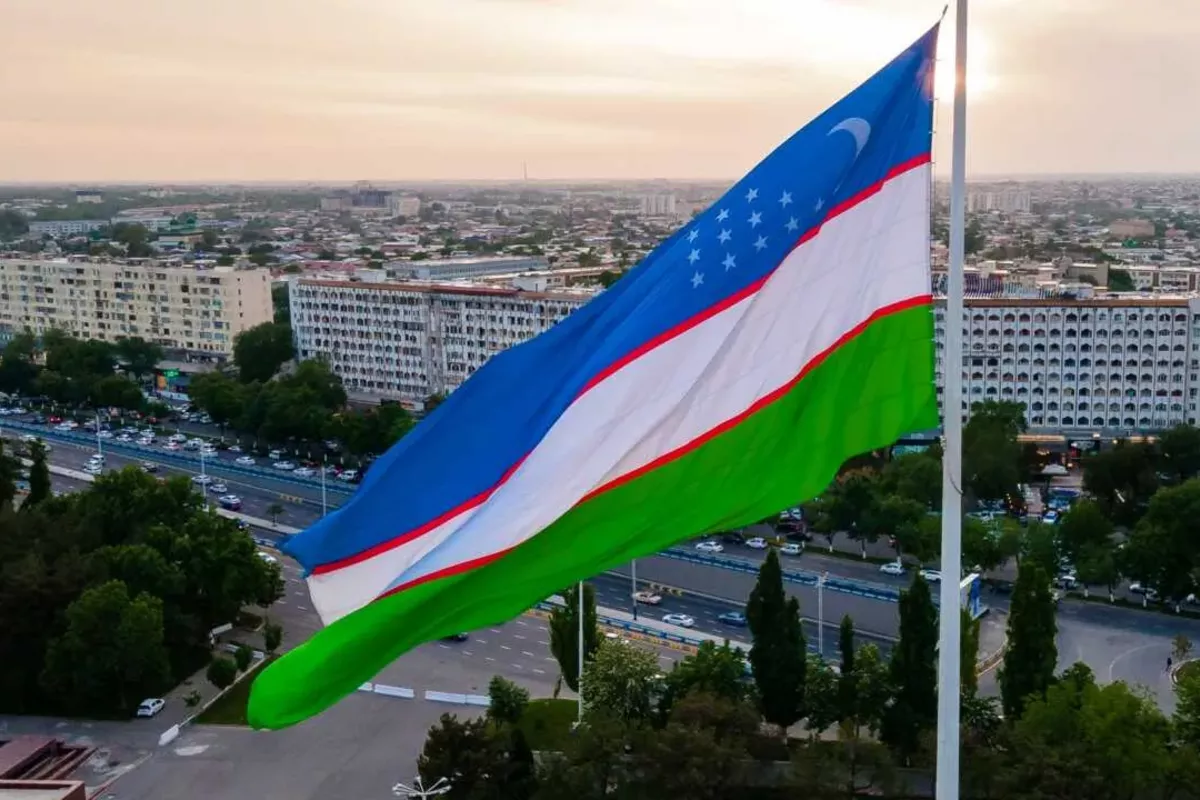
Uzbekistan’s rise over the past several years has been easy to overlook precisely because it has avoided spectacle. There has been no single dramatic “turning point,” no sharp break announced with fanfare. Instead, Tashkent has advanced through careful sequencing. First came domestic stabilization, then gradual economic opening, and only after that a more confident regional and international posture. This methodical approach has produced a country that increasingly behaves not just as a participant in Central Asia, but as a system-maker-one that promotes connectivity, helps shape regional norms, and coordinates pragmatically on security, all while preserving strategic flexibility among major external powers.
This trajectory can be understood as the interaction of two long arcs. The first is economic: a shift from a tightly state-led model toward one anchored in macroeconomic stability, market signals, and institutional reform. The second is diplomatic: an evolution from defensive self-protection toward calibrated regional leadership that avoids forcing binary geopolitical choices. Together, these arcs form what might best be described as Uzbekistan’s strategy of strategic patience-moving steadily, minimizing unnecessary shocks, and keeping options open.
From opening markets to building institutions
Uzbekistan’s reform cycle began with decisions that were bold by regional standards. Currency liberalization, capital-account easing, and the introduction of a more realistic exchange-rate regime marked a clean break with earlier administrative controls. These early steps were essential, but they were only the beginning. The more consequential phase is the one now underway: translating liberalization into durable institutions capable of sustaining private-sector growth and attracting long-term investment.
Macroeconomic performance has played a crucial role in enabling this transition. According to the International Monetary Fund, Uzbekistan maintained strong growth momentum, with real GDP expanding by 7.7 percent in 2025 and remaining resilient into early 2026. Domestic demand has been a key driver, providing political space for reforms that would otherwise be socially contentious.
At the same time, inflation dynamics have reflected the cost of necessary adjustments. Energy price reforms, in particular, have contributed to inflationary pressures. These reforms-touching household utility bills, fuel prices, and tariffs-are often where reform coalitions fracture. Uzbekistan has attempted to push through these changes while keeping growth high enough to preserve social legitimacy.
This balance captures the central tension of Uzbekistan’s economic opening. The state wants markets to function more effectively and allocate resources more efficiently, but it also recognizes that reform must remain socially survivable. Strategic patience here is not hesitation; it is an effort to avoid destabilizing shocks that could derail the broader reform agenda.
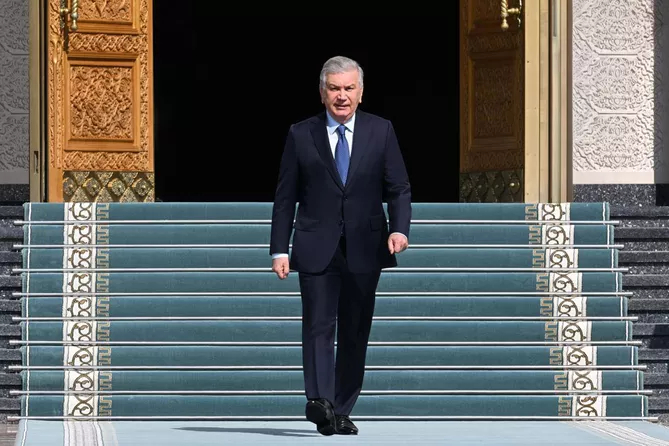
Photo: Uzbekistan President's press service
Privatization and the credibility test of reform
If macro stability provides the foundation, the real test lies in whether Uzbekistan can reduce the state’s footprint in the economy without simply replacing it with new, opaque rent-seeking arrangements. For investors and partners, credibility hinges not on reform rhetoric but on governance outcomes.
Privatization and state-owned enterprise reform sit at the center of this challenge. The government has signaled its intent to move major assets-particularly in banking, telecommunications, and industrial sectors-toward more market-facing governance models. This includes stronger disclosure requirements, clearer oversight, and an emphasis on minority shareholder protections.
A flagship instrument in this effort is the Uzbekistan National Investment Fund (UzNIF), launched with Franklin Templeton as its fund manager. The goal is to bundle minority stakes in major state-linked companies into a professionally governed structure that can be benchmarked against international standards and eventually listed on global markets. In theory, this approach serves multiple objectives: improving governance, developing domestic capital markets, and telling a credible “investable story” to international investors.
Reporting by the Financial Times has highlighted plans to list approximately $1.7 billion worth of Uzbekistan’s state assets by early 2026, framing the move as part of a broader effort to enhance transparency and attract global capital. Local business reporting has also pointed to a potential initial public offering in the first half of 2026, possibly involving dual listings in London and Tashkent. If executed successfully, such a listing would mark a major reputational milestone for Uzbekistan’s capital-market ambitions.
Yet risks remain. Privatization credibility ultimately depends on which assets are genuinely opened to competition, what rights minority shareholders receive, and whether competitive neutrality is enforced in practice. Like many late reformers, Uzbekistan faces the danger of a “halfway house”: enough market language to attract interest, but insufficient governance depth to sustain confidence over time.
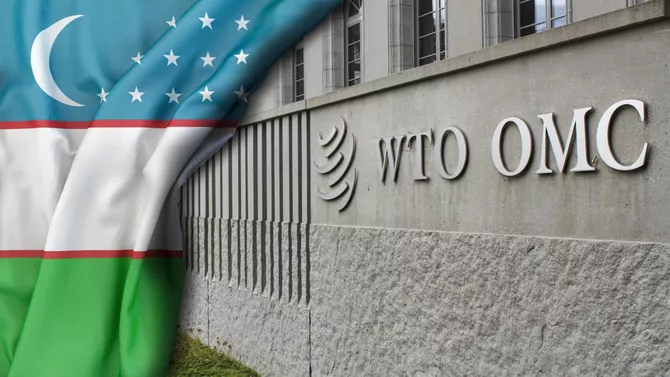
Photo: Shutterstock
WTO accession as a reform anchor
Uzbekistan’s renewed push to join the World Trade Organization is not simply about gaining better access to global markets. It is also about anchoring domestic reforms within an external rules-based framework that is difficult to reverse.
Several developments since late 2025 point to momentum. In October 2025, Uzbekistan concluded bilateral negotiations on market access for goods and services with the European Union, a key milestone on the accession path. The government has also publicly targeted completion of the accession process by the WTO’s 14th Ministerial Conference in March 2026, a timeline reflected in updates from the World Trade Organization in early 2026.
The importance of WTO accession lies in the discipline it imposes. Accession negotiations force governments to confront politically sensitive issues such as subsidies, customs practices, technical standards, state trading, procurement rules, and services regulation. For reformers inside Uzbekistan’s bureaucracy, the WTO serves as a powerful external reference point: reforms are no longer discretionary but necessary to meet international commitments.
At the same time, WTO accession carries political risks. Binding trade rules reduce policy flexibility and expose domestic producers to competition. Uzbekistan’s approach reflects its broader strategic patience-moving toward accession while attempting to sequence compensatory measures, including compliant industrial policy tools, targeted social protection, and gradual exposure where possible.
Energy transition as industrial policy
Uzbekistan’s economic opening does not imply a retreat of the state from development. Rather, it signals a shift in how the state intervenes-away from direct control of production and toward the construction of enabling platforms such as energy systems, logistics networks, and industrial infrastructure.
Energy is the clearest illustration of this approach. Reliable power supply has been framed as a national competitiveness issue, not merely a technical concern. In December 2025, President Shavkat Mirziyoyev launched the operation of 42 energy facilities and the construction of 21 new projects, part of an infrastructure push reported to be worth around $11 billion. These projects included solar, wind, thermal, and hydropower plants with a combined capacity of roughly 3.5 gigawatts, alongside expectations of significant annual generation gains and reduced natural gas consumption.
The implications are twofold. First, energy reliability underpins industrial upgrading. Investors may tolerate regulatory complexity or bureaucratic friction, but they cannot operate with unstable power supply. Second, the energy transition has become a foreign investment story. Uzbekistan’s renewables drive has attracted Gulf and other international investors, often through independent power producer models that align climate goals with capital inflows.
Policy ambitions are also rising. The Organisation for Economic Co-operation and Development has noted that Uzbekistan revised its 2030 renewable energy target upward-from 25 percent to an ambitious 40 percent of installed capacity. The challenge now lies in execution: grid modernization, storage capacity, tariff design, and regulatory credibility will determine whether private investment strengthens the system or creates hidden fiscal risks.
Connectivity as a tool of statecraft
For a landlocked country, connectivity is both an economic necessity and a diplomatic opportunity. Uzbekistan has embraced this logic, treating infrastructure corridors not just as trade facilitators but as instruments of statecraft.
Two initiatives illustrate this strategy. The first is the China-Kyrgyzstan-Uzbekistan railway, a long-discussed project that has reportedly entered implementation stages. If completed, it would diversify regional routing options and enhance integration between Central Asia and China.
The second is the Trans-Afghan Railway vision. In July 2025, Uzbekistan, Afghanistan, and Pakistan signed a framework agreement related to feasibility studies for a rail corridor linking Central Asia to Pakistani ports. International assessments, including those referenced by the OECD, note Uzbekistan’s interest in southern routes while also highlighting constraints related to financing and security.
These projects are not merely about transport. They represent a “yes agenda” that emphasizes shared growth and future opportunity rather than coercive leverage. Connectivity allows Uzbekistan to increase its relevance without militarization, offering partners tangible benefits while avoiding overt geopolitical signaling.
From caution to convening in foreign policy
Uzbekistan’s foreign policy has evolved from a historically cautious, inward-looking posture toward a more confident form of regional leadership. This shift is most visible in its embrace of multilateral formats within Central Asia.
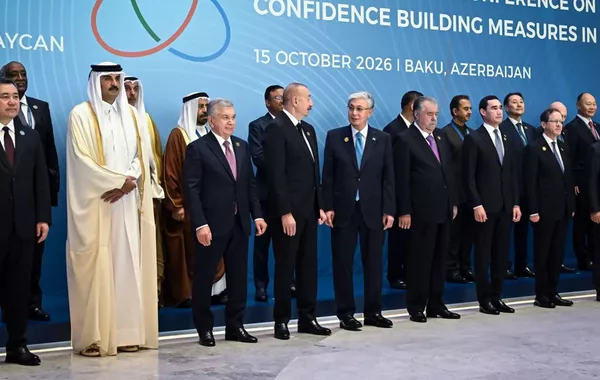
The Consultative Meetings of Central Asian heads of state, hosted in Tashkent in November 2025, exemplify this trend. Reporting by Reuters noted President Mirziyoyev’s proposal to formalize cooperation into a “Community of Central Asia,” encompassing economic, security, and environmental cooperation. Notably, the proposal also envisaged regular engagement with Azerbaijan, signaling an intent to link Central Asia more closely with the South Caucasus.
This outward-looking vision reflects Uzbekistan’s ambition to shape a broader interconnected space across Eurasia. At the same time, its leadership style remains non-coercive. Rather than imposing outcomes, Tashkent focuses on convening, agenda-setting, and advancing functional cooperation in areas such as energy, water management, and transport.

Master Plan of New Tashkent (Photo: New Tashkent Directorate)
Balancing major powers through strategic patience
Uzbekistan’s external posture can be summarized as multi-vector diplomacy anchored in regional cooperation. Strengthening Central Asian coordination reduces vulnerability to external pressure, while diversified partnerships preserve strategic autonomy.
This approach allows Uzbekistan to engage with China on infrastructure, with Europe on trade rules and standards, and with Gulf partners on energy investment-without framing any relationship as exclusive. Strategic patience in this context means avoiding forced choices, calibrating commitments to domestic capacity, and leading by shaping regional agendas rather than reacting to external ones.
Tests ahead for the quiet rise
Uzbekistan’s trajectory appears increasingly durable, but it is not guaranteed. Several near-term tests will determine whether strategic patience translates into lasting strategic success.
First, WTO accession follow-through will be critical. Meeting the 2026 timeline and implementing commitments would significantly enhance credibility; slippage would weaken the reform anchor. Second, the quality of privatization and capital-market governance-particularly around UzNIF-will be closely scrutinized by investors. Third, infrastructure delivery and corridor security will shape Uzbekistan’s strategic geography, especially for routes involving Afghanistan, where risks remain beyond Tashkent’s control.
A state learning to lead
Uzbekistan’s quiet rise is not accidental. It reflects a deliberate strategy that links economic reform with regional leadership and diplomatic flexibility. By sequencing change, anchoring reforms externally, and investing in connectivity and energy platforms, Tashkent is positioning itself as an agenda-setter rather than a rule-taker.
If this approach holds-combining institutional reform, credible privatization, and pragmatic statecraft-Uzbekistan is likely to emerge not as the loudest power in its neighborhood, but as the one that quietly makes cooperation work.