Anadolu Agency has published an explainer detailing the military assets the United States is deploying to the Middle East amid rising tensions with Iran.
The Caspian Post republishes the article.
The US has stepped up its military presence in the Middle East, deploying a large influx of naval and air assets in a move that marks a significant shift in its regional force posture amid heightened tensions with Iran.
The Pentagon is rapidly deploying a carrier strike group, advanced fighter squadrons, and missile defense batteries. The move comes as US President Donald Trump signaled a temporary pause in potential hostilities, citing a halt in Iranian executions, even as he previously declared American forces were "locked and loaded."
The mobilization underscores Washington’s urgent effort to re-establish a credible military threat after months of reduced presence.
Closing Strategic Gap
The sudden influx of firepower follows reports that US military officials deemed the theater "not ready" for a major confrontation earlier in January.
According to US media reports, Trump had considered a range of response options to the crackdown on protesters in Iran but faced logistical hurdles. A significant portion of US military assets had been shifted toward the Caribbean and Asia in late 2025, leaving the Middle East insufficiently prepared for sustained combat operations.
A senior military official cited by the New York Times noted that commanders in the region requested additional time to consolidate US positions and bolster defenses against possible Iranian retaliation. Furthermore, Israeli Prime Minister Benjamin Netanyahu reportedly cautioned Trump that Israel was unprepared for Iranian retaliation.
This hesitation stands in stark contrast to June 2025, when the US executed Operation Midnight Hammer, in which the US forces carried out airstrikes on three key Iranian nuclear facilities - Fordow, Natanz and Isfahan.
To prevent a repeat of the logistical shortfalls witnessed in early January 2026, Washington has ordered a rapid force generation event.
Naval Power Projection
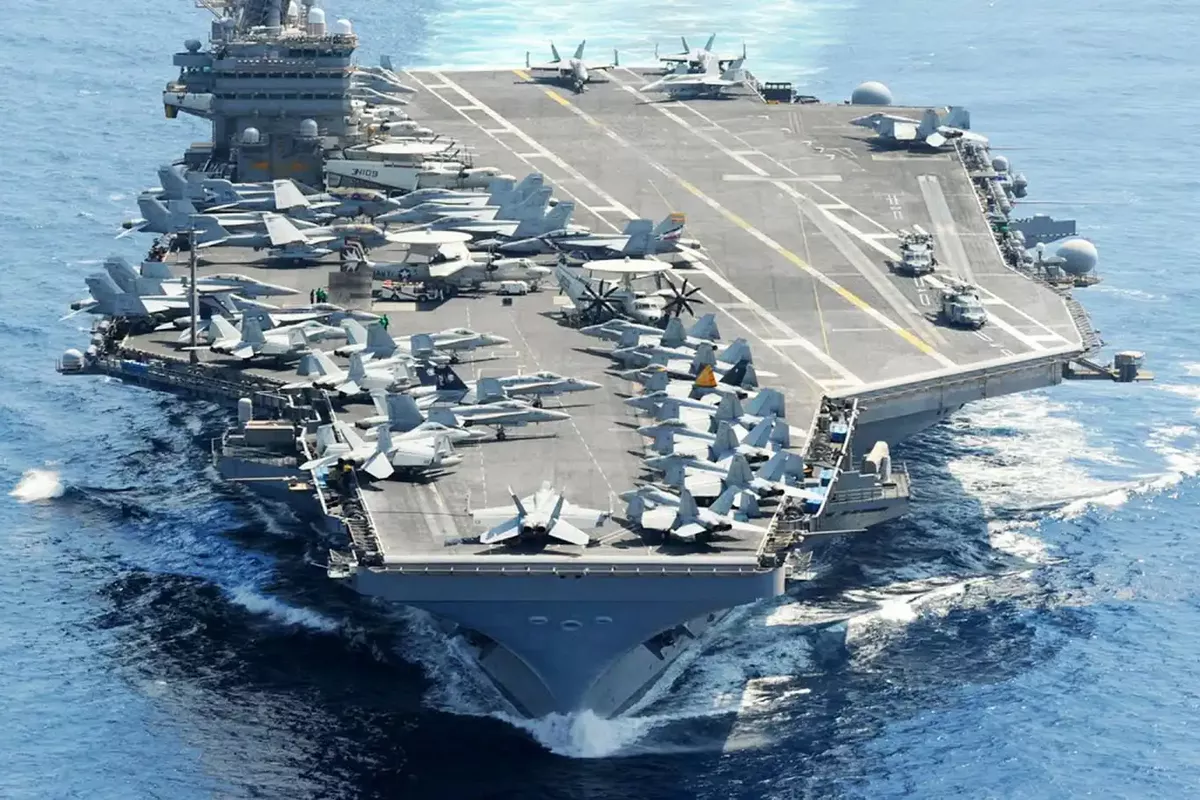
The centerpiece of this reinforcement is the arrival of the USS Abraham Lincoln (CVN-72) Carrier Strike Group. Previously operating in the South China Sea, the nuclear-powered aircraft carrier has now entered the US Central Command (CENTCOM) area of responsibility and is operating in the Arabian Sea.
The vessel hosts Carrier Air Wing 9, a sophisticated aerial force capable of projecting power deep inland. The air wing includes F-35C Lightning II stealth fighters from squadron VMFA-314, multiple squadrons of F/A-18E/F Super Hornets, and EA-18G Growler electronic attack aircraft designed to suppress enemy air defenses.
Escorting the carrier are three guided-missile destroyers from Destroyer Squadron 21: the USS Frank E. Petersen Jr. (DDG 121), the USS Michael Murphy (DDG 112), and the USS Spruance (DDG 111).
These vessels join a formidable naval picket already established in the region. The US has been hosting multiple Arleigh Burke-class destroyers, with reports confirming the presence of the USS McFaul (DDG 74) and USS Mitscher (DDG 57) in the Central Command area of responsibility and USS Roosevelt (DDG 80) is in the Mediterranean Sea. These surface combatants are equipped with the Aegis Combat System and have Mk 41 Vertical Launch Systems capable of firing a mix of missiles, including BGM-109 Tomahawk land-attack cruise missiles.
This configuration provides US commanders with the capability to launch precision strikes deep inside Iran from the relative safety of international waters. Additionally, the carrier group includes nuclear-powered attack submarines, which Pentagon officials confirmed at least one operating in the region, add a stealthy layer of cruise missile capability to the gathered armada.
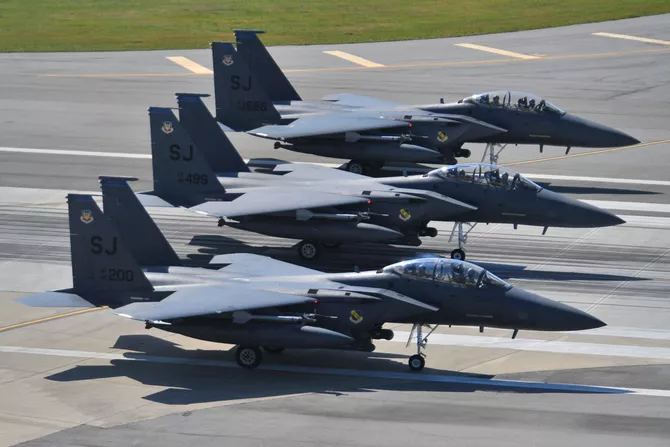
Photo: US Air Force
Air Superiority, Deep Strike Capability
Parallel to the naval buildup, the US Air Force has substantially increased its land-based strike potential.
In a significant redeployment of air power, the 494th Expeditionary Fighter Squadron has relocated several - up to a dozen - F-15E Strike Eagle combat jets from Lakenheath, UK, to Muwaffaq al Salti Air Base in Jordan.
The F-15E is a critical platform for the types of missions Washington envisions in a potential conflict with Tehran. The two-seat fighters are designed for deep-penetration missions and can carry precision-guided munitions and bunker-busting bombs necessary to target hardened Iranian infrastructure.
KC-135 Stratotankers, which provide aerial refueling and extend the reach of both land and carrier-based jets, were known to be in the region.
At Al Dhafra Air Base in the UAE, the US continues to operate reconnaissance aircraft and unmanned aerial vehicles, including MQ-9 Reapers.
Further enhancing intelligence capabilities, a US Air Force RC-135W Rivet Joint aircraft recently landed in Qatar, according to flight tracking data. This specialized platform is used to monitor electronic emissions, likely tracking Iranian radar and communication networks to build target packages for the arriving strike forces.
Defensive Shield, Troop Surge
As offensive assets arrive, the US has also moved to harden its defensive posture to protect American troops and allies from Iranian ballistic missile retaliation, a key concern raised by Israeli officials.
CENTCOM and regional partners recently opened a new coordination cell at Al Udeid Air Base in Qatar on Jan. 12. The new Air Defense Operations Cell (MEAD-CDOC) aims to enhance integrated air and missile defense across the theater.
Meanwhile, THAAD batteries have been positioned in Israel and the UAE, complemented by Patriot systems at bases across Qatar, Kuwait, and Jordan.
The deployment of the Abraham Lincoln strike group and the additional air squadrons has added roughly 5,700 US service members to the region. This surge brings the total US troop strength in the Middle East to approximately 50,000 personnel.
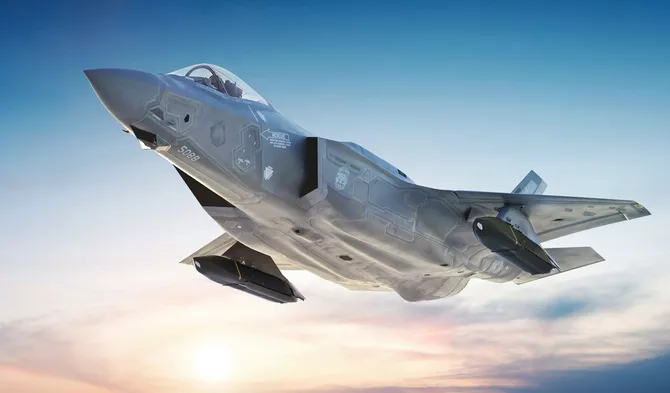
Photo: US Air Force
Political Volatility
The military buildup occurs against a backdrop of intense political volatility in Iran and mixed signals from Washington.
Iran has been rocked by large-scale protests in cities nationwide, driven by economic grievances and the depreciation of the rial. In response to the Iranian government’s crackdown on dissent, Trump took to his social media platform Truth Social to urge Iranians to "keep protesting" and to "seize institutions."
Trump warned of a US "rescue" if protesters were killed, stating that American forces were "locked and loaded." He claimed that "help is on its way" without offering specifics, while hinting broadly at military options.
However, the US president shifted tone as he said that Tehran had paused planned executions.
On Monday, in an interview with the news site Axios, Trump described the situation with Iran as "in flux," citing the arrival of a "big armada."
"They want to make a deal. I know so. They called on numerous occasions. They want to talk," Trump said.
Despite the diplomatic opening, the physical reality on the ground has changed. The deployment of the USS Abraham Lincoln and the fortification of regional defenses have closed the readiness gap that reportedly delayed US action earlier in January, giving Washington the immediate capability to act should the diplomatic pause break down.