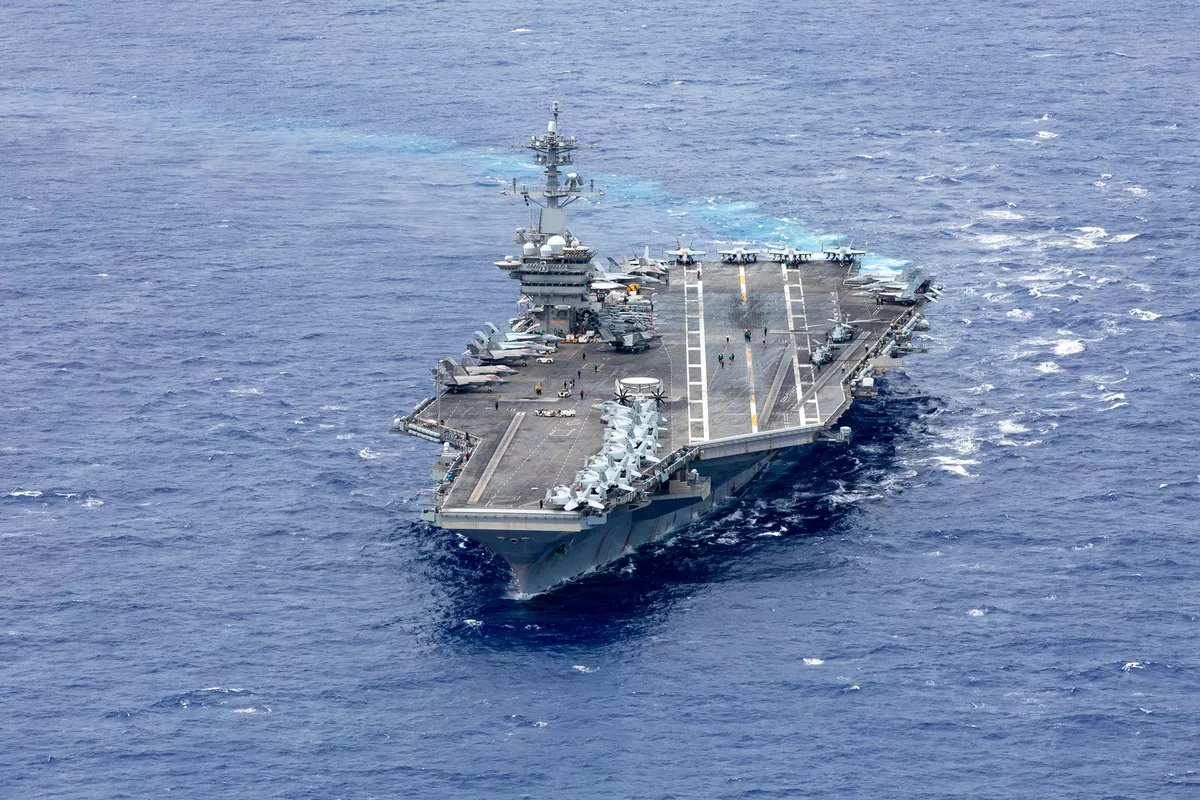
On January 26, 2026, the U.S. Navy’s USS Abraham Lincoln carrier strike group entered the Middle East amid escalating tensions between Washington and Tehran. The timing is calculated. This deployment is not a symbolic show of force but a practical expansion of U.S. military options in the region, bringing together airpower, missile defense, strike capabilities, intelligence assets, and crisis-response flexibility. Its presence significantly broadens the range of choices available to U.S. policymakers in the coming days.
The deployment comes against the backdrop of Iran’s violent suppression of domestic protests and growing concern in Washington over what officials have warned could amount to “mass executions” of detainees. Iranian state-affiliated media have reported at least 3,117 deaths, while human rights groups and activists cite higher figures along with widespread arrests. The U.S. administration has publicly warned Tehran of consequences, while Iran has responded that any American attack would be treated as an act of full-scale war. At the same time, regional states-most notably the United Arab Emirates-have made clear they do not want their territory, airspace, or waters used to launch attacks against Iran.
Within this context, the arrival of the carrier raises two central questions: what follows next, and what is Washington ultimately trying to achieve?
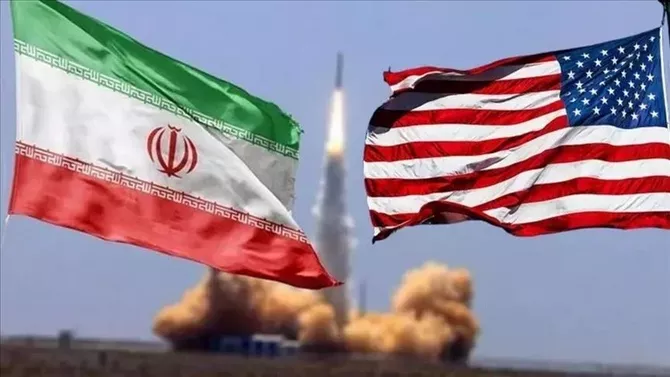
Photo: Shutterstock
Creating Options and Shaping Behavior
A carrier strike group remains one of the most versatile military tools the United States can deploy in the Middle East, serving three critical purposes.
First, it provides rapid, credible options. A carrier brings a full air wing and command-and-control infrastructure capable of sustained operations without relying entirely on regional bases-an increasingly important advantage as partners grow wary of political exposure. The UAE’s refusal to allow its territory or airspace to be used for strikes highlights how quickly access can become constrained.
Second, it influences adversary behavior through deterrence and coercive signaling. Deterrence is not limited to the threat of immediate attack. The presence of a carrier reassures allies, signals resolve, and aims to convince Tehran that escalation would be costly or ineffective. U.S. officials have described the deployment as strengthening the president’s ability to defend American forces and, if necessary, carry out military action.
Third, it provides insurance against sudden escalation. The Middle East remains vulnerable to rapid crises-from drone and rocket attacks on bases to maritime incidents or sudden Israel-Iran exchanges. A carrier offers both defensive and offensive flexibility while giving political leaders time to assess options.
In essence, the carrier represents capability rather than commitment: a tool to pressure, protect, and, if required, strike.
Firepower at Sea
Initial reports indicated that the Abraham Lincoln arrived with three guided-missile destroyers, significantly increasing U.S. naval firepower in the region. The accompanying vessels-USS Spruance, USS Michael Murphy, and USS Frank E. Petersen Jr.-add layered air and missile defense, a critical safeguard against drone or missile attacks by Iran or aligned groups.
These destroyers also carry Tomahawk cruise missiles, a key component of any early strike scenario, and expand surveillance and escort capabilities across major maritime routes. Combined with the carrier’s air wing, the strike group can conduct defensive patrols, precision strikes, maritime security missions, electronic warfare, and intelligence collection simultaneously.
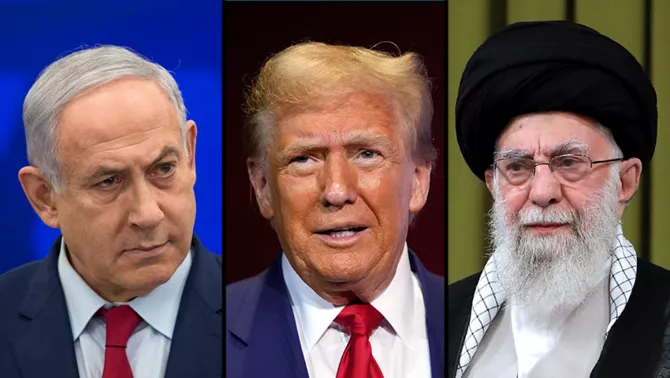
Photo: Getty Images
A Broader Military Posture
The carrier deployment is part of a wider buildup. U.S. officials have confirmed the movement of additional fighter aircraft and air defense systems to the region, alongside exercises intended to demonstrate the ability to rapidly deploy and sustain airpower. Reports have pointed to the arrival of F-15E Strike Eagles and increased military cargo flights, underscoring that this is a broader posture adjustment rather than an isolated naval move.
Allied actions reinforce the signal. The United Kingdom has deployed Typhoon fighter jets to Qatar to strengthen defensive coverage. Together, these measures create a layered deterrent: sea-based aviation, land-based fighters, and reinforced air defenses designed to deter escalation and protect U.S. and allied assets if deterrence fails.
Why the Moment Matters
Public messaging has focused on humanitarian and political concerns, particularly Iran’s crackdown on protests that began in late December and the prospect of executions. Iran’s own casualty figures, coupled with higher external estimates, have turned the situation into an international flashpoint.
But carrier deployments are rarely driven by a single factor. This move also reflects recent precedent. In June 2025, Israel and Iran engaged in a 12-day conflict following Israeli strikes on Iranian military and nuclear-related sites and subsequent Iranian retaliation. During that crisis, the United States carried out a major regional buildup and later struck three Iranian nuclear facilities.
That episode shapes current perceptions. Tehran is likely to interpret large U.S. deployments as potential strike preparation. Israel may assume U.S. involvement could follow renewed escalation. Regional governments, meanwhile, are increasingly cautious about appearing to facilitate military action.
Washington’s Strategic Aim
Stripped of rhetoric, the U.S. approach appears to pursue three overlapping objectives.
First, the protection of U.S. forces and infrastructure. With heightened tensions and warnings from Iran-aligned militias, defending American personnel and bases is the minimum requirement.
Second, reassurance of partners while maintaining political flexibility. Regional states want stability without entanglement. A carrier allows Washington to signal commitment without forcing partners into visible participation, while also assuring markets and allies that maritime security can be maintained even if basing options narrow.
Third, coercive diplomacy toward Tehran. The timing suggests an effort to pressure Iran to restrain executions, curb repression, and avoid regional retaliation, while preserving the ability to escalate if warnings are ignored.
In this sense, the carrier operates as leverage-diplomatic pressure backed by visible force.
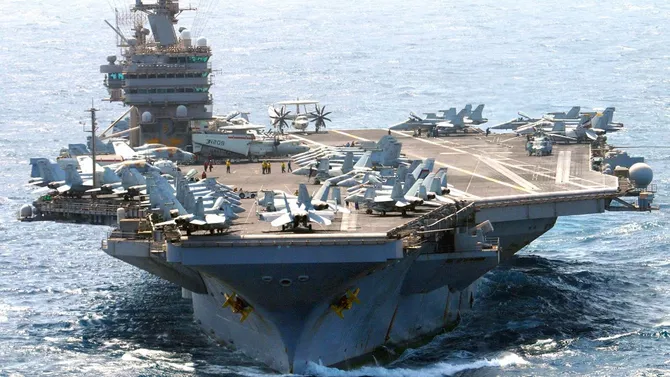
Photo: US Navy
Risk of Escalation
A broader Iran-Israel-U.S. conflict remains possible, though not inevitable. Iran-aligned groups have issued warnings, and proxy dynamics remain particularly dangerous because they allow deniability and rapid escalation through attacks on bases, shipping, or infrastructure.
The legacy of June 2025 complicates matters further. All sides believe they can absorb limited exchanges, yet also fear that defenses could be overwhelmed. Public red lines and hardened rhetoric reduce room for quiet compromise, increasing the risk of miscalculation.
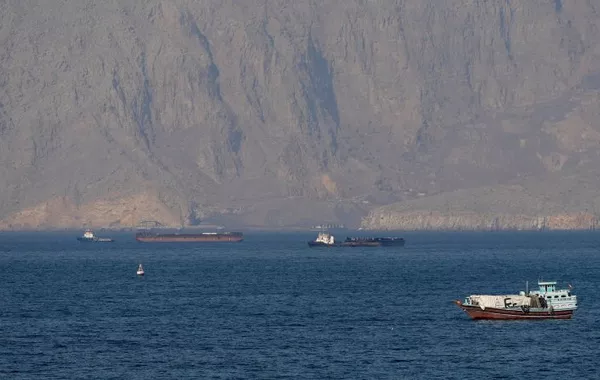
Geography also matters. Carrier operations closer to the Gulf of Oman or the North Arabian Sea shorten reaction times, making even minor incidents-such as drone encounters or naval harassment-potential flashpoints.
Still, constraints remain strong. Regional partners favor de-escalation and will limit how their territory is used. The U.S. can signal readiness without firing a shot through patrols, exercises, and visible deployments. Iran understands the costs of direct confrontation and may prefer calibrated, deniable responses unless it believes regime survival is at risk.
What Comes Next
Four developments bear close watching.
First, more visible deterrence through intensified messaging, flight operations, and allied coordination.
Second, quiet diplomacy accompanying loud deployments, often through regional intermediaries seeking to de-escalate.
Third, increased proxy activity in the form of limited, probing actions rather than immediate large-scale attacks.
Fourth, an eventual decision point. If Washington judges that Iran is backing down, the carrier may remain as a standing deterrent. If Iran defies warnings or a proxy attack kills Americans, the same forces could form the opening phase of a strike.
Bottom line:
The arrival of the USS Abraham Lincoln reflects coercive deterrence in action. The United States is seeking to shape Iranian behavior by making its military capability visible, flexible, and less dependent on regional basing politics. Escalation is possible, particularly through miscalculation or proxy conflict, but it is not predetermined. The key indicators will be attacks on U.S. personnel, a sharp intensification of repression or executions in Iran, or renewed direct Iran-Israel confrontation.