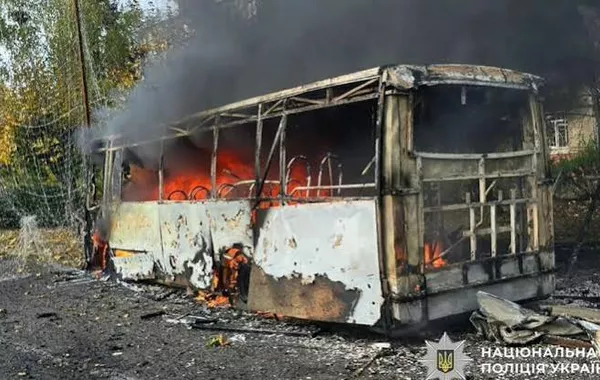
Why Did Iran Strike Precisely Nakhchivan Airport?
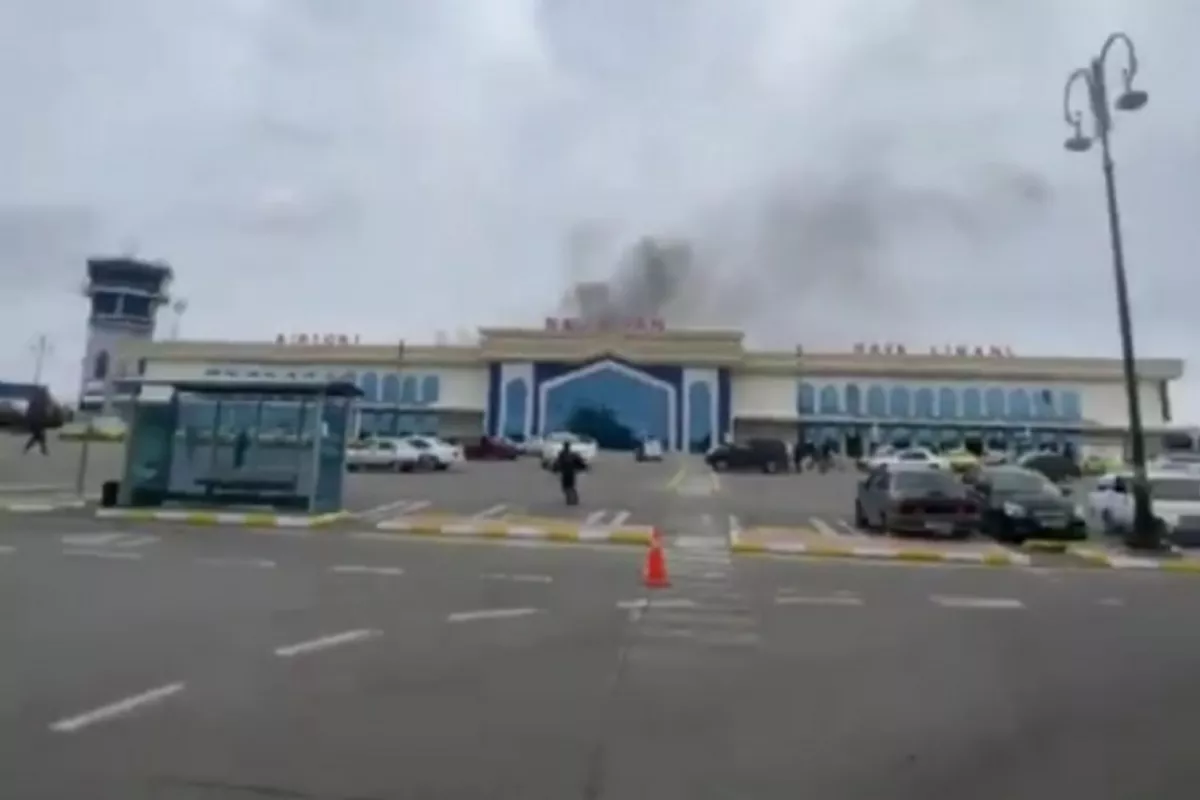
The drone strike on the territory of Nakhchivan, reportedly carried out by the Iranian armed forces, has sparked serious outrage in Azerbaijan, quickly becoming one of the most widely discussed developments in the region. Many experts and observers view the incident not merely as an isolated military episode amid broader regional tensions, but as a political signal that raises numerous questions. In Baku, the move is widely perceived as a demonstration of ingratitude and political hypocrisy on the part of the Iranian regime, particularly given the broader context of relations between the two countries in recent years.
The mullah regime knows that the main part of Azerbaijan is connected to the Nakhchivan Autonomous Republic only by air transport. Therefore, by disabling the airport, they want to completely cut off the connection between Nakhchivan and the rest of Azerbaijan.
This method was actively used by Armenia in the 1990s, and now Iran is following that example.
Azerbaijan has traditionally adhered to the principle of good neighborliness in its relations with all countries in the region, including Iran. For many years, official Baku has emphasized that Azerbaijani territory has never been used and will never be used against neighboring states. This has been a principled and consistent position repeatedly articulated at the highest levels of government. Azerbaijani authorities have stressed that the country poses no threat to Iran or any other state and remains committed to maintaining stability and security in the South Caucasus and the wider Caspian region.
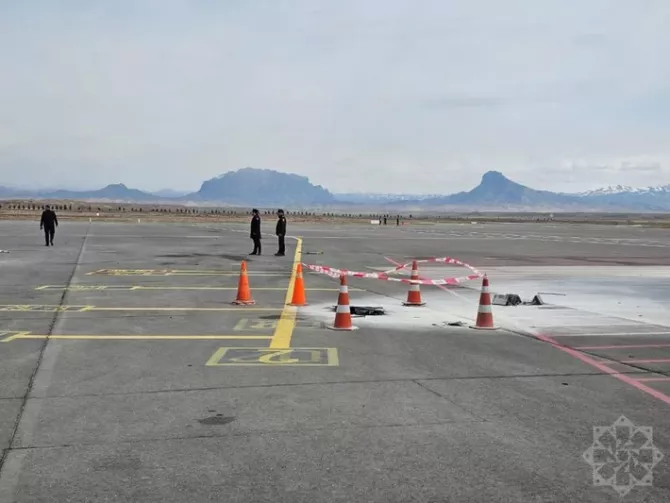
Photo: Azertac
Against this background, the reported strike appears particularly unexpected and difficult to explain. It occurred at a moment when Azerbaijan had been demonstrating a restrained and diplomatically balanced stance toward Iran. Following recent events in Iran connected with the death of the country’s Supreme Leader, Azerbaijani President Ilham Aliyev was among the first international leaders to express official condolences. He personally visited the Iranian embassy, a gesture widely regarded as an important diplomatic sign of respect. In addition, discussions had taken place regarding the possible delivery of humanitarian assistance to Iran, further demonstrating Baku’s intention to maintain relations based on mutual respect and cooperation.
For this reason, the incident has triggered an especially sharp reaction in Azerbaijan. The reported target was a civilian infrastructure facility - the airport in Nakhchivan, which is used daily by ordinary citizens. In the modern world, attacks on such facilities inevitably raise serious concerns.
Civilian infrastructure, particularly aviation infrastructure, plays a crucial role in ensuring public safety and the normal functioning of society. Any attack on such objects is perceived not only as a threat to a particular country but also as a challenge to broader regional stability.
Critics of Iranian policy point to what they see as a clear contradiction between Tehran’s official rhetoric and its practical actions. At the diplomatic level, Iran frequently emphasizes the importance of respecting the sovereignty of regional states, speaks out against external interference, and calls for strengthening security across the Middle East and neighboring regions. However, a strike on a civilian facility within the territory of a neighboring country inevitably raises doubts about the consistency of such statements.
Such actions also risk undermining the fragile trust that has developed among countries in the region over many years. The South Caucasus remains an area of complex political dynamics where even a single provocation can trigger wider repercussions. In such circumstances, it is particularly important for regional actors to avoid steps that could be interpreted as direct threats or attempts at pressure.
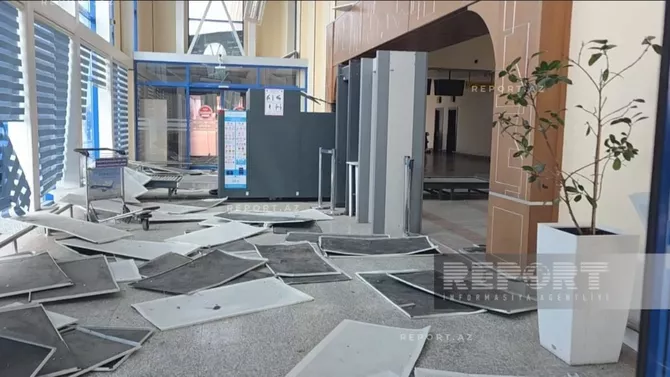
Photo credit: Report
Furthermore, the use of drones against civilian infrastructure is widely viewed as a troubling signal. From a strategic perspective, such strikes rarely achieve meaningful military objectives. Instead, they tend to escalate tensions, weaken diplomatic efforts, and increase risks for civilian populations.
The history of the region demonstrates that attempts to exert pressure on Azerbaijan rarely produce the results expected by those who initiate them. Throughout its modern history, the country has repeatedly faced various security challenges and external pressures. Yet each time, Azerbaijan has demonstrated an ability to safeguard its national interests and maintain the security of its territory. Azerbaijani state policy has traditionally combined diplomacy, pragmatism, and a readiness to defend national sovereignty.
Many analysts also emphasize the broader geopolitical context surrounding the incident. The Middle East and the South Caucasus are currently experiencing a period of heightened geopolitical turbulence. Conflicts, political crises, and economic pressures intersect across the region, creating a highly unstable environment. In such circumstances, even seemingly limited actions can carry far-reaching consequences and intensify instability well beyond the immediate area of conflict.
For this reason, the events surrounding Nakhchivan are increasingly being viewed not simply as a localized incident but as a worrying signal for the wider regional security architecture. If attacks on civilian infrastructure begin to emerge as an accepted instrument of political pressure, this would create a dangerous precedent capable of undermining the foundations of international cooperation and trust between states.
History repeatedly shows that such actions rarely remain without political and diplomatic consequences. States that choose to apply forceful pressure against their neighbors often face responses at diplomatic, political, or international levels.
At a time when regional stability is already under strain, restraint and responsibility in decision-making become more important than ever. Both the South Caucasus and the Middle East are currently under significant pressure from global geopolitical dynamics. New provocations targeting civilian infrastructure risk increasing the chances of escalation and undermining prospects for long-term stability - a stability that ultimately serves the interests of all countries in the region.
By Samir Muradov