Where Does Türkiye Stand in the EU-India Free Trade Agreement?
The global trading system has experienced its most severe disruptions in recent years because of the sharpening of geo-economic competition, shocks in supply chains, and strategic tensions between major economies. These basically supply-side forces have a negative influence on the classic framework of free trade. In fact, the problem is not simply about trading.
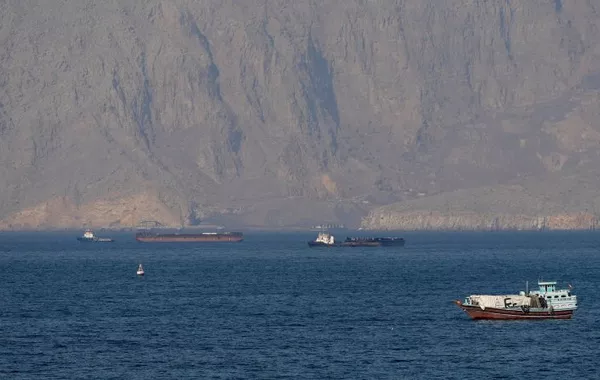
The relationship between the Strait of Hormuz and energy trade is currently one of the hottest topics on the agenda. Structural issues, such as the EU-India trade agreement, also have significance. So, this turning point in global trade seeks answers to not just economic but political questions as well.
New Steps, New Moves
Global trade order is eroding because of geopolitical tensions and protectionist policies, which are gaining strength again in today’s world. Hence, the EU-India free trade agreement (FTA) represents a tangible reflection of the European Union's search for risk diversification and strategic autonomy. The high tariffs and volatile trade policies implemented in the U.S. in recent years have pushed global uncertainty indices above historical averages. This directly has an influence on countries’ and firms' investment and supply decisions.
According to International Monetary Fund (IMF) calculations, the effective U.S. tariff rates ranged from 3% to a maximum level 24% in 2025 and declined to around 18% by the year's end. This volatile movement shows how rapidly trade costs can change. The fact that some of these tariffs were overturned by U.S. courts and President Donald Trump's swift response of increasing tariffs within his jurisdiction. These moves show that global trade will face more waves. This turbulence has inevitably accelerated the search for new alternatives in global production networks.
One example of this is the EU-India FTA, signed in January 2026. Reached after nearly 20 years of negotiations. The agreement carries far more significance than a technical tariff-cutting document. Even if the agreement is only between the EU and India, it still covers one-third of the world’s Gross Domestic Product (GDP), but at present, two-thirds at least.
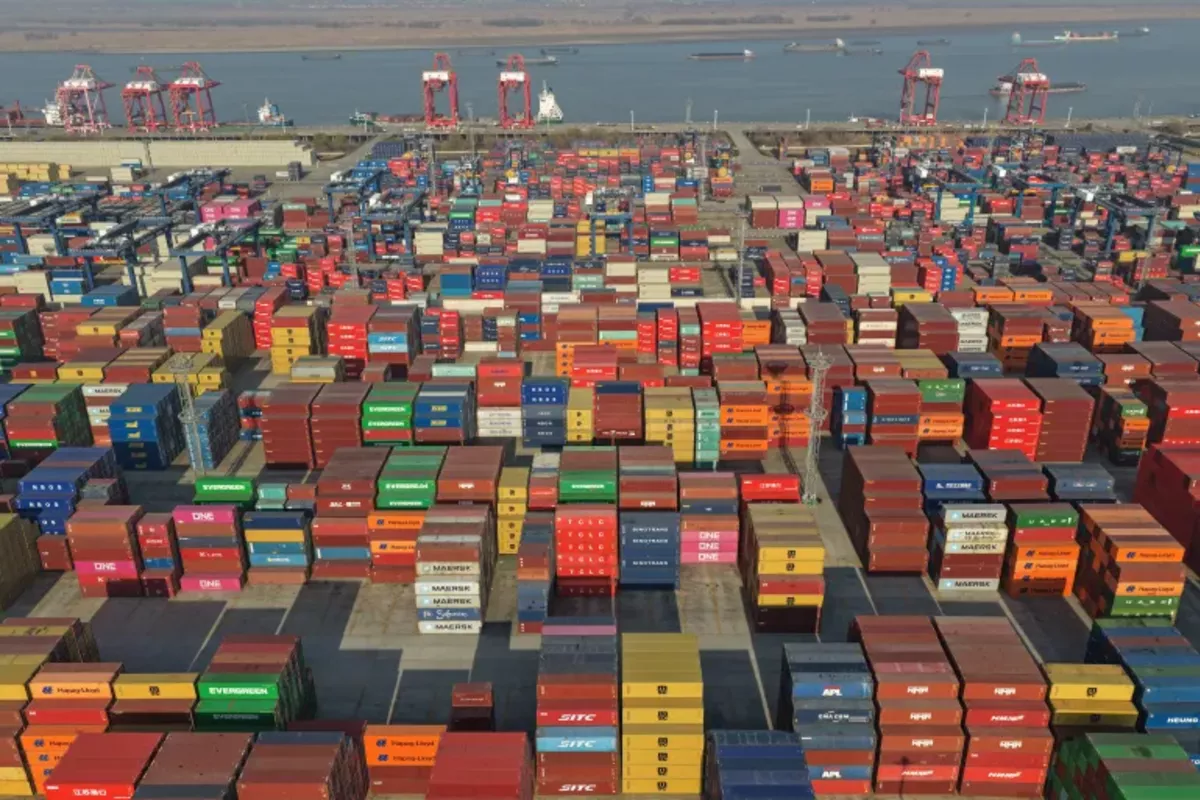
The trade between the EU and India is strengthening. The total trade volume between the two sides has exceeded 180 billion euros ($208.20 billion). With this agreement, customs duties will be eliminated or significantly reduced between the EU and India. To illustrate, India's agreement to gradually reduce tariffs on European-made cars from as high as 110% to 10% represents a dramatic change for the automotive and machinery sectors. On the EU side, the elimination of existing tariffs in labor-intensive areas such as textiles, ready-made clothing, leather, and seafood will provide India with a significant cost advantage. According to calculations by the European Commission, approximately 4 billion euros of annual tariff burden will be eliminated on India's exports to the EU. This development is said to have the potential to double bilateral trade volume by 2032.
Data from the Trademap shows that India has significantly strengthened its position vis-a-vis the EU over the past decade. The export-to-import ratio is approaching 140% and the EU's share of India's total exports has risen in recent years. This picture reveals that India has a permanent place in the European market and has increased its competitiveness. This trend is likely to accelerate further after the agreement.
Türkiye's Position
These developments point to a process that Türkiye needs to monitor closely. Türkiye's trade integration with the EU is quite deep, as seen in the Trademap data. Between 2005 and 2024, the EU's share of Türkiye's total exports exceeded 40%. In 2024, Türkiye's trade with the EU was nearly balanced. Türkiye's share of the EU's total imports has risen above 1.5%, showing a steady upward trend in recent years. These figures indicate that Türkiye's position in the EU market is strengthening. But the issue is not just total volume but also export composition.
Türkiye's and India's export structures to the EU reveal significant overlap, particularly in sectors like machinery, electrical equipment, automotive parts, iron and steel and textiles. The concentration of both countries in similar product groups within the EU market suggests increased competitive pressure. Türkiye is not part of the decision-making processes in EU free trade agreements with third countries, whereas part of the Customs Union with the EU. It is also a pressure mechanism. India's more advantageous access to the EU market could lead to Türkiye facing more intense price and cost competition in similar sectors.
On the other hand, Türkiye's structural advantages are important. Data from Harvard’s Economic Complexity Index reports that as of 2024, Türkiye and India have a nearly similar production structure. However, the trend highlights Türkiye's increasing capacity to produce more sophisticated products in recent years. Furthermore, Türkiye's long-standing integration into EU value chains, legislative harmonization, and logistical proximity offer a significant competitive advantage. For Europe, increasing geopolitical risks have made the costs of excessive reliance on distant geographies visible. In this context, Türkiye is positioned not only as a transit country but also as a supply hub close to Europe.
The pieces are being rearranged on the global trade chessboard. The EU is strengthening ties with alternative partners like India to reduce China-centric concentration, searching for new markets and counterbalancing U.S.-driven uncertainties. India aims to climb higher in global value chains with access to the European market. Türkiye, with its strong trade diplomacy and economic structure, can take a more prominent role in this equation.
In conclusion, the EU-India Free Trade Agreement is not merely a trade agreement signed between two economies but symbolizes a period in which global power balances are being reshaped. Türkiye must accelerate steps to increase its competitiveness through the updating of the Customs Union, market diversification and investments in green and digital transformation, too. For Türkiye, demand in the European Union is of primary strategic importance. On the other hand, the data shows that Türkiye has a strong fundamental in trade. However, the same data also says that competition is intensifying. In the new era, the winners will be economies that have high adaptation capacity and strategic positioning, like Türkiye.
Read the original article here