Forecasting the course of the war in Ukraine is an extremely difficult and often thankless task. Since February 2022, almost everyone has made mistakes in assessing the war: analysts at the CIA, European experts, military strategists, specialists from leading intelligence services, and, above all, planners within Russia’s General Staff.
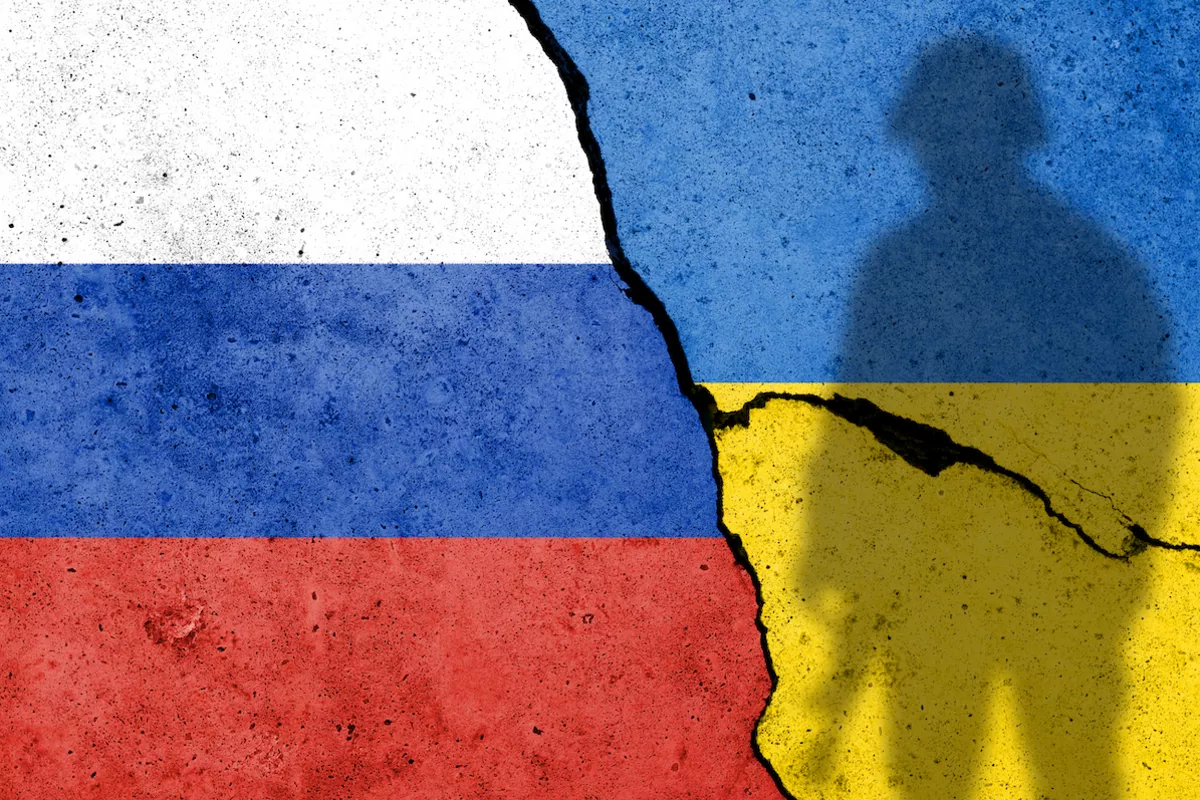
The scale of these miscalculations is now evident. That is why any forecast must be made with caution. But if one looks at the situation soberly, without propaganda-driven illusions, one thing becomes increasingly clear: Russia has found itself in a strategic zugzwang. In chess, zugzwang is a position in which every possible move worsens the player’s situation.
This is precisely the position in which the Russian Federation finds itself today. Moscow can neither advance decisively, nor retreat, nor freeze the conflict on favourable terms, nor admit the failure of its so-called “special military operation”. Every option leads to a further deterioration of its political, military, or domestic position. In my view, Russia lost this war politically on the very first day of its full-scale invasion of Ukraine. The decision to launch the war was itself a strategic mistake, the consequences of which Moscow has been attempting to offset through military means ever since.
Yes, the Russian army has achieved some territorial gains, including the creation of a land corridor to Crimea. But if we assess the situation as a whole, it is clear that the main political objectives of the war have not been achieved. Moreover, even from a military perspective, Russia’s results appear extremely limited. After years of war, Moscow has still failed to capture the entire territory of Donetsk region within its administrative borders, despite presenting this as one of its key objectives. If Russia has been unable to accomplish even this over such a long period, it points to a serious failure in the original military planning. Today, Russian forces continue to make slow advances in certain sectors of the front, but these gains do not alter the overall picture.
The line of contact has remained relatively stable for a considerable period. There has been no strategic breakthrough in Russia’s favour. On the contrary, the war is increasingly moving beyond the framework of a conventional frontline confrontation. Crimea is acquiring particular importance in this context.
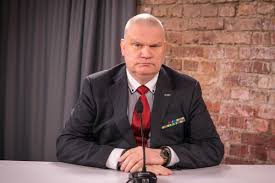
Source: Atlantic Council
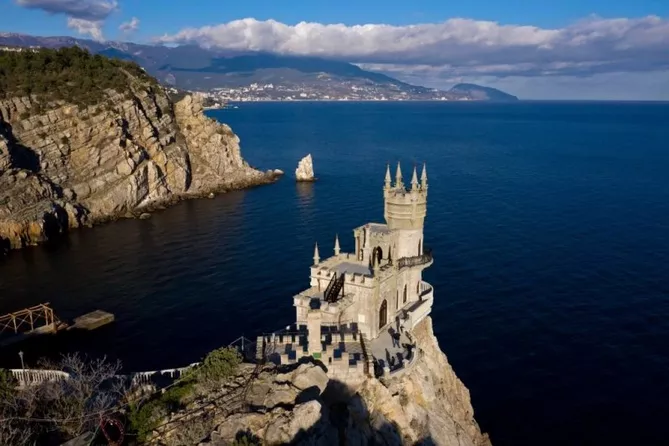
Ukraine is steadily increasing pressure on the peninsula, targeting military infrastructure, disrupting supply routes, and gradually turning Crimea from a Russian stronghold into a vulnerable point. In Russian history, Crimea has more than once become a territory around which major political shifts have begun. It is no coincidence that one increasingly hears the phrase: it began with Crimea, and it will end with Crimea.
If Ukraine continues to expand its long-range strike capabilities, develop drone and ballistic missile production, and strengthen pressure on Russian logistics, Moscow’s position will continue to deteriorate. The war will increasingly be carried into Russia’s deep rear, where infrastructure, energy facilities, military depots, and communication lines will become regular targets. This fundamentally changes the nature of the conflict.
Under current dynamics, in my view, Russia’s military defeat may require approximately another year and a half of active hostilities. But this is not only about ground operations. The decisive factors will be the development of Ukrainian ballistic capabilities, long-range drones, strikes at distances of 2,000 kilometres or more, and the gradual degradation of Russian logistics. Even without an immediate ground operation against Crimea, its effective isolation could become the turning point of the entire war.
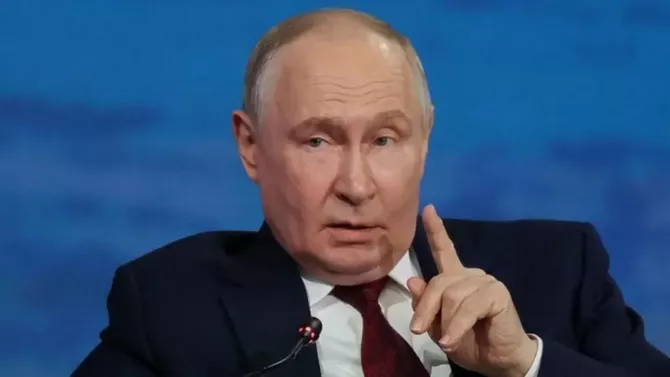
Source: BBC
However, there is also a subjective factor that cannot be ignored. As long as Vladimir Putin and his closest circle remain in power, ending the war on rational terms is practically impossible. For the current Russian leadership, acknowledging failure would mean acknowledging the failure of the entire political structure on which the regime rests. That is why the war continues not for the sake of achievable goals, but for the sake of the war itself.
Objectively, Russia could attempt to exit the conflict by acknowledging that its declared goals have not been achieved and beginning a withdrawal from occupied territories. In reality, however, such a scenario is highly unlikely. It would almost certainly trigger serious internal turbulence, comparable to the crisis of the late Soviet period. For the current Russian authorities, defeat in Ukraine could become not merely a foreign policy failure, but the beginning of internal collapse. This is why Moscow can neither win nor withdraw. It is trapped in a war that is eroding its resources, international standing, economy, military capacity, and political stability.
For Russia, the war is no longer an instrument for achieving strategic objectives. It has become a mechanism of regime survival - one that simultaneously brings the regime closer to crisis.
At the same time, it is important to understand that Ukraine will not be left alone. Despite internal disagreements within the European Union, Europe is unlikely to abandon Kyiv.
For European states, this war has long become a matter of their own security. The United States, too, despite domestic political fluctuations and electoral cycles, is unlikely to fully disengage from Ukraine. The form and intensity of support may change, but strategically Ukraine has already become part of the Western security architecture.
The main complication is that Russia remains a nuclear power. The world is facing a unique situation: one of the largest nuclear powers is engaged in a prolonged war, losing it politically and gradually losing the strategic initiative. On the one hand, leading global actors understand the danger of an uncontrolled collapse of Russia, primarily because of the risk of nuclear proliferation. On the other hand, the logic of history suggests that the last major imperial structure has entered a phase of deep crisis. How these two processes can be reconciled - preventing nuclear chaos while accepting the historical end of an imperial project - is something no one can confidently predict today.
That is why any precise forecasts about the timing and outcome of the war should be treated with great caution. But one thing can already be said: Russia has found itself in an absolute strategic deadlock. Politically, it lost the war at the moment of invasion. Militarily, it is becoming increasingly trapped in a conflict it cannot win. And internally, the war is gradually becoming a factor capable of producing the most serious consequences for the state. This is why the current war is not merely a confrontation between Russia and Ukraine. It is a historic crisis of Russian statehood - one that began with an attempt to restore an empire and may end with its final collapse.