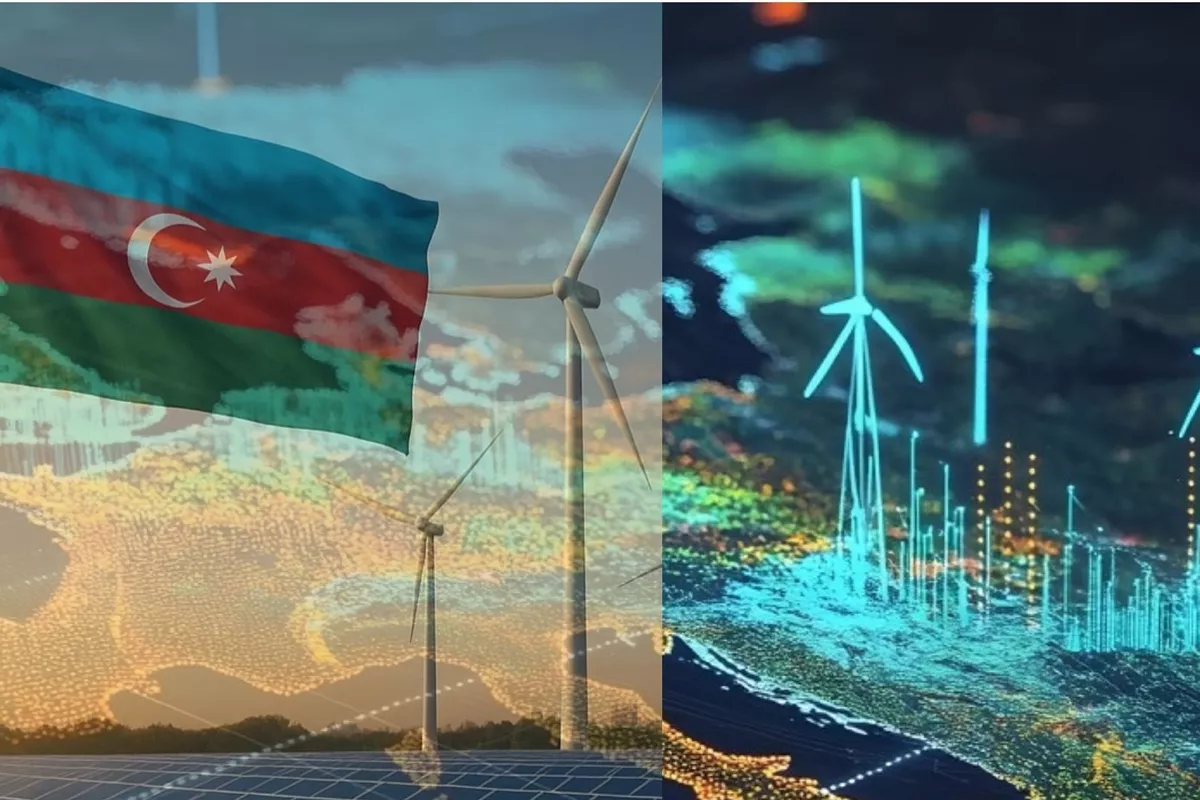
A delegation of German business representatives is expected to visit Baku in early December to assess opportunities for cooperation in infrastructure development, electric mobility and energy storage technologies linked to renewable energy sources.
The visit is reportedly being organised as part of the German Energy Export Initiative, implemented on behalf of Germany’s Federal Ministry for Economic Affairs and Energy.
Cooperation in alternative energy was also reflected in the Joint Declaration on a Strategic Agenda for Bilateral Partnership between the Republic of Azerbaijan and the Federal Republic of Germany, signed by the leaders of the two countries in Berlin on 21 July. One of the provisions envisages cooperation in green energy, including green and low-carbon hydrogen.
Germany is an important renewable energy partner for Azerbaijan because of its extensive expertise, which could prove highly valuable as the country seeks to diversify its energy mix.
According to Deutsche Welle, Germany generated more electricity from solar and wind power in 2025 than any other European Union member state. Data from the energy think tank Ember also place Germany among the world’s leading countries in the deployment of renewable energy. Last year, 59 per cent of the country’s electricity was generated from clean sources, primarily wind and solar power.
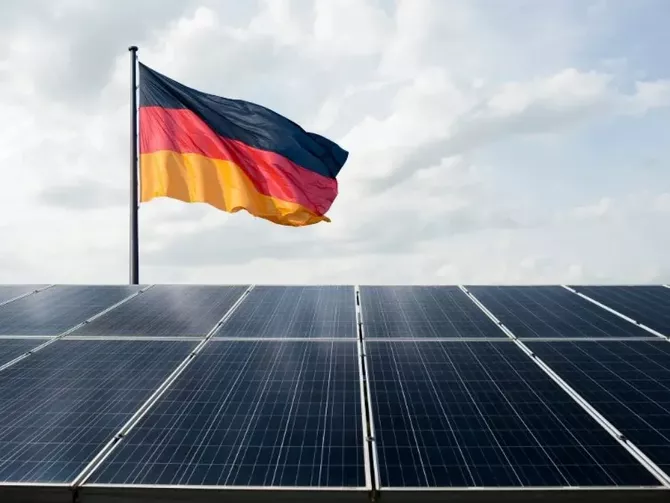
Photo: Freepik
Unlike France, which continues to place significant emphasis on nuclear energy, Germany’s achievements have been based exclusively on the expansion of wind and solar generation. Germany, as is well known, has phased out nuclear power. Its final three reactors, located in Bavaria, Lower Saxony and Baden-Württemberg, were shut down in April 2023.
Although Berlin faced criticism from some of its European partners over that decision, the growing share of green energy in the country’s power mix suggests that the strategy has produced significant results.
Following the adoption of the Renewable Energy Sources Act, known in German as the Erneuerbare-Energien-Gesetz, in 2000, the share of electricity generated from wind and solar power rose sharply from 2 per cent to 45 per cent.
According to Ember’s 2025 report, Germany produced more electricity from wind and solar power than any other EU country and accounted for more than a quarter of the European Union’s total wind and solar generation.
Germany’s experience in energy storage is also of particular interest to Azerbaijan. In March this year, Azerbaijan launched its first large-scale electricity storage facilities, the largest of their kind in the Commonwealth of Independent States.
Credit: Azernews
This marked an important first step, and German companies could contribute to the further development of the sector. Germany has considerable practical experience in energy storage, an increasingly important component of energy resilience and security.
According to German media reports, by mid-2025 the country had approximately two million energy storage systems with a combined capacity of 14.5 GW and usable storage capacity exceeding 22 GWh.
The overwhelming majority - approximately 1.97 million installations - were small residential batteries with capacities of up to 20 kWh, generally connected to rooftop solar panels. Germany also had almost 15,000 medium-sized and industrial storage systems with capacities ranging from 20 kW to 1 MW.
The rapid expansion of renewable generation can lead to an oversupply of electricity during periods of peak production. Azerbaijan is not yet facing such a challenge, as the development of green energy in the country began relatively recently.
Nevertheless, significant progress has already been achieved. As of early summer, renewable energy sources accounted for 33 per cent of the electricity generated in Azerbaijan.
According to the Ministry of Energy, Azerbaijan produced 2.0834 billion kWh of electricity in May, of which 689 million kWh came from renewable sources. Moreover, the electricity needs of the Nakhchivan Autonomous Republic were fully met through renewable energy during the month.
This can, without exaggeration, be described as the first major success of Baku’s green energy strategy.
By the end of 2027, Azerbaijan plans to increase its combined solar and wind generation capacity to 2 GW. By the end of 2032, the figure is expected to reach 8 GW.
The results recorded this year, which in some areas represent a manyfold increase compared with the previous year, provide grounds for confidence that these targets can be achieved.
Energy Minister Parviz Shahbazov recently visited the construction site of the Gobustan solar photovoltaic power plant. The 100 MW facility, located in the Gobustan district, is nearing completion.
Universal Energy, the Chinese company serving as both the project’s general contractor and investor, said the facility was almost fully prepared to begin supplying electricity to the grid.
The Gobustan solar power plant is expected to become operational within the next few months and generate approximately 260 million kWh of electricity annually.
Travellers heading north through Azerbaijan can already see numerous wind turbines along the country’s roads. During the first half of the year, wind power generation reached almost 500 million kWh, 23 times the figure recorded during the same period last year.
Solar power generation stood at approximately 257 million kWh. This was 9 per cent lower than the previous year’s figure, most likely because of weather conditions. However, the remaining half of the year still provides an opportunity to make up for the decline.
Azerbaijan’s energy storage facilities were inaugurated in March with the participation of President Ilham Aliyev at the 500 kV Absheron substation and the 220 kV Aghdash substation.
The facilities have a combined output capacity of 250 MW and an energy storage capacity of 500 MWh. They are the largest battery energy storage system facilities in the CIS. The equipment was supplied by the Chinese company Great Power.
The development of renewable energy is one of the principal priorities of Azerbaijan’s energy strategy, under which several major investment projects are being implemented.
The country’s project partners include BP, Masdar, ACWA Power, China Gezhouba Group Overseas Investment, SOCAR Green and other companies. German businesses may soon be added to that list.