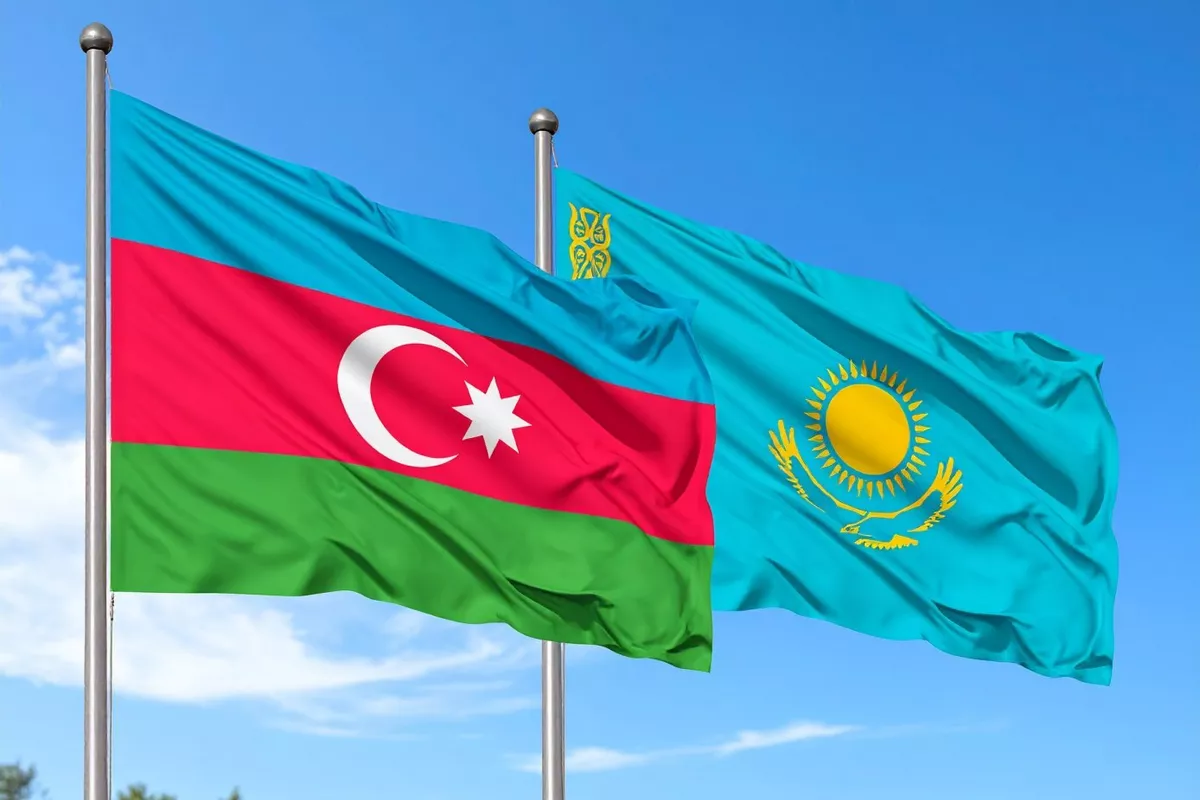
Cooperation between Kazakhstan and Azerbaijan has long moved beyond the framework of conventional bilateral relations. Today, the two countries form a central link in an emerging Eurasian transport architecture connecting China, Central Asia, the South Caucasus, Türkiye and Europe.
This is no longer merely about cargo transportation or the construction of individual infrastructure facilities. Baku and Astana are creating an integrated transport and logistics space that is gradually becoming a strategically important alternative to traditional routes between East and West.
Speaking on August 3 during a teleconference marking the launch of several road construction projects, Kazakh President Kassym-Jomart Tokayev described the transport and logistics sector as one of the main drivers of the country’s economic growth.
This assessment is entirely justified. Kazakhstan is located at the intersection of major continental routes, and its geographical position allows it to claim the role of one of Eurasia’s key transit centers.
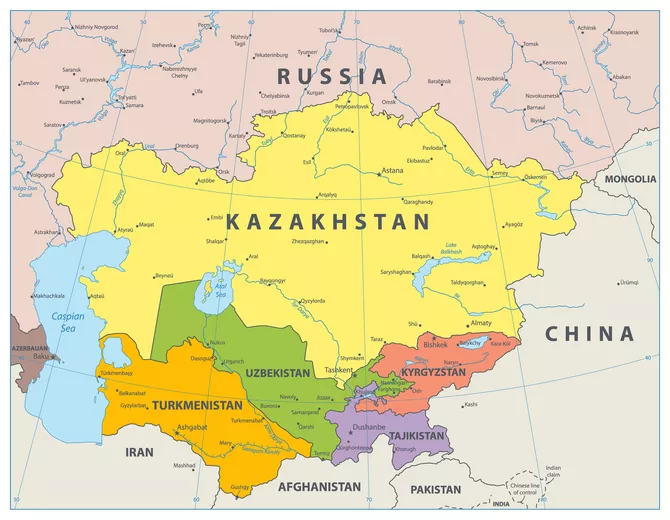
Credit: mappr.co
The Kazakh president described roads as the “arteries of life” and outlined a strategic objective: to strengthen Kazakhstan’s status as a leading Eurasian transit hub. Achieving this goal requires a modern, technologically advanced and interconnected transport system capable of handling growing trade flows between China and European markets.
Of particular importance in this context is the construction of the Beineu-Saksaulsk highway. Tokayev described the future road as a key international transport artery and a “golden bridge” between China and Europe.
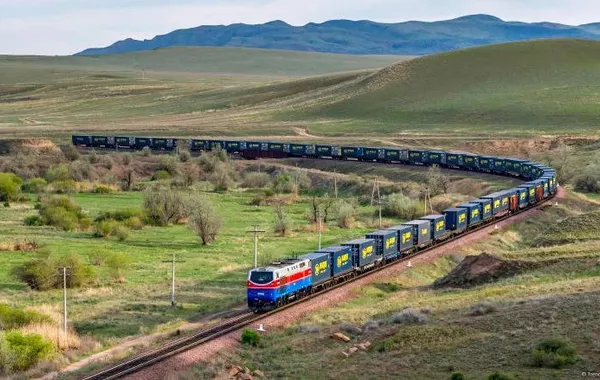
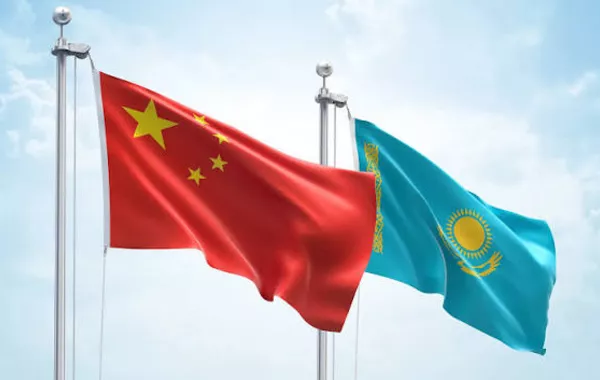
The new highway is expected to directly connect checkpoints on the Kazakh-Chinese border with the Caspian ports of Aktau and Kuryk. According to current projections, the project could shorten the route for goods transported from China to Europe by approximately 1,000 kilometers and reduce delivery times by up to three days.
This is not the first time that the project has appeared on Kazakhstan’s strategic agenda. In January 2026, Tokayev stated that the construction of the Beineu-Saksaulsk road would shorten the land section of the Middle Corridor by approximately 900 kilometers and provide more direct access to the ports of the Mangystau region.
Kazakhstan is therefore systematically transforming discussions about the Middle Corridor from political declarations into practical infrastructure development.
A concrete logistics network is being built to ensure the uninterrupted movement of goods from the Chinese border to the Caspian Sea and subsequently through Azerbaijan toward Türkiye and Europe.
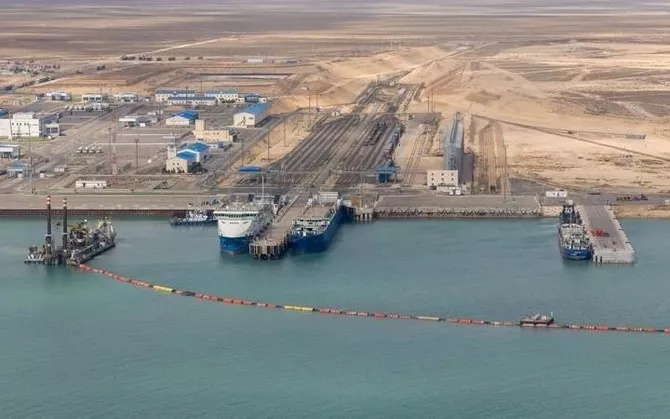
The ports of Aktau and Kuryk play a particularly important role in this system. In June, Tokayev described them as major gateways for international transit. The modernization of Kazakhstan’s port infrastructure is expected to transform the Middle Corridor into a stable and secure route capable of gaining a more prominent position in global logistics.
Credit: primeminister.kz
An important step was taken on July 16 with the signing of an investment agreement for the construction of the first phase of a multifunctional terminal at the Port of Kuryk.
The agreement was signed by Kazakhstan’s Ministry of Transport, the administration of the Mangystau region and Kazakhstan Guoyou Investment, which represents China’s Guoyou Materials Group.
During a meeting with Yu Boyang, chairman of the corporation’s board of directors, the Kazakh president reiterated Astana’s ambitious objective of becoming a fully fledged Eurasian transport hub.
Tokayev welcomed the initiative to establish a multimodal complex at Kuryk that would integrate maritime and railway logistics.
The new complex is expected to achieve an annual throughput capacity of up to 15 million tons during its first year of operation. Investments in the terminal’s construction are estimated at approximately $1 billion.
The project includes an automated container terminal, a new railway line and the delivery of container ships and ferries. This is more than an expansion of a single port. It represents the creation of a major logistics hub on the eastern coast of the Caspian Sea, designed to serve cargo flows between China and Europe.
As Yu Boyang rightly noted, given Kazakhstan’s growing importance as a transit corridor between China and Europe, Caspian ports are becoming both a new transport route and a new center of economic growth.
However, the effectiveness of this route does not depend on Kazakhstan alone. Once cargo reaches Aktau or Kuryk, it must cross the Caspian Sea and continue through Azerbaijan. Astana’s transport strategy is therefore objectively linked to Baku’s infrastructure capabilities.
Azerbaijan, for its part, possesses an advanced system of maritime, railway and road communications. The Baku International Sea Trade Port, the Baku-Tbilisi-Kars railway and transport routes leading toward Türkiye and Europe make the country an indispensable western segment of the Trans-Caspian International Transport Route.
This interdependence creates a solid foundation for a Kazakh-Azerbaijani geopolitical tandem.
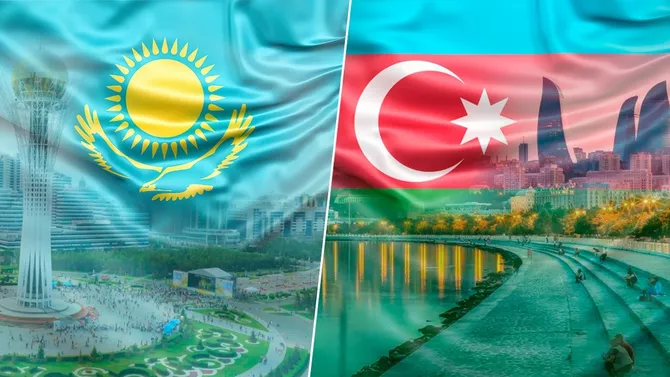
Cоllage credit: Kazinform / Freepik /commons.wikimedia.org
Kazakhstan provides Central Asia and China with access to the Caspian Sea, while Azerbaijan offers the shortest and most efficient continuation of the route toward the South Caucasus, Türkiye and Europe.
Significantly, cooperation between the two countries is expanding beyond the traditional transport sector.
In July, work began on laying a fiber-optic cable along the seabed of the Caspian Sea from Baku toward Aktau. The armored cable was manufactured and tested in China, while its transportation to Baku was carried out through the Port of Kuryk.
This project is of fundamental importance. Kazakhstan and Azerbaijan are connecting not only roads, railway lines and maritime routes. They are also creating a digital corridor between Central Asia and the South Caucasus that could become part of a broader telecommunications network linking Asia and Europe.
The Middle Corridor is therefore gradually acquiring a multidimensional character. It is becoming a transport, energy, trade and digital space at the same time.
Statistics confirm the growing demand for this route. In the first half of 2026, the Port of Kuryk handled approximately 880,000 tons of cargo. This figure demonstrates sustained demand for the port’s services and its growing role in the development of the Trans-Caspian International Transport Route.
There are, of course, still challenges on the path toward transforming the Middle Corridor into a fully fledged global transport artery.
Tariffs, customs procedures, ferry schedules and railway operations must be coordinated. Port capacity must be expanded, maritime fleets modernized, digital cargo-tracking systems introduced and processing times reduced.
The fundamental difference at the current stage, however, is that Kazakhstan and Azerbaijan are no longer limiting themselves to statements about their transit potential. Both countries are investing in concrete infrastructure and gradually developing an integrated logistics system on both sides of the Caspian Sea.
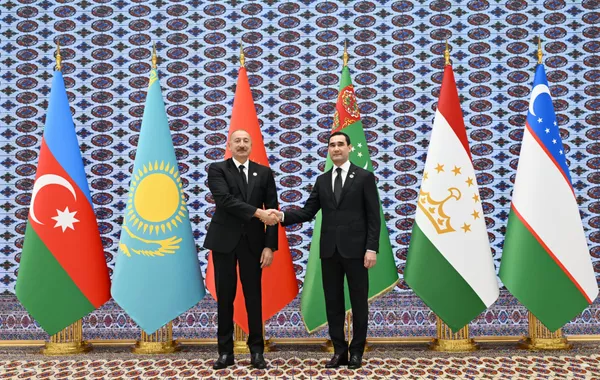
Following his meeting with Kassym-Jomart Tokayev late last year, Azerbaijani President Ilham Aliyev rightly stated that active interaction between the two countries carried a significant geopolitical message.
According to the Azerbaijani leader, the current historical period is witnessing the opening of new transport routes and the implementation of projects designed to strengthen connectivity throughout the wider Eurasian region.
The South Caucasus and Central Asia are moving closer together and are increasingly acting as parts of a single geographical and economic space.
This observation accurately reflects the processes currently underway. The Caspian Sea is no longer perceived solely as a natural boundary separating the two regions. On the contrary, it is becoming a connecting space around which a new system of transport, energy and digital cooperation is taking shape.
The European Union is also showing growing interest in this emerging architecture.
In July, European Commission President Ursula von der Leyen described the South Caucasus as one of the world’s major transport hubs, connecting Europe with the Caspian region and Central Asia.
The proposal to launch an EU-Azerbaijan Transport Connectivity Partnership and organize a regional investment conference demonstrates that Brussels considers Baku one of the principal participants in the future Eurasian connectivity system.
However, cooperation with Azerbaijan inevitably requires closer engagement with Kazakhstan.
Without Kazakhstan’s transport network, the ports of Aktau and Kuryk and direct access to the Chinese border, the western segment of the Middle Corridor cannot fully realize its potential. Similarly, Kazakhstan needs Azerbaijan as a reliable transit partner on the western coast of the Caspian Sea.
This is precisely where the geopolitical strength of the Baku-Astana tandem lies. It is based not on temporary political circumstances, but on a fundamental alignment of national interests, geography and long-term economic strategies.
Kazakhstan and Azerbaijan are not merely participating in individual transport projects. They are laying the foundations for a new Eurasian space in which Central Asia and the South Caucasus are emerging as an independent center of international trade and connectivity.
Amid the transformation of global supply chains, rising demand for alternative routes and intensifying competition for control over international transport flows, the significance of this partnership will only increase.
Today, Baku and Astana are not creating a peripheral route situated between larger powers. They are forming an independent geopolitical axis capable of influencing economic and strategic processes across the entire Eurasian continent.