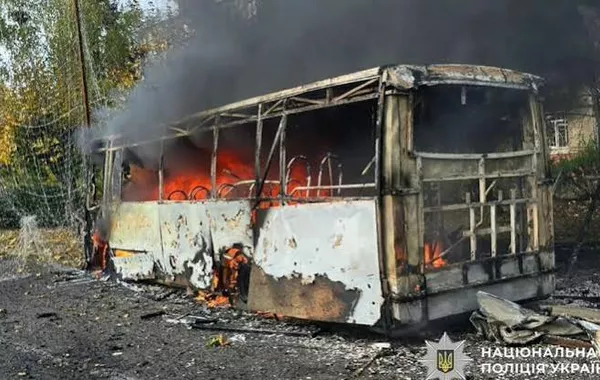
The war in Ukraine has long ceased to be merely a European conflict. It began as Russia’s full-scale invasion of a neighbouring state, but over time it has evolved into a test of the entire international order.
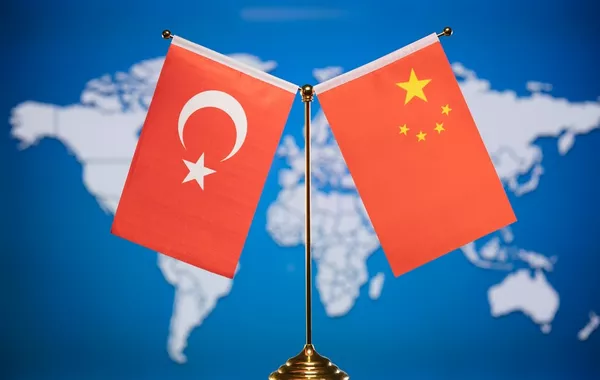
The recent call by Australia and the United Kingdom for China to prevent the supply of dual-use components to Russia demonstrates just how far this conflict has expanded beyond Europe. What happens on the battlefield in Ukraine is now directly linked to security calculations in the Indo-Pacific.
At the AUKMIN consultations in London on 10 June, Australian and British ministers expressed concern about the role of third countries in helping Russia sustain its war effort. Their message to Beijing was clear: China must prevent the supply of dual-use components that support Russia’s defence-industrial base. This was not an ordinary diplomatic remark. It reflected a deeper Western concern that Russia’s ability to continue the war increasingly depends not only on its own resources, but also on external supply chains.
At the centre of this problem are dual-use goods. These are products, technologies or components that can be used for both civilian and military purposes. They may not look like weapons in the traditional sense, but they are essential for modern warfare. Electronics, machine tools, navigation systems, sensors, communications equipment, drone components, satellite-related technologies and advanced industrial parts can all strengthen a state's military-industrial potential. In Russia’s case, such goods help sustain production, repair equipment, manufacture drones and missiles, and adapt to Western sanctions.
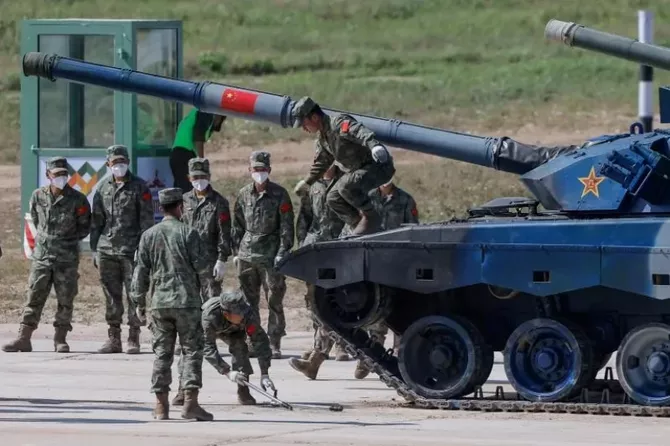
Credit: Al Jazeera
That is why the issue is so politically sensitive. China insists that it is not directly arming Russia and presents its position on the war in Ukraine as neutral. However, Western governments increasingly argue that neutrality cannot be measured solely by whether Beijing sends tanks or missiles to Moscow. If Chinese companies supply components that enable Russia to produce or upgrade weapons systems, then China’s economic role becomes strategically significant, even if it formally remains below the threshold of direct military assistance.
The figures help explain why the West is increasingly alarmed. In 2024, trade between China and Russia reached a record 1.74 trillion yuan, or approximately $244.8 billion. In 2025, bilateral trade declined for the first time in five years, falling by about 6.9% to $228.1 billion, but the overall scale remained enormous. Even this decline does not indicate a rupture in economic ties.
Rather, it suggests that the Moscow-Beijing economic relationship is adapting to sanctions, changing commodity prices and new restrictions. More important than the overall volume of trade is its structure. According to US assessments, around 90% of Russia’s microelectronics imports in 2023 came from China. In the final quarter of 2023, nearly 70% of Russia’s machine-tool imports also originated from China. These categories are critically important to Russia’s defence-industrial base. Microelectronics are used in missiles, drones, communications systems, armoured vehicles and aircraft. Machine tools are required for the production, repair and modernisation of weapons. Formally, such goods may have civilian applications, but in wartime their significance becomes strategic.
This is why dual-use trade has become a central issue. According to analytical estimates, China’s shipments of dual-use goods to Russia again exceeded $4 billion in 2024. These are not traditional weapons, but they include components, electronics, industrial equipment, sensors, machinery and communications systems that help Russia sustain military production. This changes the very understanding of modern warfare: the battlefield in Ukraine is connected not only to artillery and missiles, but also to customs data, export controls, microchips, logistics networks and supply chains stretching across Asia.
For Australia and the United Kingdom, the issue is not only about Ukraine. It is about confidence in a rules-based international order. Russia’s invasion challenged the principle that borders cannot be changed by force. If Moscow can continue the war with the help of external supply networks, the consequences will be felt far beyond Eastern Europe. Countries in the Indo-Pacific are watching closely because the same principles apply to their own region: sovereignty, territorial integrity, freedom of navigation and resistance to coercion.
This is the strategic link between Ukraine and the Indo-Pacific. For Europe, Russia is the most immediate threat. For Australia, Japan, South Korea and many Southeast Asian countries, the primary security challenge is China’s growing power and assertiveness. Yet these two theatres are now interconnected. If Russia succeeds in weakening Western resolve in Ukraine, it will send a signal to other revisionist powers that pressure, force and endurance can overcome international resistance. That is why Canberra and London increasingly view support for Ukraine as part of Indo-Pacific security.
China’s role in Russia’s war also matters because it exposes the limits of sanctions in a world of globalised supply chains. Since 2022, the United States, the European Union, the United Kingdom and their partners have imposed broad restrictions on Russia’s access to advanced technologies. These measures were designed to weaken Russia’s defence-industrial base. Yet Moscow has adapted by using intermediaries, third-country suppliers and alternative trade routes. Chinese companies have become a major focus of Western concern because of China’s industrial scale and its ability to supply components that Russia struggles to obtain elsewhere.
The European Union has already expanded sanctions against entities in third countries accused of assisting Russia’s military-industrial complex. Some of these entities have been based in China and Hong Kong. EU officials have repeatedly warned that sanctions circumvention through China remains one of the greatest challenges to maintaining pressure on Moscow. The problem is not only the direct export of restricted goods. It is also the broader ecosystem of companies, brokers, logistics firms and financial channels that complicates enforcement.
A new arena of geopolitical competition is therefore emerging. The war is being fought not only with artillery, drones and missiles. It is also being fought through customs data, export controls, sanctions lists, shipping routes, microchips and financial compliance measures. A component manufactured in Asia, shipped through a third country and assembled in Russia may eventually end up in a drone or missile used against Ukraine. This turns supply-chain control into a matter of military strategy.
For China, the situation is complex. Beijing benefits from its relationship with Moscow. Russia provides energy resources, political support and a strategic partnership in the face of Western pressure. At the same time, China does not want to provoke a full-scale economic confrontation with Europe, Australia or the broader Western bloc. That is why Beijing seeks to maintain ambiguity: it avoids openly supplying lethal weapons, but it has not fully stopped the flow of dual-use goods through commercial channels. However, that ambiguity is becoming increasingly difficult to sustain. Western governments are now openly linking China’s economic behaviour to Russia’s ability to continue the war.
The message from Australia and the United Kingdom is part of this broader shift. It signals to Beijing that the issue is no longer being treated as a technical trade matter. It is increasingly viewed as a strategic test of China’s responsibility as a major power and a permanent member of the UN Security Council.
The AUKUS context makes this even more significant. Australia and the United Kingdom are not only supporting Ukraine diplomatically; they are also deepening defence cooperation in the Indo-Pacific. Their work on submarines, advanced technologies, radar systems and critical minerals is aimed at strengthening deterrence in a region where China’s influence continues to grow. When these same countries raise concerns about Chinese support for Russia, they are linking two security agendas: the war in Europe and the balance of power in Asia.
This connection will shape future Western policy. Pressure on Chinese companies suspected of supporting Russia’s defence-industrial base is likely to increase. Sanctions will probably become more targeted, aimed not only at Russian firms but also at foreign suppliers, banks and logistics networks. Export controls may also be tightened around sensitive technologies, particularly components linked to drones, missiles, communications systems and precision manufacturing.
But the West faces a difficult challenge. China is deeply integrated into the global economy. Unlike Russia, it cannot be isolated without enormous costs to global trade, manufacturing and supply chains. This means Western governments must balance pressure with risk management. They seek to limit Chinese support for Russia without triggering a broader economic rupture that would damage their own economies. That is why the focus is increasingly on dual-use components and specific companies rather than sweeping restrictions on all trade.
For Ukraine, this issue is existential. Every foreign component that helps Russia produce more drones, missiles or electronic systems can translate into new strikes on Ukrainian cities, infrastructure and military positions. Kyiv has repeatedly argued that sanctions enforcement is just as important as the introduction of new sanctions. The challenge is not only what is written in law, but whether restricted technologies actually stop reaching Russia.
For the Indo-Pacific, the lesson is broader. Ukraine has become a warning of what happens when authoritarian powers believe the democratic world is divided, distracted or unable to sustain pressure over time. If Russia’s war effort is indirectly supported by Chinese industry, then the conflict becomes a practical demonstration of how Eurasian authoritarian cooperation can challenge Western security across multiple regions simultaneously.
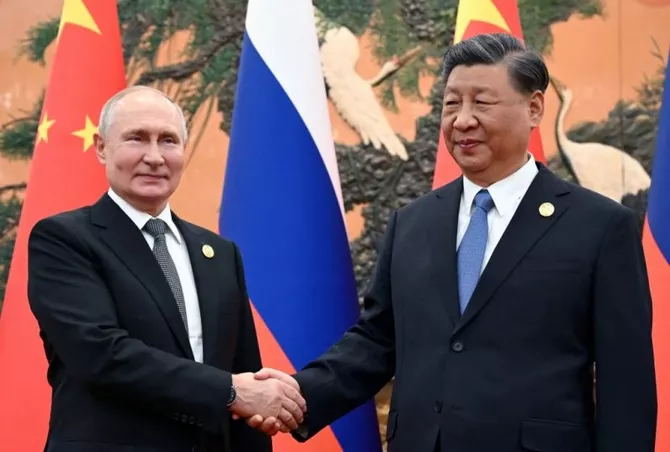
Credit: Atlantic Council
This does not mean that China and Russia are identical actors or that their partnership has no limits. Beijing continues to calculate its interests carefully and avoids certain steps that could lead to direct confrontation with the West. But the scale of China’s economic relationship with Russia gives Moscow room to continue the war. That is what concerns Western policymakers. Even without a formal military alliance, the China-Russia relationship can weaken sanctions, sustain military production and complicate efforts to end the war.
Thus, the war in Ukraine has become an Indo-Pacific issue because it has long ceased to concern Ukraine alone. It is about whether economic power can be used to sustain aggression without accepting responsibility. It is about whether sanctions can remain effective in a globalised economy. It is about whether Europe and the Indo-Pacific can still be treated as separate security theatres when the same actors and supply chains connect them.
Australia and the United Kingdom are sending a clear message: China cannot claim neutrality if its companies help sustain Russia’s war machine. Whether Beijing listens will matter not only for Ukraine, but also for the future of deterrence in Asia. The battlefield may be in Europe, but the consequences of this conflict are global. That is why China’s role in Russia’s war matters far beyond Ukraine.
By Murad Samedov