Talk of relocating Iran’s capital from Tehran first surfaced last year, as a years-long drought began to alarm not only experts but senior officials. By summer, with the country in the grip of an unprecedented dry spell, the proposal had become a prominent item on the government’s agenda.
The only factor that could have slowed the plan was rain, but autumn, too, passed without it. With drinking water supplies for more than 10 million residents falling to catastrophic levels, debate over moving the capital has intensified and is now unfolding at the highest levels of government.
Three weeks ago, the Tasnim news agency reported that Masoud Pezeshkian’s proposal to relocate the capital had been taken off the agenda. “A final decision has been made that water and environmental problems in the capital will be resolved through new technologies and scientific resource management directly in Tehran,” the president’s representative for maritime development coordination said. He added that a major 1,000-kilometer project to bring water from the Persian Gulf to Tehran had been completed and currently serves as the city’s only reliable supply.
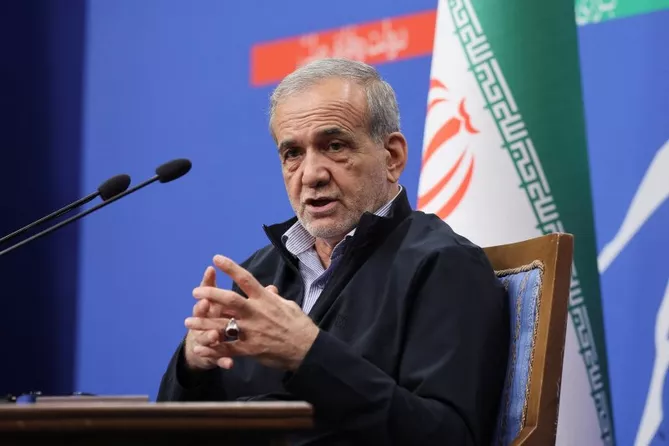
Photo: Reuters
However, in recent days, the head of state admitted that the country no longer has a choice and the capital must be moved from Tehran. According to him, the city can no longer function due to severe environmental problems.
“When we say the ground is sinking 30 centimeters every day, that means catastrophe,” Iran International quoted him as saying.
Pezeshkian also pointed to declining water reserves and emphasized that environmental protection is not a joke - ignoring it means signing one’s own death warrant.
Tehran subsides by 30 centimeters not daily but annually. Pezeshkian apparently exaggerated to strengthen the impact of his message and draw more attention to the issue. Still, even a 30-centimeter annual land subsidence is, according to experts, a true disaster caused by excessive extraction of groundwater, a problem that cannot be solved even with the most advanced technologies. The city is overpopulated, and the only solution is relocating the capital, which would also help reduce the population.
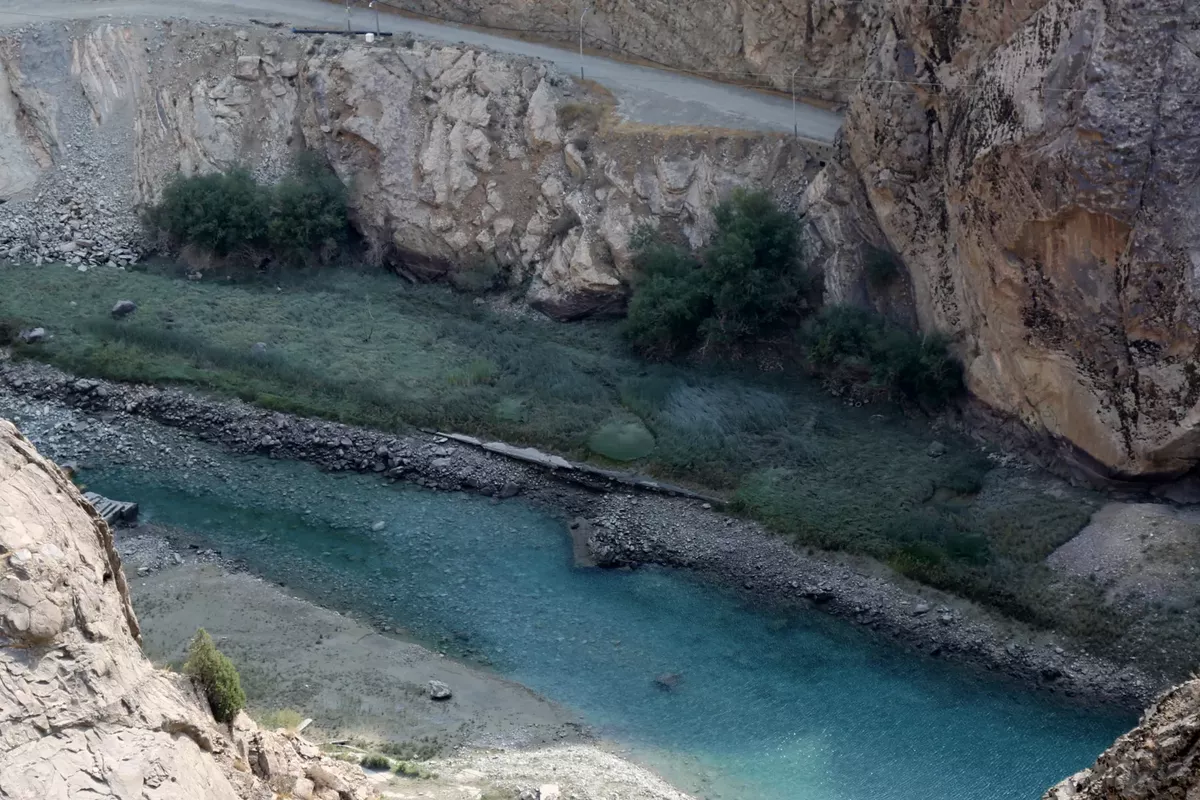
Climate change has dealt a heavy blow to Iran. Over the past five years, precipitation has fallen to critically low levels. The drought of 2025 has been the most severe. The reservoirs supplying drinking water to the capital are filled to only 5 percent or less. Earlier in November, Masoud Pezeshkian warned that if rains did not begin by winter, the capital would have to be evacuated. There would be no other choice. The rains never came, and now the question of relocating the capital has become urgent. There are no major rivers on the Iranian plateau. Surrounded by mountains, the region receives little rainfall. The water crisis has reduced hydropower production, shrunk crop areas, and caused problems for industrial enterprises.
According to Iranian sources, it is possible that Iran may seek assistance from neighboring countries. However, experts see little prospect of broad international support due to the nature of relations between the Iranian regime and the West.
While the water shortage can be addressed to some extent by using desalinated seawater, the problem of land subsidence cannot be resolved. The disaster stems from uncontrolled drilling of artesian wells by the population. At one time, the government allowed farmers to drill freely, believing it would stimulate agriculture. But this led to a sharp decline in groundwater reserves and sinking of the soil. Numerous dams and reservoirs also worsened the situation, as in a country with few rivers and low water flow, they altered the natural water regime.
As for where Iran’s capital might be moved, earlier this year, government spokesperson Fatemeh Mohajerani said at a briefing that the city of Makran, located on the coast of the Gulf of Oman in Sistan and Baluchestan Province in southeastern Iran, could become the new capital. According to her, a Council for the Transfer of Iran’s Capital is operating, although she noted that the issue is not currently at the top of the agenda.
Makran is located in a sandy desert, but its proximity to the sea would allow it to be supplied with desalinated water. It was previously reported that cooperation with the United Arab Emirates, which has the necessary technology, was being considered in this regard.
Iran would not be the first country to move its capital in the 21st century.
The Russian newspaper Kommersant researched this topic and published notable findings.
On November 6, 2005, at 6:37 a.m., the relocation of Myanmar’s government from Yangon to Naypyidaw began. The exact reason for the move was not specified, but the date and time were determined by astrologers. Civil servants and archives were transported by military trucks under the escort of soldiers. The cost of building the new city was estimated at $4 billion.
Yangon’s population before the relocation was just over 4 million, a figure incomparable to the challenges Tehran, a city of more than 10 million, would face in the event of evacuation.
Moving on: In 2015, Egypt announced plans to relocate its capital from overcrowded Cairo to a specially constructed city tentatively named the “New Administrative Capital.” The project’s estimated cost was $45 billion. By May 2023, at least 14 ministries and agencies had moved to the new city, although it has not yet been officially declared the capital.
At different times, several other small countries have moved or planned to move their capitals, for example, Palau, Burundi, and Equatorial Guinea. In 2002, South Korea also announced plans to relocate its capital from overcrowded Seoul. Construction of the new city of Sejong cost $20 billion. However, Seoul remains the capital, although several ministries and agencies were transferred to the new city.
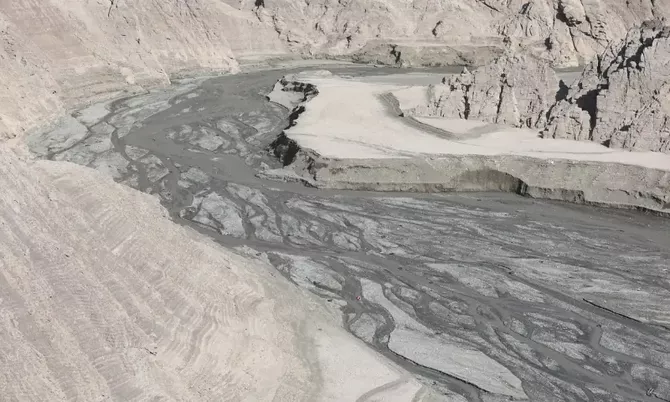
Photo: Reuters
Today, Iranians are praying for rain. Clerics are urging the population to appeal to the Almighty for rain during Friday prayers. Meanwhile, the authorities, not relying too much on divine intervention, are seeking solutions. According to IRNA, cloud seeding has begun - spraying substances to artificially induce rainfall. Silver iodide or potassium is injected into clouds from planes or from the ground to accelerate condensation and trigger precipitation. Two weeks ago, this method was used over the basin of the dried-up Lake Urmia. However, the method is expensive and yields very limited results.
The authorities continue to search for a way out. It appears that evacuation of Tehran is no longer considered a last-resort option postponed for the future.
By Tural Heybatov