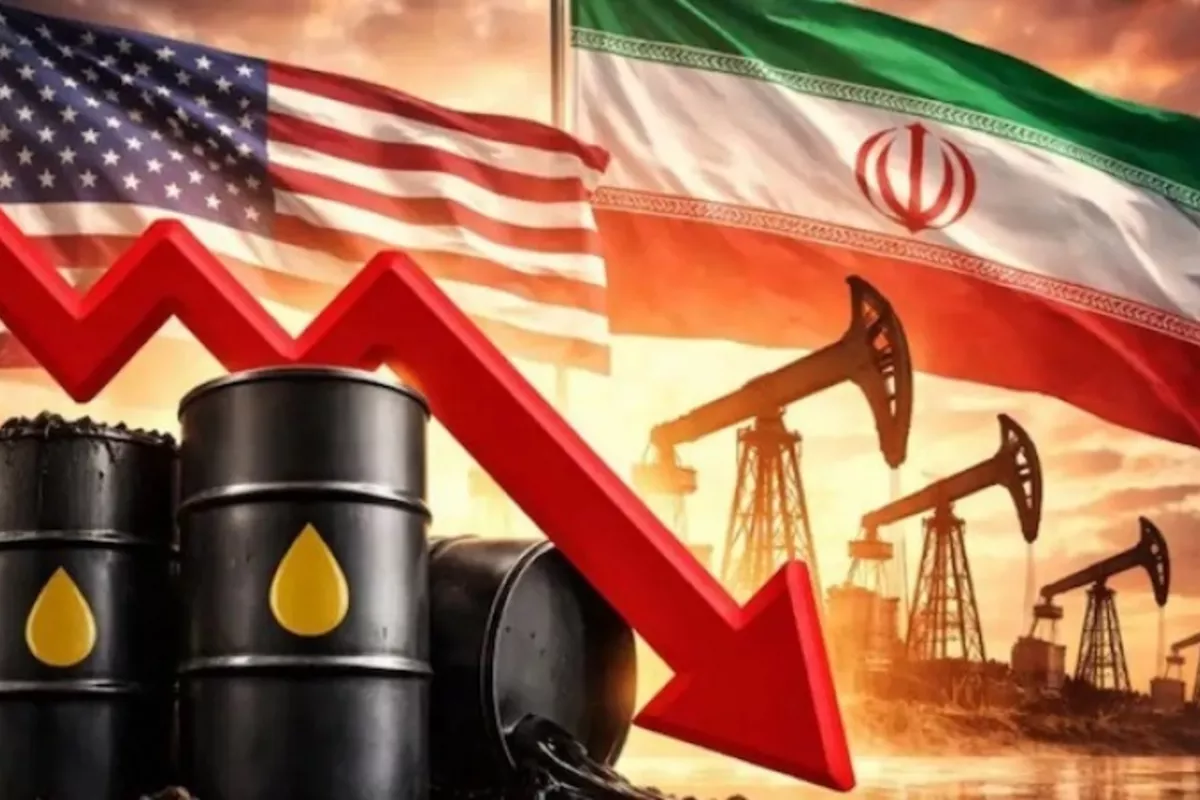
Oil prices fell after the United States and Iran signed an interim deal to reopen the Strait of Hormuz and launch 60 days of final negotiations. But major risks remain.
The interim peace deal between the United States and Iran has immediately changed the mood in global markets. Oil prices fell after Washington and Tehran signed a 14-point memorandum aimed at ending military operations, restoring commercial traffic through the Strait of Hormuz and opening a 60-day window for final negotiations.
But behind the market relief lies a more complicated question: can this fragile agreement survive long enough to reshape energy flows, sanctions and security in the Gulf?
According to Reuters, Brent crude fell by more than 2% after the signing of the interim ceasefire agreement, dropping by $1.64 to $77.91 per barrel, while US West Texas Intermediate declined by $1.80 to $74.99 per barrel. The move reflected a rapid shift in market expectations: traders are now pricing in the possibility that Iranian oil exports could return more fully to the market and that one of the world's most important energy chokepoints may gradually reopen.
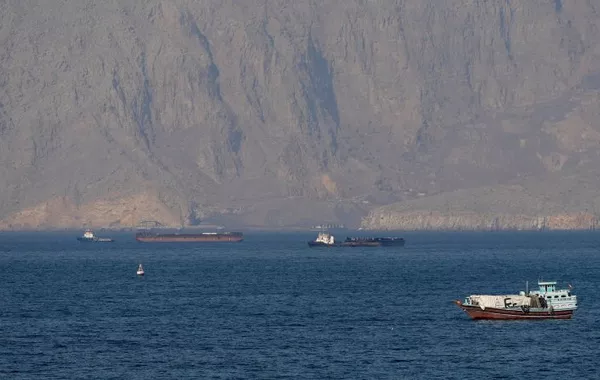
The Strait of Hormuz is not just another maritime route. It is one of the most sensitive arteries of the global economy. Located between Iran and Oman, the narrow waterway connects the Persian Gulf with the Gulf of Oman and the Arabian Sea. For global oil markets, Hormuz is a pressure point: when traffic through the strait is threatened, prices rise; when the risk eases, markets often respond immediately.
That is why the US-Iran memorandum has had such a strong psychological effect. The deal does not resolve every dispute between Washington and Tehran, nor does it automatically guarantee a lasting peace. But it reduces, at least for now, the risk of a prolonged disruption to Gulf energy flows. For importers in Asia, refiners in Europe and consumers around the world, that matters.
The agreement, described by Reuters as a 14-point interim Memorandum of Understanding, includes an immediate end to military operations and creates a 60-day period for negotiations on a more comprehensive settlement. One of its central provisions is the restoration of safe commercial passage through the Strait of Hormuz. Reuters reported that traffic through the strait is expected to return to full capacity within 30 days if the deal holds.
This is the key condition for oil markets. The war and the blockade of Hormuz disrupted one of the world's most important supply routes. Reuters previously noted that the waterway accounts for roughly one-fifth of global oil trade and liquefied natural gas flows. Any threat to that route forces traders to factor in higher freight costs, insurance risks, potential supply shortages and geopolitical uncertainty.
The current market reaction shows how quickly sentiment can change. For months, the risk premium surrounding Gulf energy supplies had been one of the main factors supporting crude prices. Now, traders are asking a different question: if Iranian exports return and tankers move more freely, could the market face additional supply just as global demand growth remains uncertain?
The International Energy Agency has already warned that if the deal holds, the market could move towards a supply glut in 2027. Reuters cited the IEA as warning of a possible surplus of 5.05 million barrels per day next year. That forecast helps explain why oil traders reacted so sharply. A reopened Hormuz and the return of sanctioned Iranian barrels to the market would not simply remove a risk; they could alter the balance between supply and demand.
For Iran, the deal offers a path back into the global energy system. The memorandum includes sanctions waivers on Iranian oil and a framework for broader sanctions relief if further negotiations succeed. It also includes references to economic recovery and reconstruction, with Reuters reporting that the agreement involves support for Iran's recovery through a proposed $300 billion reconstruction and development framework.
However, these economic incentives come with conditions. The most difficult aspects of the agreement have not yet been fully settled. The future of Iran's nuclear programme, the role of the International Atomic Energy Agency, the handling of enriched uranium, the future of sanctions and Iran's regional posture remain major sources of tension.
That is why the next 60 days will be decisive. The interim memorandum buys time, but it does not remove the underlying mistrust between the United States and Iran. Washington wants limits, verification and guarantees. Tehran wants sanctions relief, security assurances and recognition of its economic rights. Between those two positions lies the most difficult part of the negotiation.
The Guardian reported that sanctions relief is tied to progress on nuclear talks, while safe shipping through Hormuz is expected to be restored within 30 days. That sequencing matters. If the strait reopens before the nuclear issue is fully resolved, Iran receives an early economic benefit. If sanctions relief proceeds too slowly, Tehran may accuse Washington of using the deal to extract concessions without providing enough in return.
President Donald Trump has already warned that US military action could resume if Iran violates the agreement or if the process collapses. That warning is significant because it shows that the deal is not based on trust alone. It is a ceasefire backed by pressure, economic incentives and the possibility of renewed force.
Regional actors will also shape what happens next. Israel will watch the nuclear provisions closely and may resist any agreement that it believes leaves Iran with too much strategic room. Gulf states will welcome a calmer energy environment, but they will also seek assurances that Iran will not use sanctions relief to expand its regional influence. Hezbollah and Lebanon are also part of the broader security equation, as the memorandum refers to ending military operations across connected fronts.
For the global economy, the immediate effect is relief. Lower oil prices can ease inflationary pressures, reduce fuel costs and improve confidence in energy-importing countries. Asian economies, in particular, are highly sensitive to Gulf energy flows. Europe also benefits from reduced volatility, especially after years of energy shocks linked to war, sanctions and supply disruptions.
But that relief may prove temporary if the deal falters. A breakdown during the 60-day negotiation period could quickly reverse the market reaction. Oil prices could jump again if shipping through Hormuz is threatened, if Iran delays implementation, if Washington reimposes pressure, or if a regional actor triggers a new escalation.
This is why the US-Iran deal should be viewed less as the end of the crisis and more as the beginning of a high-risk diplomatic test. The agreement has lowered oil prices because it has reduced the immediate fear of a supply shock. But it has not yet resolved the strategic conflict that created the crisis in the first place.
The most important question now is whether both sides can turn a temporary pause into a durable framework. If they can, the consequences could be far-reaching: Iranian oil may return more openly to global markets, shipping through Hormuz could normalise, Gulf security could stabilise and energy prices could remain under downward pressure.
If they cannot, the world may be facing only a brief pause before another confrontation.
For now, markets are reacting to hope. Oil prices have fallen, tankers may soon move more freely and the language of diplomacy has replaced the language of open war. But the next 60 days will determine whether the US-Iran memorandum becomes a genuine turning point - or simply another fragile truce in one of the world's most strategically important energy corridors.