Armenia's Draft Constitution Proposes Major Changes to Political System
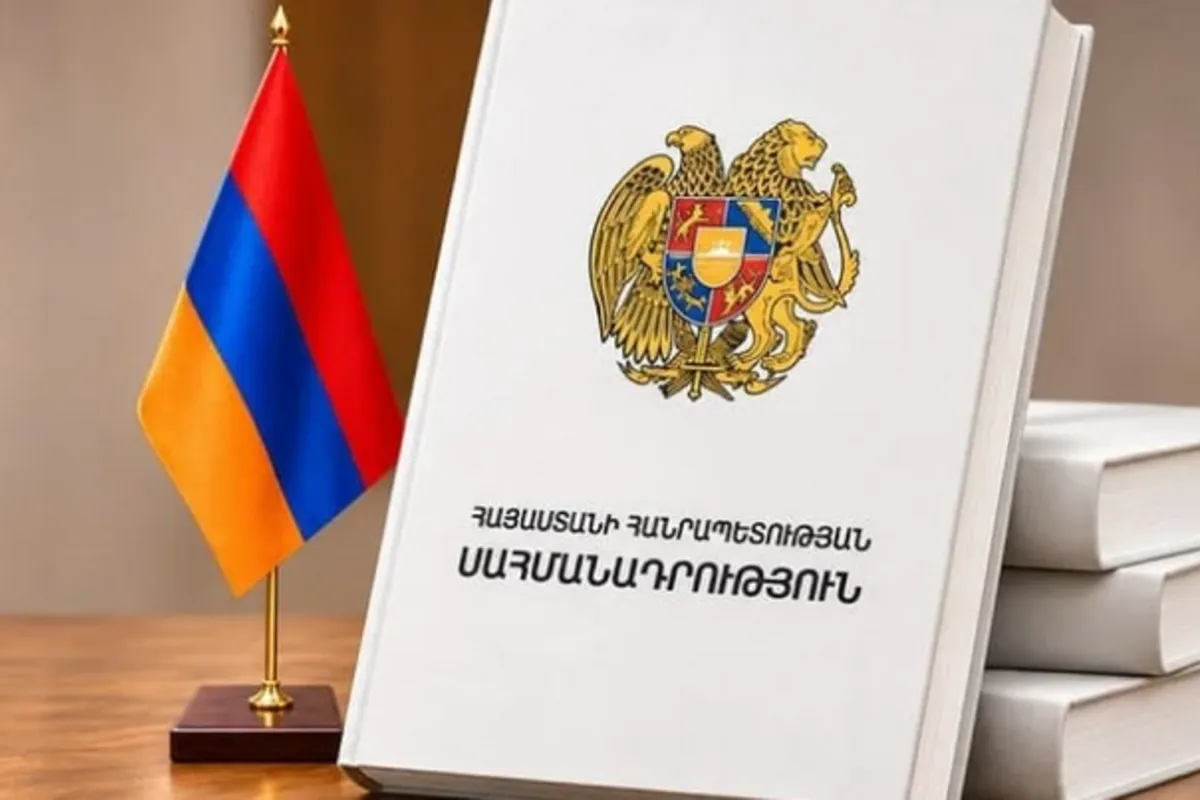
Armenia's draft new Constitution proposes significant changes to the country's political system, electoral rights, presidential and parliamentary powers, and relations between the state and the Armenian Apostolic Church.
One of the key changes is the removal of any reference to Armenia's Declaration of Independence, adopted on August 23, 1990, according to Armenia Today.
The draft also introduces new eligibility requirements for voters. To participate in parliamentary elections and referendums, citizens would have to maintain permanent residence in Armenia for at least one year during the two years preceding the vote.
Another proposed amendment would allow Armenian citizenship to be revoked by a court decision in cases involving crimes against the foundations of the constitutional order or state security. The current Constitution prohibits the deprivation of Armenian citizenship.
The rules governing political party financing would also change. Parties would be allowed to receive funding only through donations from citizens and state budget allocations in cases established by law.
The Constitutional Court would gain the authority to ban political parties, including those promoting the rejection of Armenia's state independence or receiving funding from foreign sources.
The draft proposes lowering the minimum age for presidential candidates from 40 to 35, while expanding the president's powers.
Parliament would gain the authority to express no confidence in individual ministers and other officials. It would also be able to vote for its own dissolution with the support of three-fifths of lawmakers.
The referendum procedure would undergo significant changes as well. For a new Constitution to be adopted, the minimum level of support would increase from one-quarter to one-third of eligible voters. More than half of those participating in the referendum would also have to vote in favor.
At the same time, the parliamentary threshold required to submit a draft for a referendum would be lowered from two-thirds to three-fifths of lawmakers.
The document also envisages a one-time assessment of the professional qualifications and integrity of sitting judges within five years of the Constitution entering into force.
The draft retains recognition of the Armenian Apostolic Church (AAC) and its exclusive mission as the national church.
However, relations between the state and the Church would be regulated by law rather than through a separate agreement.
Another significant proposal concerns the country's armed forces.
Under the draft, the prime minister would become the Supreme Commander-in-Chief of the Armed Forces without the current qualification limiting this role to wartime.
The Chief of the General Staff would report to the defense minister without the existing distinction between peacetime and wartime arrangements.
The National Security Council would also be removed from the Constitution.
In addition, parliamentary approval would be required to deploy Armenian armed forces outside the country's territory, except in cases covered by ratified international treaties.
The proposed amendments would represent a broad restructuring of Armenia's constitutional framework, affecting electoral participation, political institutions, military command and the relationship between the state and religious institutions.