Source: AZERTAC
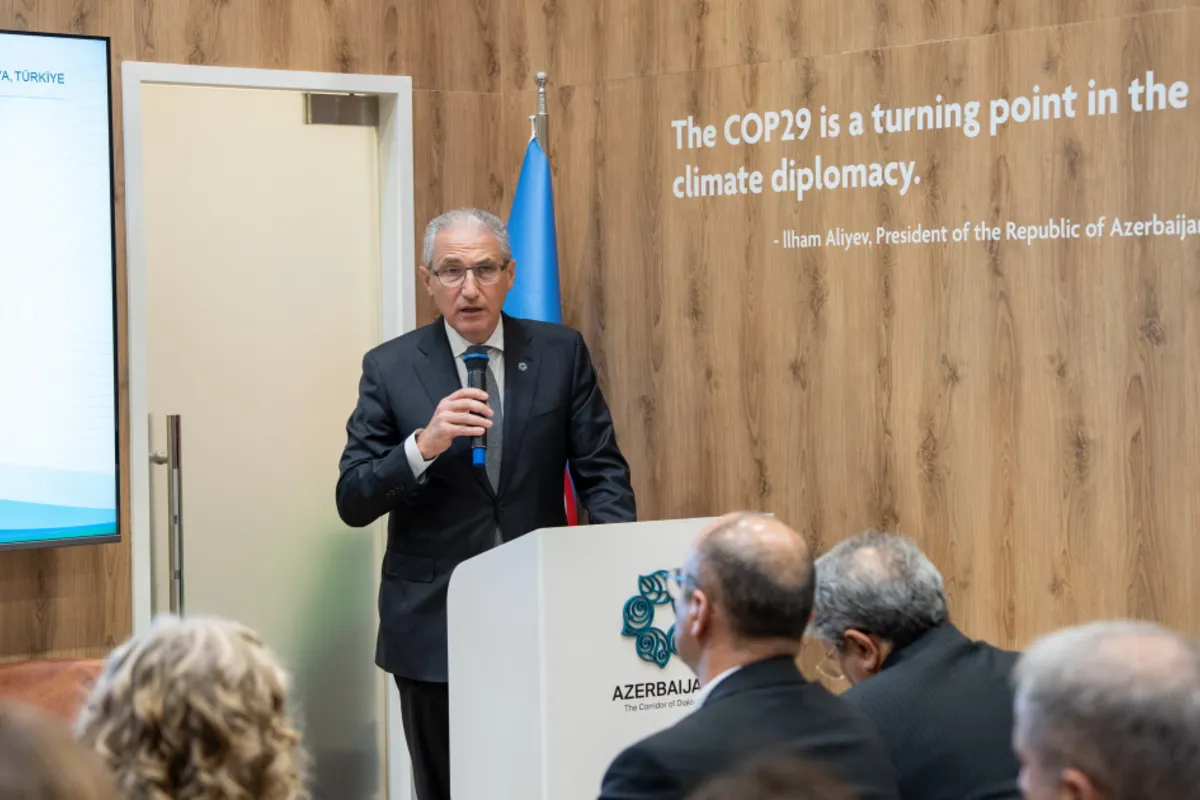
A high-level event dedicated to the Caspian Sea was held at the Azerbaijan Pavilion during the 31st session of the UN Climate Change Conference (COP31), currently taking place in Antalya, Türkiye.
The event brought together officials from the five Caspian littoral states - Azerbaijan, Russia, Iran, Turkmenistan, and Kazakhstan - as well as Inger Andersen, Executive Director of the United Nations Environment Programme (UNEP), The Caspian Post reports, citing AZERTAC.
Noting that this was the fourth consecutive high-level meeting on the Caspian Sea held since COP28, Mukhtar Babayev, Representative of the President of Azerbaijan on Climate Issues and President of COP29, stated that while much of the world is grappling with rising sea levels, the Caspian Sea faces the opposite threat: a persistent and alarming decline in its water level. Between 2016 and 2025, the Caspian Sea's water level fell by 1.33 meters.
Babayev also noted that the water level fell by 14 centimeters in 2025 alone and highlighted significant changes in temperature and precipitation.
According to Babayev, although annual precipitation in the area under observation reached 198.3 millimeters in 2025, the highest figure in the past decade, the sea level continued to fall.
He said that the retreat of the Caspian Sea had exposed approximately 30,000 hectares of land in the Azerbaijani sector alone. “These changes create new challenges for infrastructure and economic activity. Ports and shipping face rising costs, while fisheries, fish migration routes, and biodiversity face growing threats. This is an ecological, economic, and social challenge for our entire region,” Babayev said, recalling the first Caspian Environmental Summit held in Turkmenbashi, Turkmenistan.
Referring to President Ilham Aliyev’s warning at the summit in Turkmenbashi that the rapid decline in the Caspian Sea's water level could have catastrophic consequences, Babayev stressed the importance of raising international awareness of the issue.
“We must bring this challenge more prominently onto the agenda within UN processes, international climate and environmental forums, as well as in cooperation with development and scientific institutions. I call on the five littoral states to act together, implement decisions, and demonstrate concrete progress before the damage becomes irreversible,” he said.
Event participants noted that the Caspian littoral states had strengthened joint scientific research and data-exchange initiatives to address the decline in the sea's water level.
Share on social media