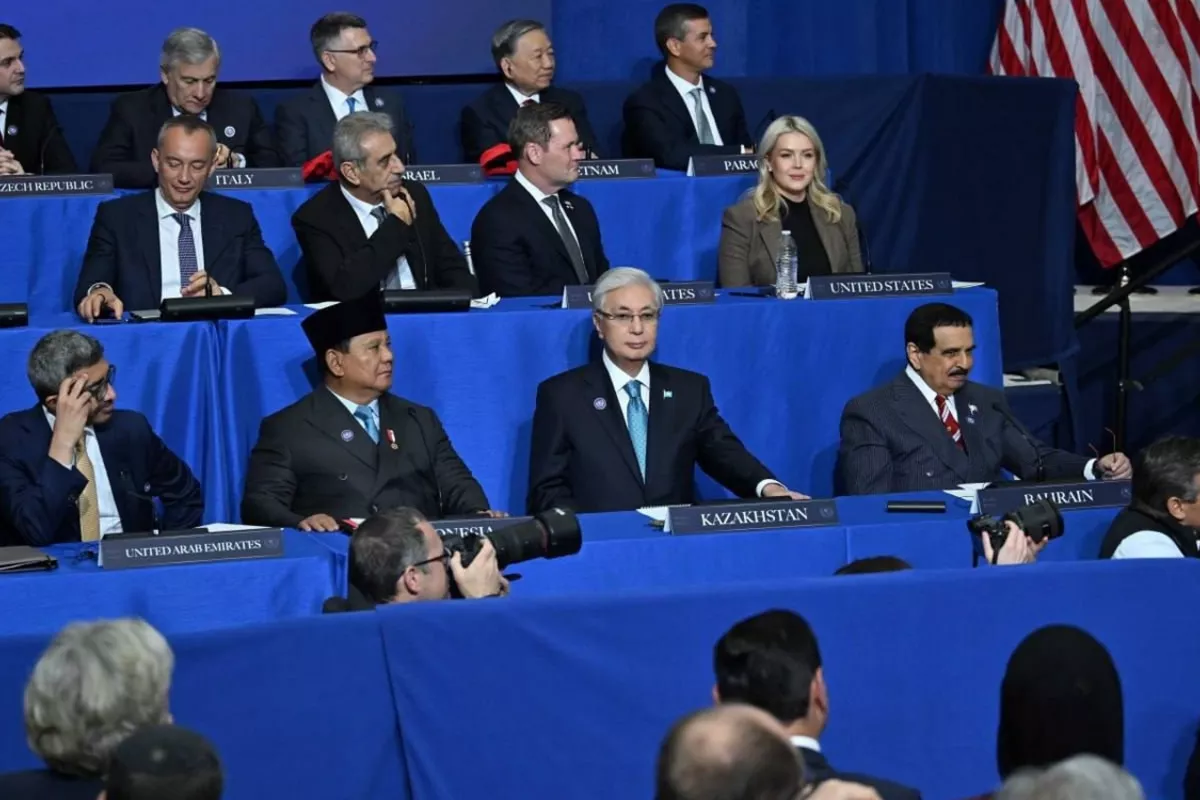
On February 19, President Tokayev will meet President Trump for the third time in six months to advance Trump’s Board of Peace initiative - an undertaking that aligns with Kazakhstan’s long-articulated view that peace remains achievable, even in a war-torn world under seemingly impossible odds. This approach emphasizes sustained diplomacy, interfaith coexistence, economic integration, and respect for human dignity. Moreover, Washington has not only pivoted towards Central Asia but has found Kazakhstan a rational and predictable partner in an increasingly chaotic and multipolar world - one in need of credible mediators capable of engaging across political, economic, and religious divides.
In accepting Trump’s invitation to join the Board, Tokayev has assumed a role consistent with Kazakhstan’s long-articulated identity and practice as a bridge-builder. Kazakhstan’s lived experience of pluralism and balanced pragmatic diplomacy gives that role substance. Kazakhstan brings to the Board a distinctive societal composition that has, despite differences, remained cohesive and broadly tolerant.
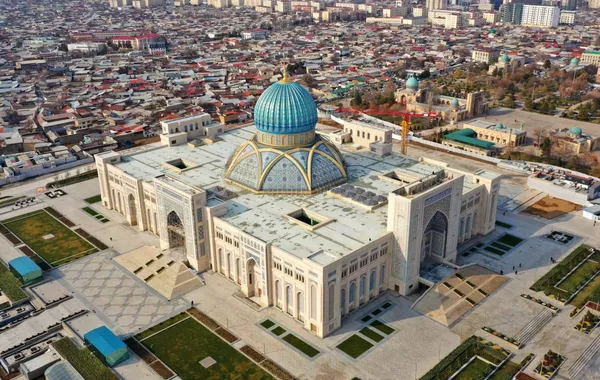
Although it is a Muslim-majority country in Central Asia, it is also home to a substantial Christian, agnostic, and atheist population and has more than 100 ethnic groups. This demographic and religious diversity is not peripheral to its national identity and story as a relatively newly formed nation; it is foundational and will resonate as it carries out its responsibilities as a member of the Board. For decades, Kazakhstan has institutionalized interreligious dialogue as a matter of state policy rather than relying on symbolic rhetoric. In the process, it has learned to separate political ideology from the core principles of religious freedom and freedom of conscience.
The Board of Peace initiative fits squarely within Tokayev’s priorities. As he said recently, this new platform is a “timely and relevant initiative designed to deliver meaningful and long-lasting results” in tackling global conflicts, aiming to complement-not replace-institutions like the United Nations. For Kazakhstan, participation reflects the external expression of that domestic model of pluralism and balanced engagement. It builds on Kazakhstan’s long experience of managing domestic diversity while sustaining balanced relations across competing global power centers through disciplined statecraft and structured dialogue.
Kazakhstan brings this worldview into its seasoned practice of diplomacy. On the Board of Peace, Tokayev will bring experience and practical recommendations to the table. Other heads of state joining Tokayev include another Central Asian leader, President Mirziyoyev of Uzbekistan.
A Continuation of Kazakhstan’s Role as an International Mediator
This visit to Washington continues Kazakhstan’s long-standing diplomatic tradition of prioritizing dialogue without dogma, development without division, and peace through prosperity.
Tokayev has consistently framed the country’s foreign policy in measured terms: “Kazakhstan will continue to serve as a bridge-builder and peacemaker. It will also continue to choose balance over domination, cooperation over confrontation, and peace over war.” Rather than mere aspirational rhetoric, this statement, made at the 80th United Nations General Assembly in 2025, reflects a pragmatic doctrine that has guided Astana’s multi-dimensional diplomacy - maintaining constructive relations across competing power centers while advancing mediation, confidence-building, and multilateral engagement as tools of stability. This approach is structural rather than situational, having shaped Kazakhstan’s external posture for decades.
President Tokayev has consistently advocated for the principle that “diplomacy remains the only tool to manage international relations, reduce risks and strengthen security and well-being.” This approach reflects a strategic doctrine rather than aspirational rhetoric: Kazakhstan seeks stability through predictable statecraft, balanced relations, and principled mediation across competing power centers.
Kazakhstan’s readiness to provide neutral platforms for dialogue reflects that doctrine in practice. From hosting negotiations to supporting confidence-building measures, Astana has sought to position itself as a constructive intermediary rather than a partisan actor. Participation in the Board of Peace represents an extension of this long-cultivated diplomatic identity - one rooted in balance, continuity, and pragmatic engagement.
A Muslim Nation Championing Peace and Interfaith Dialogue
As a country shaped by religious and ethnic diversity, Kazakhstan has long positioned itself as an example of peaceful pluralism. For more than two decades, the Congress of Leaders of World and Traditional Religions in Astana has brought together spiritual leaders from across the globe to foster mutual understanding and respect. Tokayev has long emphasized his belief that despite differences in faith and traditions, people are “united by common aspirations and good intentions,” underscoring the vital role of inter-religious and intercultural cooperation for humanity’s future.
These efforts demonstrate that Kazakhstan’s interfaith dialogue is not merely theatrics but is embedded in its socio-political culture. Kazakhstan argues that such cooperation is essential to lasting peace, which is possible only once these values are internalized and practiced- an approach and attitude relevant for any durable peace framework.
In Washington, Tokayev will appeal to leaders who likewise recognize the need for what he describes as the “moral compasses of humanity.” In a forum that brings together leaders from across the world’s major civilizations and religious traditions, the moral framing of which Tokayev speaks is not ornamental; it underpins the trust necessary for sustained engagement across political fault lines.
Peace Through Mutual Understanding and Economic Stability
Tokayev will also underscore that economic development and connectivity are necessary complements to diplomatic dialogue. Landlocked countries like Kazakhstan encounter distinct challenges. He has argued that strengthening trade and connectivity not only drives economic growth but also fosters political stability. By backing initiatives that connect markets, develop infrastructure, and deepen regional and global economic integration, he maintains that shared prosperity and a recognition of the common good become another foundation of lasting peace.
In Tokayev’s view, peace is not merely the absence of conflict, but a positive state of mind reinforced by cooperation in trade, infrastructure, and shared growth. In his addresses at the United Nations, he linked economic development and connectivity with long-term global stability, arguing that economic integration and mutual prosperity reinforce diplomatic efforts. Support for frameworks like the Board of Peace reflects a broader conviction that religious tolerance and economic opportunity must function together as stabilizing factors in a fragmented and disoriented international system.
Looking Ahead
President Tokayev’s visit to the White House represents more than protocol or symbolism; it signals continuity in Kazakhstan’s strategic posture at a moment of global uncertainty. As a Muslim-majority nation that has institutionalized interfaith dialogue for over two decades, served as a neutral venue for negotiations, and consistently linked economic development with stability, Kazakhstan approaches this engagement with a record rather than rhetoric. Tokayev’s message has been consistent: peace requires discipline, structured dialogue, and sustained cooperation anchored in respect for human dignity.
In Washington, he is expected to reinforce the argument that stability cannot be built on maximalism, ideological rigidity, or civilizational rivalry. Instead, it must rest on predictable diplomacy, balanced partnerships, and a willingness to engage across political, economic, and religious divides. Kazakhstan’s experience managing internal diversity while maintaining constructive relations with competing global powers informs that outlook and shapes its contribution to initiatives such as the Board of Peace.
There is no room, Tokayev would say, for unnecessary ambitions, religious intolerance or extremism, and dangerous ideological imperatives that ignore the universal dignity of the human person. When states commit to responsible statecraft and principled engagement, peace is not a bridge too far.
Find the original article here