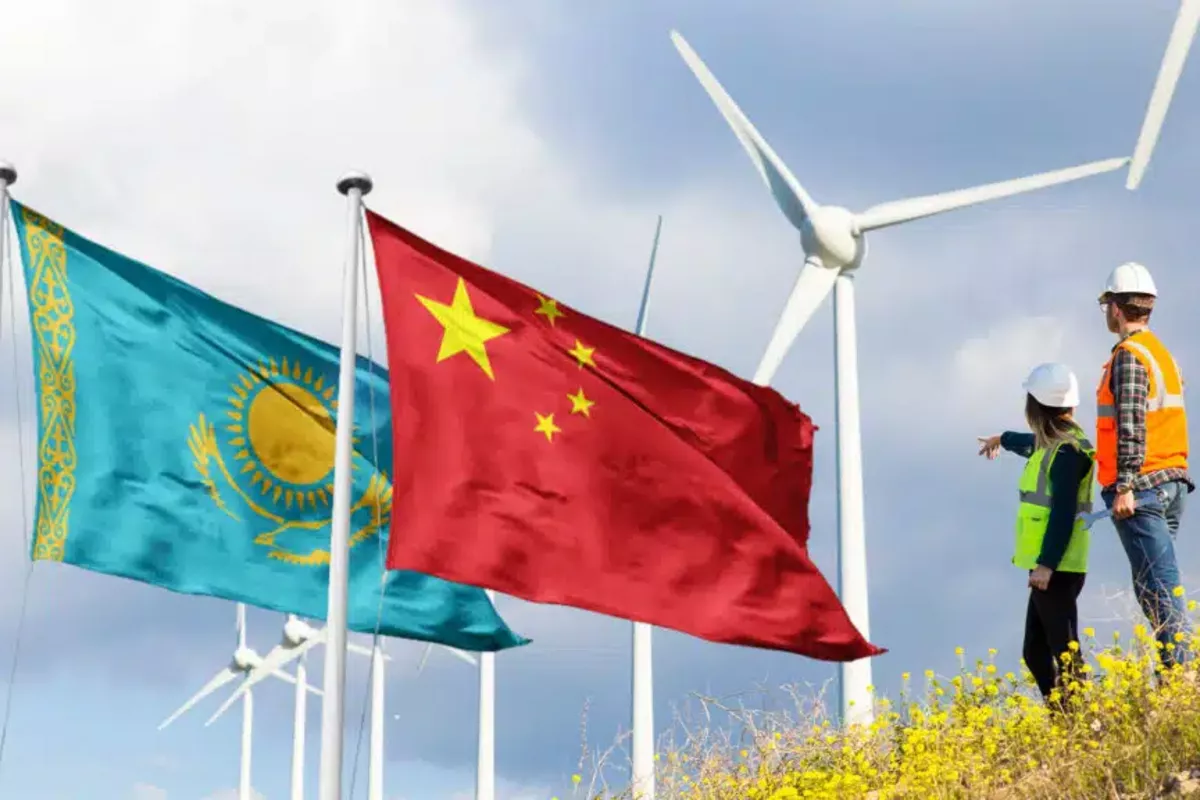
Kazakhstan and China have taken another significant step in deepening their energy cooperation with the signing of an investment agreement to construct a 500-megawatt (MW) wind power plant in Kazakhstan’s Karaganda region. The project was officially announced by the Kazakh Ministry of Energy and formalized on the sidelines of a regional environmental summit.
The agreement was signed between Kazakhstan’s Energy Minister Yerlan Akkenzhenov and Karaganda Wind Power Chairman Shao Yuebo, marking a continuation of expanding bilateral collaboration in the renewable energy sector. The initiative reflects a broader strategic alignment between the two countries, where China increasingly plays a key role as an investor and technology provider, while Kazakhstan positions itself as a regional hub for clean energy development in Central Asia.
This partnership is not an isolated project but part of a growing trend of infrastructure and energy cooperation that integrates Kazakhstan into China’s broader green energy and Belt and Road-related investment framework. For Kazakhstan, the project supports its national goals of diversifying energy sources and reducing dependence on fossil fuels, while for China it reinforces its presence in Central Asia’s emerging renewable energy markets.
Project Scale, Investment, and Energy Output
The wind farm planned in the Karaganda region is a large-scale renewable energy project with a total investment volume of $645 million. According to the Ministry of Energy, the facility will have a total installed capacity of 500 MW, making it one of the significant wind energy projects in Kazakhstan’s mid-term energy development pipeline.
Once operational, the wind farm is expected to generate approximately 1.6 billion kilowatt-hours (kWh) of electricity annually. This output represents a substantial contribution to Kazakhstan’s national electricity grid, particularly as the country continues to modernize its energy infrastructure and address rising domestic demand.
Beyond its contribution to electricity generation, the environmental impact of the project is equally notable. The Ministry of Energy estimates that the wind farm will reduce carbon dioxide emissions by approximately 1.3 million tons per year. This reduction aligns with Kazakhstan’s broader climate commitments, including its target of achieving carbon neutrality by 2060.
The scale of the project demonstrates the growing viability of wind power in Kazakhstan, a country traditionally dominated by coal-based electricity generation. Karaganda, with its favorable wind conditions and industrial infrastructure, has emerged as a strategic location for renewable energy investments.
Renewable Energy Development in Kazakhstan’s Long-Term Strategy
The wind farm project is being implemented under an intergovernmental agreement and forms part of Kazakhstan’s broader national program to develop renewable energy sources. Over the past decade, Kazakhstan has gradually increased its focus on clean energy as part of efforts to modernize its economy and reduce environmental impact.
The government has set ambitious targets for renewable energy expansion, aiming to increase the share of renewables in electricity generation significantly in the coming years. Wind and solar energy are expected to play a central role in this transition, given the country’s vast geographic potential and favorable natural conditions.
The Karaganda wind farm fits into this long-term strategy by contributing both capacity and technological advancement. Large-scale projects such as this are also seen as critical for attracting further foreign investment and improving Kazakhstan’s energy security. By diversifying its energy mix, the country reduces exposure to fluctuations in fossil fuel markets while simultaneously strengthening its environmental commitments.
Moreover, such projects help develop domestic expertise in renewable energy operations, maintenance, and grid integration-areas that will become increasingly important as the sector expands.
China’s Role in Central Asia’s Green Energy Expansion
China’s participation in the project highlights its growing influence in renewable energy development across Central Asia. Chinese companies and financial institutions have become major players in global green infrastructure, particularly in wind and solar power technologies.
In Kazakhstan, Chinese involvement often brings not only capital investment but also advanced engineering capabilities and supply chain integration. The Karaganda wind farm project reflects this model of cooperation, where Chinese partners contribute both financial and technical expertise.
For China, investments in renewable energy abroad also align with its broader strategy of exporting green technologies and supporting international climate goals while expanding economic partnerships. Central Asia, due to its geographic proximity and energy potential, has become a key region in this strategy.
At the same time, such cooperation allows Kazakhstan to accelerate its energy transition without bearing the full financial and technological burden alone. The partnership model demonstrates mutual benefit: Kazakhstan gains infrastructure and emission reductions, while China strengthens its position as a global leader in renewable energy development.
Economic and Environmental Implications for the Region
The Karaganda wind farm project is expected to have significant economic and environmental implications for Kazakhstan. On the economic side, the $645 million investment will contribute to local development, job creation, and infrastructure improvement during both the construction and operational phases.
Wind energy projects of this scale typically require a combination of engineering, logistics, and maintenance services, which can stimulate regional employment and create opportunities for local businesses. Additionally, increased electricity generation capacity can support industrial growth in the Karaganda region, which is already one of Kazakhstan’s major industrial hubs.
From an environmental perspective, the estimated reduction of 1.3 million tons of CO₂ emissions annually represents a meaningful contribution to national and global climate mitigation efforts. As Kazakhstan continues to rely heavily on fossil fuels, projects like this are essential in gradually shifting the energy balance toward cleaner alternatives.
However, the long-term success of such initiatives will depend on continued policy support, grid modernization, and further investment in energy storage and transmission infrastructure. Without these complementary developments, the full potential of renewable energy expansion may not be fully realized.
Conclusion: A Milestone in Kazakhstan’s Green Transition
The 500-MW wind farm project in Kazakhstan’s Karaganda region represents a major milestone in the country’s renewable energy development. Backed by a $645 million investment and supported through intergovernmental cooperation with China, the project reflects both economic ambition and environmental responsibility.
It underscores Kazakhstan’s strategic commitment to diversifying its energy mix and reducing carbon emissions, while also highlighting China’s growing role as a global partner in clean energy infrastructure.
As the project moves forward, it is likely to serve as a model for future renewable energy cooperation in the region, demonstrating how cross-border investment and technological collaboration can accelerate the transition toward a more sustainable energy future.