One week after the ceasefire took effect on April 8, Iran has entered a phase that’s neither full peace nor an ongoing war.
Developments on the ground, official messaging, and regional dynamics are moving in parallel but rarely in alignment. The truce itself is fragile, set to expire within days, and already violated by both sides, The Caspian Post reports, citing foreign media.
At the regional level, the ceasefire has been read elsewhere as part of a broader de-escalation framework. Inside Iran, it is being read differently. Many see it as part of a wider strategic contest in which the country has, at least in part, managed to assert its position.
Conditions outlined at the highest levels of leadership, particularly the insistence on not conceding strategic leverage, have resonated with parts of the public. In conversations across Tehran over the past week, one theme recurs: under no circumstances should the outcome of the conflict be diluted at the negotiating table.
The Blockade and the Strait
Much of that pause has hardened around a single waterway. The US naval blockade of Iranian ports took effect after peace talks in Islamabad collapsed on 12 April, with Vice President JD Vance describing what Washington had offered Tehran as a "final and best offer" before leaving Pakistan without a deal.
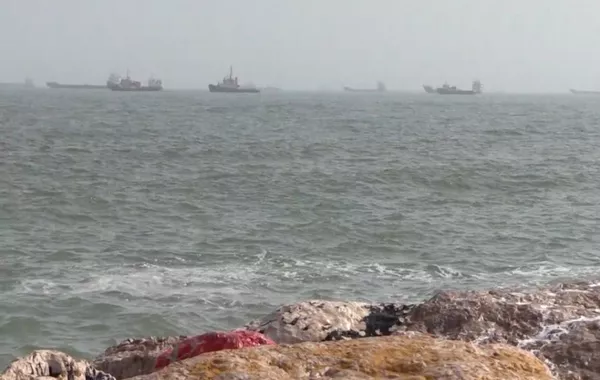
Iran's armed forces responded by accusing the US of piracy. Within days, US forces had turned back 25 commercial vessels attempting to leave or reach Iranian ports, according to US Central Command. Foreign Minister Abbas Araghchi's statement that the Strait of Hormuz remained open to all shipping triggered immediate pushback inside Iran.
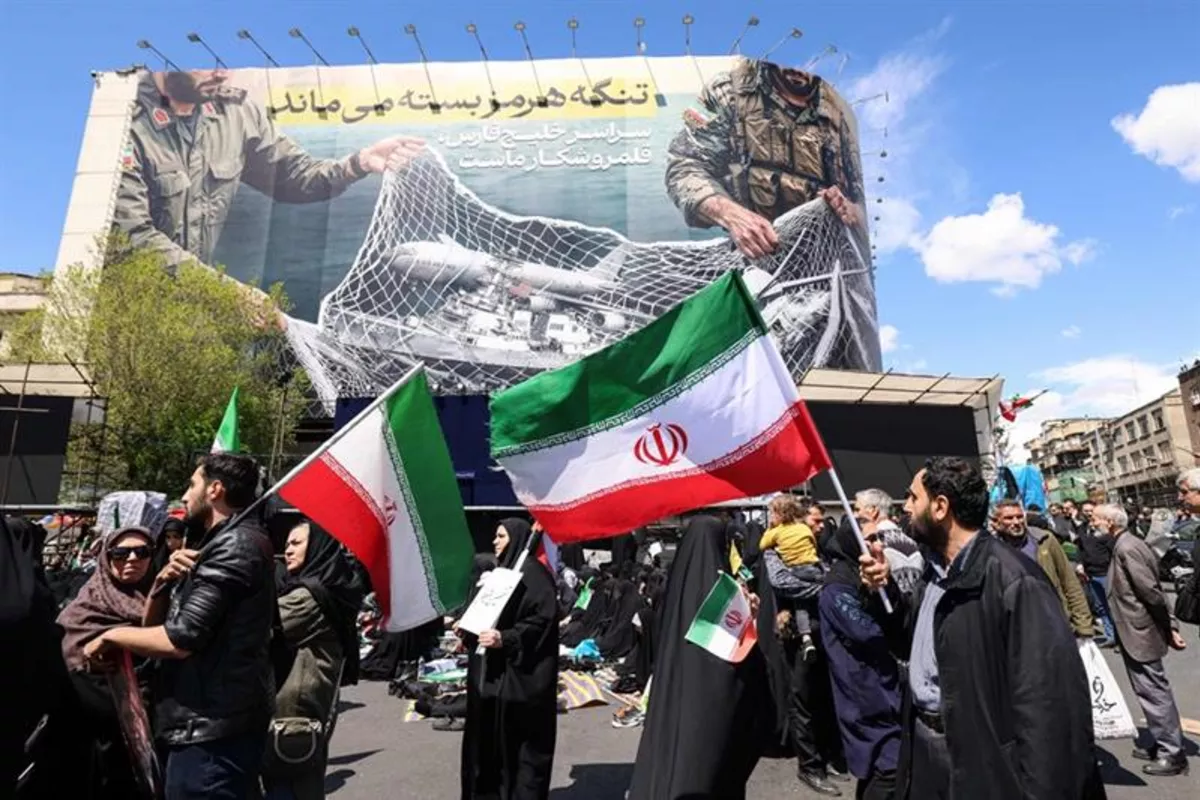
Nightly gatherings have continued well beyond the ceasefire, some organised by state media and religious authorities as demonstrations of "steadfastness," others reflecting a genuine unease about the pace of diplomatic concessions.
Within 24 hours, the situation escalated. Iran's Supreme National Security Council announced that restrictions on the Strait of Hormuz would be reinstated, citing the continued US blockade and declaring that the waterway would not be fully reopened until Washington allowed unrestricted navigation for vessels travelling from Iran. Two Indian-flagged vessels came under fire in the strait shortly after the order took effect. The head of Iran's National Security Commission framed the closure as a response to American untrustworthiness.
On 19 April, the confrontation sharpened further. U.S. Marines fired into the engine room of the Iranian-flagged cargo ship Touska in the Gulf of Oman after its crew ignored warnings to stop for over six hours, then boarded and took custody of the nearly 900-foot vessel. The US Treasury sanctioned the ship, which was en route from China to the Iranian port of Bandar Abbas. Trump accused Tehran of violating the ceasefire and threatened further strikes. Iran's joint military command Khatam al-Anbiya warned it would retaliate against what it called armed piracy.
Global markets reacted almost immediately. Oil prices jumped more than four per cent after the seizure, pushing toward $97 per barrel. Analysts have noted that prices have climbed so high that they may now be triggering demand destruction, slowing global economic activity. Traffic through the strait has been at a near-standstill for weeks, and shipping data shows Iranian oil exports effectively halted.
Deterrence Messaging and the Military Posture
The rhetoric from senior Iranian officials has hardened amid deep scepticism about US intentions. Mohsen Rezaei, a senior military advisor to the Supreme Leader, said Iran was prepared to target US naval assets in the region if hostilities resumed, noting that those forces were already within range of Iranian missile systems.
In early April, the Pentagon was declaring Iran's defence industrial base destroyed, with General Dan Caine telling reporters that Washington and its partners had struck roughly 90 per cent of Iran's weapons factories and Defence Secretary Pete Hegseth claiming that Iran could no longer produce missiles, rockets, launchers, or drones. US intelligence assessments leaked to CNN told a different story. Roughly half of Iran's missile launchers remained intact, the intelligence reporting concluded, and thousands of one-way attack drones remained in Iran's arsenal despite five weeks of daily strikes.
By mid-April, Hegseth himself had shifted his public framing, acknowledging that Iran was digging out missiles and launchers, much of this capability preserved through extensive underground tunnel networks that Iran spent decades building for precisely this contingency.
The reassessment suggests that the operational damage inflicted during the earlier phase of the war was less comprehensive than initially claimed, and that Iranian military infrastructure is being rapidly reconstituted, including through material shipments from China.
Taken together, these signals point to a layered dynamic. Diplomatic channels remain open, with US envoys including Vance, Steve Witkoff, and Jared Kushner expected in Islamabad for a second round of talks.
The Domestic Dimension
Back on the streets, the mood reflects this complexity, though it is more layered than either Iranian state media or some foreign coverage has allowed.
"We are not afraid of war," one young man said during a gathering in northern Tehran. "We are afraid of losing what this war changed."
That sentiment is real, but it sits alongside others that have been harder to document in the current information environment.
A near-total internet blackout, now nearly 1,000 hours by some counts, has made it difficult for Iranians to communicate freely and for journalists to verify public opinion beyond what can be observed in the streets.
Some Iranian residents have found much greater anxiety than those interviewed on camera in public spaces, with many expressing fear of intensified repression once the external pressure eases.
The January 2026 nationwide protests, in which between 30,000 and 36,500 people were killed according to reporting by Time, The Guardian, and Iran International, remain recent. Executions of political prisoners have continued through March and April, with at least ten political prisoners hanged in the first ten days of April alone.
In most conflict settings, ceasefires are welcomed as a clear endpoint. In Iran, they are being treated as a transitional phase, one in which the outcome is still being negotiated both externally and internally.
Parliament Speaker Mohammad Bagher Ghalibaf's televised remarks, emphasising that key strategic assets would not be conceded, read in this context as an attempt to align official messaging with rising public expectations, while state media rallies are organised to project an image of national unity.