Iran Punctured the U.S. Security Umbrella in the Gulf
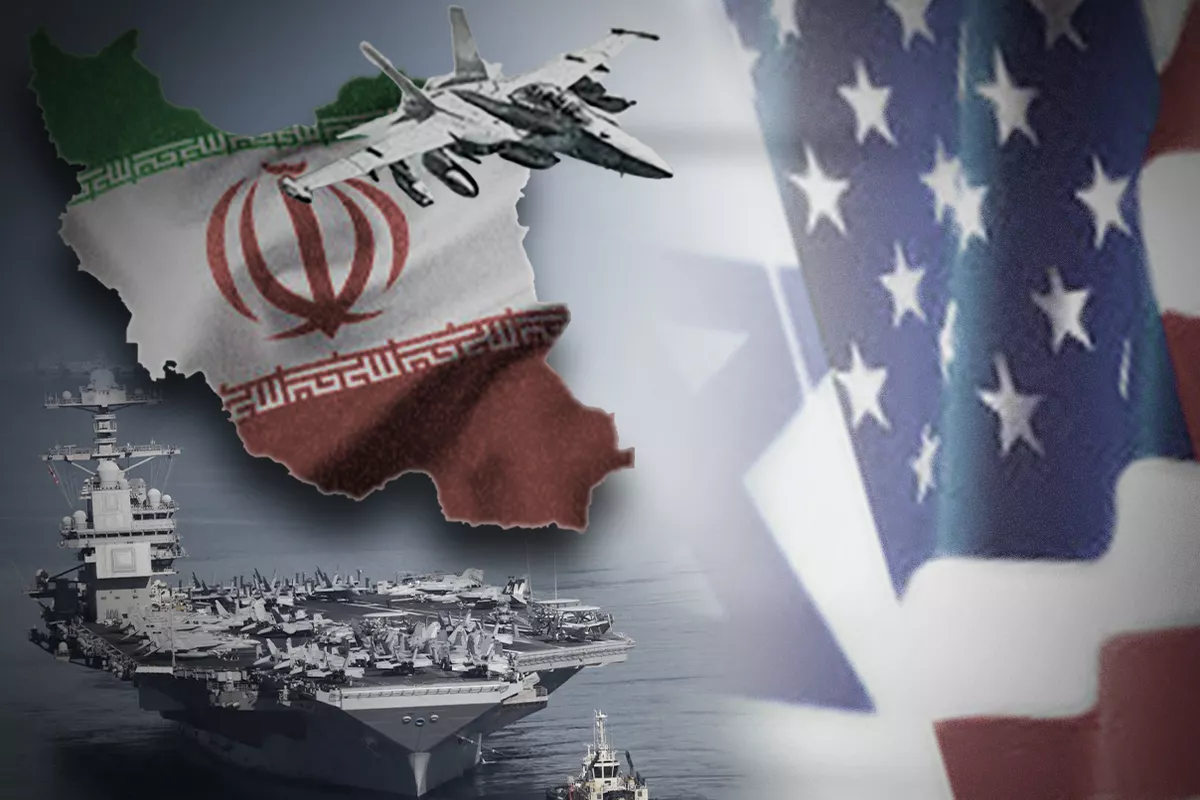
Much of the recent discussion of America’s war with Iran has focused on the prospective deal being negotiated between the two countries and the extent to which Iran’s ability to resist collapse throughout the conflict and its potential long-term control over the Strait of Hormuz will enable it to impact post-peace regional security dynamics. Yet regardless of whether Iran emerges from this war stronger or weaker than it was before it began, the conflict has undoubtedly altered how America’s regional allies perceive the security dynamics in the Middle East.
For the past several decades, America’s regional partners have existed under an American security umbrella, with many countries hosting American troops or supporting US interests in the region in exchange for arms sales and the implicit promise of deterrence against Iranian aggression. However, the Iran War has raised questions among America’s Gulf allies about whether close ties with Washington serve to provide protection or instead invite retaliation. In response to US and Israeli strikes, Iran launched roughly 6,000 projectiles at America’s regional partners, including Bahrain, Kuwait, Saudi Arabia, Qatar, and the UAE, targeting states that have largely tried to avoid direct involvement but are nonetheless seen as tacit supporters of Washington’s war effort. These attacks were intended to impose costs on America’s regional partners, destroy military assets, and disrupt regional energy production to maximize the impact of Iran’s shutdown of the Strait of Hormuz.
Iran’s efforts to undermine America’s regional security umbrella may have worked; a spokesperson of Qatar’s Foreign Ministry assessed that “The most significant outcome of this war is the shattering of the concept of a regional security system in the Gulf.” Yet it would be simplistic to say that America’s regional security umbrella has been permanently punctured. In reality, the Iran War has illuminated both the strength and the fragility of this umbrella, provoking uncertainty among America’s Arab partners about Washington’s role in promoting regional security in the Middle East going forward.
On one hand, the Iran War has been a high-profile exhibition of the world-class weapons systems underpinning America’s security umbrella. American air defense systems such as the patriot missile interceptors and Terminal High Altitude Area Defense have intercepted over 90% of Iranian projectiles. The widespread use of these systems among America’s Gulf allies has blunted the damage caused by Iranian strikes, successfully limiting casualties in the GCC countries to 41 as of April 8. Even Iran’s vaunted drone swarms, long posited as a significant threat to American air defenses, have mostly been shot down, though valid questions have been raised about America’s ability to quickly resupply its air defense systems when forced to contend with a steady stream of projectiles that can be manufactured comparatively cheaper and faster than American missiles. The exemplary performance of America’s systems, combined with the failures of Iran’s domestic and Russian-built air defense in both the current conflict and the 12-Day War and Russia’s ongoing challenges in protecting its air defense systems in its war with Ukraine, underscore the benefits of close security relationships with the US. The fact that American military presence in the region has largely deterred military aggression among Arab Gulf states while helping preserve regime stability in these countries further speaks to the value of their continued American security partnerships.
On the other hand, the mere fact that America’s regional partners are being attacked by Iran in the first place illustrates the limits and inherent dangers of America’s security umbrella. America’s Arab allies largely advised the White House against attacking Iran, and many of these partners were not warned of the impending US-Israeli strikes on Iran. The war has reportedly cost Gulf countries well over $100 billion, with that price tag continuing to rise the longer the conflict drags on. Some Gulf countries reportedly believe the US prioritizes Israel’s security concerns above theirs, raising questions about how committed America would be to their defense in the event of a future conflict between Israel and an Arab ally. The unpredictable nature of the Trump administration has also been decidedly disruptive to America’s Middle Eastern allies who struggle to make long-term strategic plans around a White House prone to rapid shifts of focus. America’s partners must now live with the results of a US-Iran conflict they didn’t want (which presently includes Iranian control of the Strait of Hormuz) and could be forced to accept a peace agreement that leaves Iran stronger than it was before the war. If America’s Middle Eastern allies are beholden to the foreign policy of an ally they cannot sufficiently influence and which they don’t believe prioritizes their security, those states might logically seek alternative arrangements to bolster their national defenses.
Many of America’s Gulf allies are reportedly discussing moving away from contracts and investment commitments with the US, signaling potential concerns about the long term merits of their American partnerships. The GCC could also take steps to deepen their cooperative security ties, similar to how its Joint Defense Council agreed to increase intelligence sharing, accelerate development of new early warning systems, and conduct joint military exercises in the wake of Israel’s attack on Doha last September. If Gulf countries believe the US can no longer guarantee their security, they could potentially create a more formal regional security alliance in the vein of NATO. However, forging such an alliance may be difficult considering the enduring geopolitical tensions between GCC members, exemplified by the 2017-2021 blockade of Qatar and the burgeoning Saudi-UAE rivalry, which looks increasingly pronounced in the wake of the UAE’s recent departure from OPEC. The Gulf states would also have to weigh the benefits of a more formal security alliance against the risk that such a pact would be perceived by Israel as a threat, which could potentially heighten security tensions in the Gulf rather than reduce them.
Even if America’s Gulf partners decide to move out from under America’s security umbrella, it would take time for these states to strengthen their own defensive capabilities enough to offset the loss of American support. Accordingly, some of America’s Gulf partners could look to deepen their security relationships with the US in the short term, regardless of whether they hope to ultimately reduce their dependence on America. For example, after the US failed to warn Qatar of Israel’s September 2025 strike on Doha, America acted to preserve this fractured relationship by providing Qatar with an explicit security guarantee, making it the first Arab ally to receive such an assurance. This agreement, combined with America’s opening of a new air and missile defense coordination cell at Qatar’s Al Udeid Air Base, proved sufficient to keep Qatar in America’s security orbit. While America is unlikely to extend similar guarantees to each of its regional partners, it would be unsurprising to see some Arab states seek deeper defense relationships with the US. Countries who remain comfortable under America’s security umbrella may use the Iran war as a pretext to permanently move deeper under it, while others may seek short-term protection to buy themselves more time to strengthen their domestic defensive capabilities.
The US-Iran conflict has shaken the regional perception of America’s security umbrella but not necessarily destroyed it. Instead, Middle Eastern leaders must now weigh the benefits of America’s technologically superior defense systems and its capacity to pacify intra-GCC conflicts against the risks of being associated with an ally they view as increasingly unpredictable. How America’s Arab partners navigate this dilemma could impact regional security for decades to come.
See the original article here