Iran’s Militarization Reflects Fear at Home, Not Just Threats Abroad
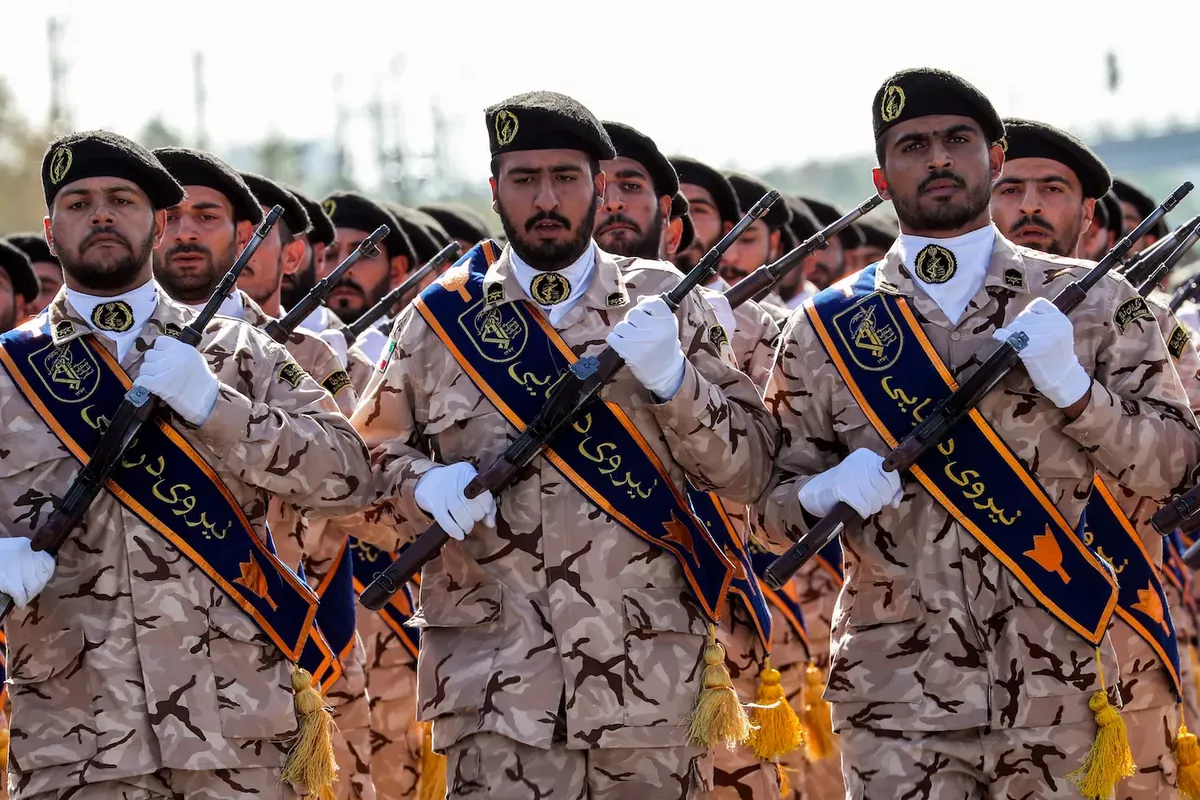
As tensions escalate around Iran, a growing line of analysis suggests that the Islamic Republic is entering a more overtly militarized phase, with the Islamic Revolutionary Guard Corps (IRGC) assuming greater influence over political decision-making. Some observers have begun to frame these developments as a shift toward military-led governance.
This interpretation overlooks what is driving the shift.
Even assuming the IRGC’s expanding role is real, it is not primarily a response to external conflict or the prospect of war with the United States. It reflects something more fundamental: the regime’s increasing reliance on coercive power to manage internal dissent and declining legitimacy.
Authoritarian systems do not militarize only to confront external threats. They do so to maintain control at home.
In recent weeks, executions have accelerated, including cases involving individuals identified as members of MEK, one of the regime’s longstanding organized opposition groups. These executions have occurred within days of each other, even as external tensions dominate international headlines, as reflected in recent reporting by Reuters. This pattern points to a system intensifying internal repression at the very moment it is engaged in external confrontation.
If militarization were primarily about external defense, one would expect the regime to consolidate politically and reduce internal friction during a period of heightened external risk. Instead, what we see is continued internal pressure, visible fractures within the political elite, and an expanding role for security institutions in managing domestic instability.
This does not look like a confident transition to a new governing model. It reflects a system under strain.
The idea that Iran is moving toward a form of military rule assumes a level of coherence that does not reflect the structure of the Islamic Republic. The IRGC is deeply embedded in Iran’s political and economic system, but it does not exist outside it. Its growing visibility does not signal a clean transfer of power from clerics to generals. Rather, it reflects the regime’s increasing dependence on coercive institutions as other sources of authority weaken.
At the same time, a parallel narrative continues to shape much of the mainstream debate: that despite mounting pressures, the regime remains resilient, capable of adapting to crisis and reasserting control. Taken together, these two narratives, one emphasizing militarization and the other durability, share a common assumption: that the primary story in Iran is what happens at the top.
That assumption overlooks the central dynamic shaping Iran today.
Over the past several years, the country has experienced repeated waves of protest, growing societal defiance visible in recurring protest cycles, and a widening gap between the state and large segments of its population. These pressures have not disappeared under the shadow of external confrontation. If anything, they have intensified. The regime’s increasing reliance on coercive tools reflects an ongoing effort to manage these internal challenges, not a confident shift toward a new political order.
Framing Iran’s trajectory as a move toward military rule risks misreading this reality. It suggests transformation where the system may actually be fragmenting. It reads consolidation into what could be gradual erosion. More importantly, it sidelines the role of Iranian society as an active political force.
If the Iranian people are to be taken seriously as political actors, analysis must move beyond tracking shifts within the regime and toward understanding the forces acting upon it. The question is not whether Iran is becoming more militarized. It is why the system increasingly depends on militarization to govern.
Iran’s future will not be determined solely by the balance between clerics and generals. It will be shaped by the pressures that are already challenging both.
See the original article here