Iran's Regime Outlasted the War. Can It Outlast the Peace?
Economic collapse and protests pose a greater threat to the Iranian regime than external enemies
The war that began on February 28, when joint American and Israeli strikes killed Supreme Leader Ali Khamenei, is finally winding down. On June 18, the United States lifted its naval blockade of Iranian ports, and the new supreme leader endorsed direct talks with Washington. Yet the government that approached the table did so battered, with a dynastic succession at the top, a society scarred by months of protest, and an economy in freefall. Whether this post-war order in Tehran can hold is not a side issue. It is the single variable on which the entire deal rests.
Power Passed to a Son, Not to a Reformer
The succession itself was an exercise in continuity. In March, the Assembly of Experts named Mojtaba Khamenei, the late leader's son, as Iran's third supreme leader-a fifty-six-year-old cleric who had never held public office and rarely appeared in public but had spent years cultivating ties with the Revolutionary Guard from inside his father's inner circle.
The Guard reportedly pressed the clerical body to confirm him quickly, and the armed forces and senior politicians rushed to pledge loyalty. His mother, sister, and wife were killed in the same strike that killed his father, while Mojtaba himself was wounded and has not appeared publicly since. Analysts interpreted the appointment as a signal that the establishment intended to preserve as much of the existing system as possible-and as a deliberate act of defiance against those who sought to overthrow it.
But this dynastic succession masked fractures rather than resolving them. Elevating a son risked deepening tensions within a leadership structure that has never operated as a hereditary monarchy. Reports from inside the establishment suggest his appointment was contested rather than universally accepted. By most accounts, Mojtaba remains an unknown figure, known primarily from photographs standing quietly in the background of meetings dominated by other men.
When he eventually authorized negotiations with Washington, he did so while stressing that he personally disagreed with the decision, granting permission only because government officials had assured him that Iran's national interests would be protected. A leader who presents negotiations as a reluctant necessity rather than a strategic choice is not bargaining from a position of confidence. His carefully calibrated remarks, intended to keep competing factions united, instead attracted criticism from multiple directions at once-an early indication of how constrained his political room for maneuver may be.
The Economy Is the Front the Regime Cannot Defend
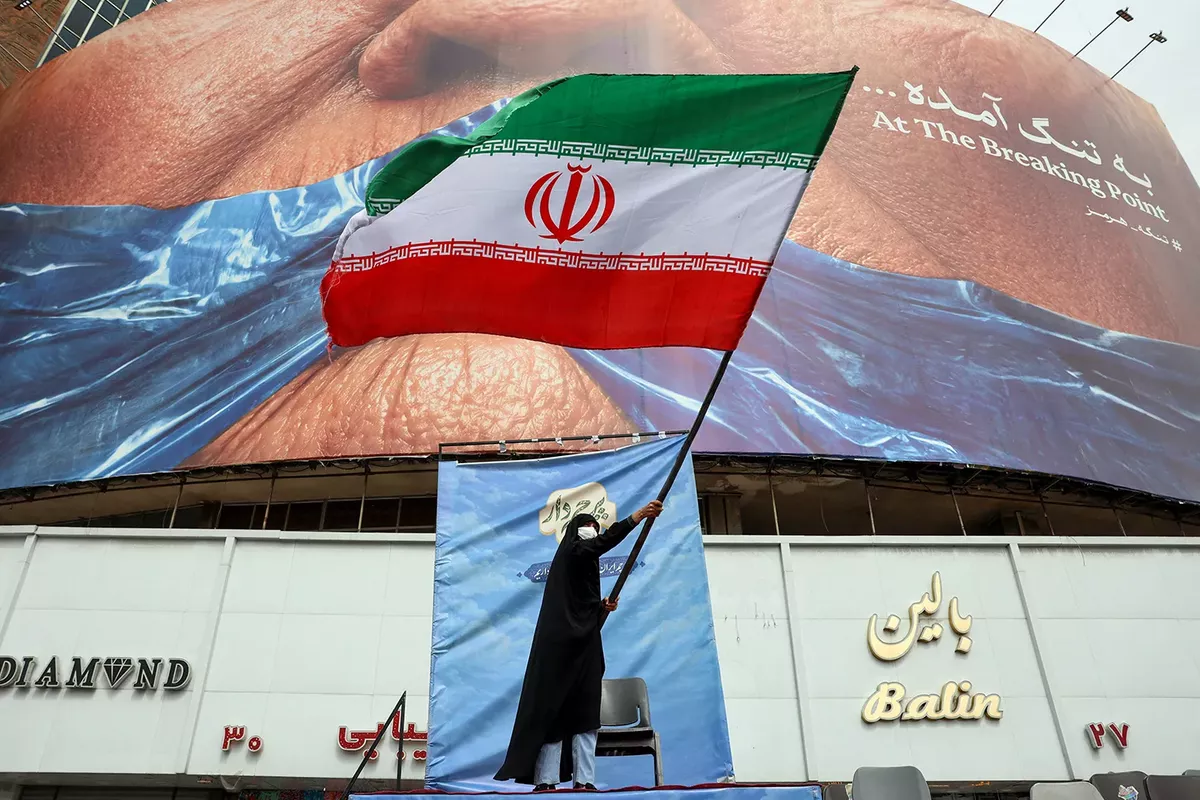
The deepest weakness is economic, and it predates the war. The rial has lost the overwhelming majority of its value since Washington abandoned the nuclear deal in 2018, and last winter the country was convulsed by the largest protests since 1979, which spread to more than two hundred cities before a lethal crackdown that left dozens dead and thousands arrested.
Crucially, the anger ran well past prices, with crowds chanting against the supreme leader himself and, for the first time in decades, openly invoking the pre-revolutionary monarchy. The state had already raised security spending sharply while granting wage rises worth a fraction of inflation, a telling allocation of priorities for a government that fears its own population more than its enemies.
That distress has not eased with the guns. Late June brought fresh student protests, record increases in the price of bread, and rolling blackouts across several provinces as summer temperatures climbed past fifty degrees, shortages that owe less to the heat than to years of underinvestment and mismanagement. The war degraded the military and the economy at once, and the new leader must now manage both while bargaining with the very country that inflicted the damage. His father's funeral, scheduled for early July, was the first public stage on which the strength of his grip can be measured.
Continuity at the Top Cannot Hide Fragility Below
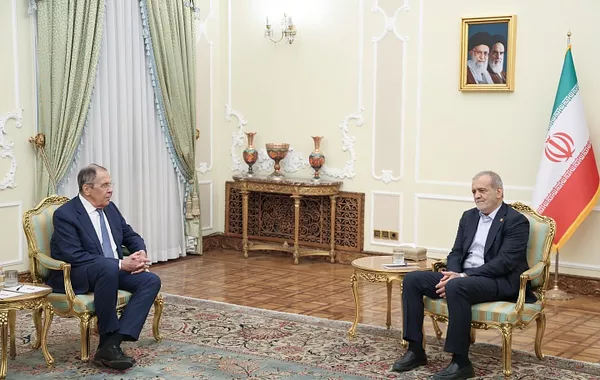
For the emerging agreement, these realities cut both ways. A regime negotiating from weakness may prove more willing to compromise. Tehran has already agreed to allow nuclear inspectors to return and to discuss the release of frozen assets in exchange for sanctions relief, with an initial tranche of $7 billion reportedly set to pass through Qatar for humanitarian imports.
Yet a leader who must constantly demonstrate resolve to hardliners and the Revolutionary Guard may also adopt tougher positions on the Strait of Hormuz and uranium enrichment simply to avoid appearing weak. When Mojtaba claimed that it was Trump's desperation that produced the agreement, his real audience was domestic, not international. The same political fragility that pushes Iran toward compromise also makes that compromise significantly harder to defend at home.
The post-Khamenei order is the load-bearing pillar of the entire settlement. If it holds, a weakened Iran may gradually reintegrate into the international system, giving the ceasefire a realistic chance of becoming durable. If it fractures under the combined weight of economic collapse and factional rivalry, the negotiations lose the stable counterpart that makes any agreement meaningful, and the region's fragile calm may disappear with it.
The regime has survived the bombs, emerging with a severely weakened military and an economy in profound crisis. Whether the political system that endured the war can successfully govern the peace remains the defining question hanging over Tehran-and over everyone now negotiating with it. For a system built around a single supreme authority for nearly half a century, the true test of any successor is never the succession itself, but the first major crisis. Iran is already facing that test.
Find the original article here