Tehran's New Strategy: Military Power and Smart Dialogue
Iran warns its missiles can strike any carrier, yet keeps diplomacy open.
Military strength and dialogue now work together in Tehran’s new strategy to ensure security and influence, The Caspian Post reports, citing Mehr news.
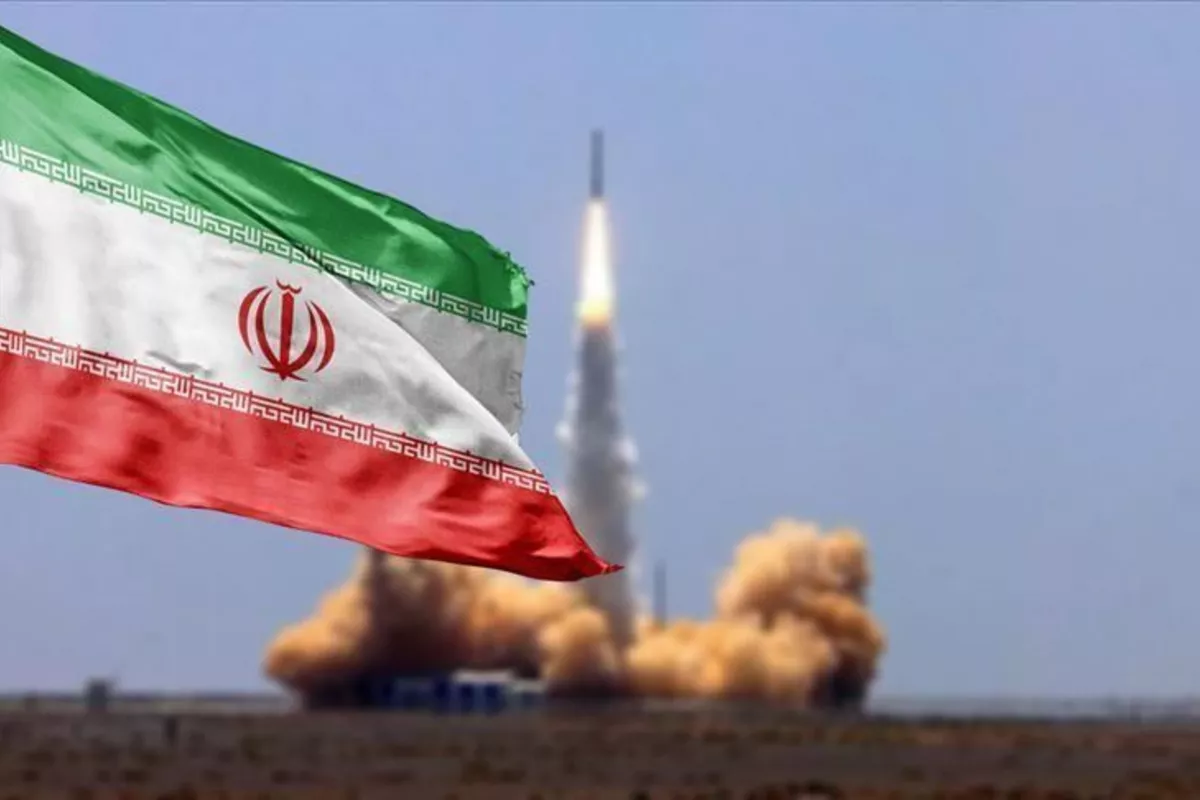
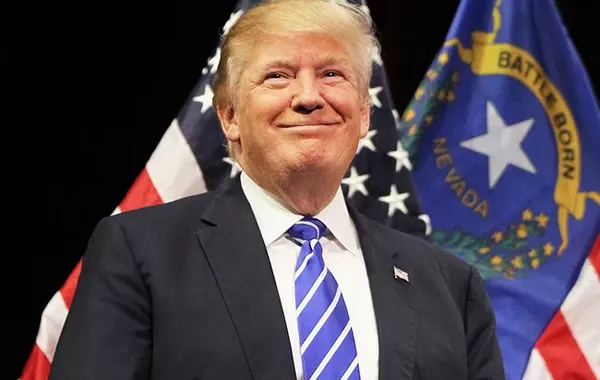
The Leader of the Islamic Revolution recently stated: “The President of the United States constantly says that our army is the strongest army in the world. The strongest army in the world may at times receive such a slap that it cannot rise to its feet! They keep saying we sent an aircraft carrier toward Iran; very well, of course, a carrier is a dangerous instrument, but more dangerous than the carrier is the weapon that can send this carrier to the depths of the sea.” These remarks articulate a strategic reality that has gradually consolidated in recent years: Iran has reached a stage where it can openly declare its tough deterrence while simultaneously advancing an active and purposeful diplomatic path.
In the past, many analyses perceived an inherent contradiction between “military power projection” and “dialogue”; as if emphasizing defensive capabilities would diminish the space for negotiation, and speaking of diplomacy would signal need or weakness. However, the experience of the Islamic Republic over recent decades has shown that these two are not contradictory; if properly designed, they are complementary. Credible deterrence underpins effective diplomacy, and active diplomacy prevents deterrence from turning into confrontation.
Iran today is no longer in the position of the early decades after the Revolution. In those years, the country was engaged in war, sanctions, and internal instability, and devoted a significant portion of its capacity to consolidating fundamental structures. Now, however, Iran’s defense, industrial, and technological infrastructure has reached a stage that enables the formation of a multilayered deterrence doctrine; a doctrine encompassing missile and drone capabilities, air defense, electronic warfare, and naval power.
When the Leader speaks of “a weapon that can send the carrier to the depths of the sea,” he is in fact pointing to this shift in balance. In twentieth-century military discourse, the aircraft carrier symbolized absolute superiority, but in the twenty-first century, with advances in precision-guided missiles, accurate guidance systems, and asymmetric technologies, no military instrument enjoys absolute immunity. This transformation is not merely technical; it has profound strategic consequences. It means that a country with political will and indigenous capacity can raise the cost of military action against itself to a level that compels opposing decision-makers to reconsider.
The significance lies in the fact that Iran defines this capability not as a prelude to confrontation, but as a shield for dialogue. In the logic of the Islamic Republic, negotiation has meaning when it is based on mutual respect and balance. A negotiation in which one side perceives itself in a position of absolute superiority and places the other under military threat will not lead to a sustainable agreement. By contrast, when both sides recognize that escalation carries high costs, a more realistic space for understanding emerges.
From this perspective, “deterrence at the height of diplomacy” is not a slogan but an operational equation. By explicitly declaring its defensive capabilities, Iran effectively clarifies its security red lines. This transparency prevents miscalculation; any actor considering a military option must incorporate its high costs into its calculations. That very calculation reduces the likelihood of resorting to war and consequently strengthens the space for diplomacy.
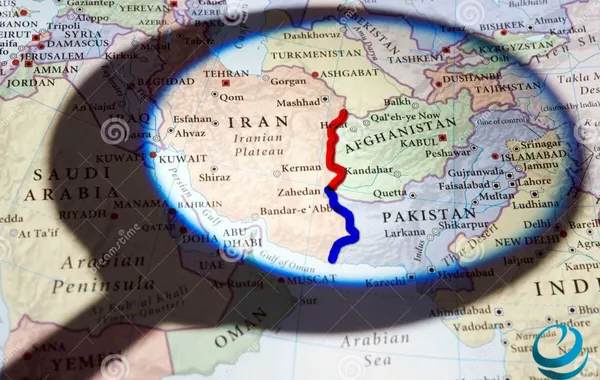
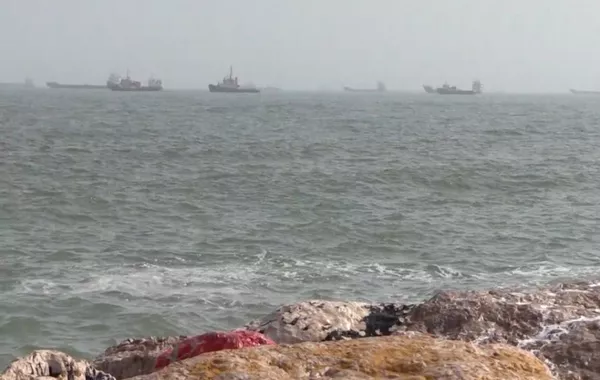
In recent years, developments in West Asia have also demonstrated that the era of low-cost interventions has ended. Any widespread instability in the Persian Gulf directly affects energy markets, global trade, and maritime security. Relying on its geopolitical position, Iran is part of this equation. Therefore, declaring maritime and missile deterrence is not merely a military message, but a reminder of a geopolitical reality: regional security cannot be defined without taking Iran into account.
Under such circumstances, the continued active pursuit of diplomacy acquires new meaning. Iran’s diplomacy today is not shaped from a position of passivity, but from self-confidence. This confidence is rooted in historical experience. Four decades of pressure and threats have not caused the collapse of Iran’s political structure. On the contrary, in many domains, they have strengthened indigenous capacities. This experience has created a kind of “strategic immunity” that has made Iranian decision-makers less hesitant and more calculating in the face of external pressure.
Diplomatic leverage increases when the opposing side understands that alternative options are costly. If military threats prove ineffective and sanctions fail to achieve their political objectives, the rational remaining path is dialogue grounded in field realities. For this reason, the combination of deterrence and diplomacy can yield more positive outcomes. This combination does not mean unilateral flexibility, nor does it imply permanent confrontation; rather, it constitutes a form of “managed tension” aimed at preventing the explosion of crisis and channeling differences into a controllable path.
Another important point is the domestic impact of this equation. When society feels that national security rests on real capabilities, support for the path of dialogue also increases. People view negotiation not as retreat, but as a tool to complete national power. This linkage between defensive strength and domestic legitimacy is an asset not every country possesses.
At the regional level as well, this approach conveys a message of stability. Neighboring countries are primarily concerned about instability and war. When Iran emphasizes deterrence while simultaneously insisting on readiness for dialogue, it signals that collective security does not pass through endless confrontation. This can lay the groundwork for indigenous security arrangements and reduce dependence on extra-regional interventions.
Ultimately, what stands out in the Leader’s remarks is the self-confidence derived from a traversed path. A country that has been able to upgrade its defense and technological infrastructure under sustained pressure can today speak openly of its power while not closing the doors of negotiation. This is the stage that may be described as “strategic maturity”; a stage in which hard and soft power are not in opposition but serve a single objective: preserving security, independence, and stability.
Iran’s new equation is formed on this basis. Credible deterrence prevents war; active diplomacy keeps the path of understanding open. The combination of the two can lead to outcomes unattainable either through pure threat or unilateral concession. In a turbulent world, a more successful country is one that can simultaneously possess the capacity to defend itself and maintain the will to engage in dialogue. Iran today seeks to demonstrate that it has reached such a stage; a stage in which carriers are no longer unilateral symbols of power and diplomacy is not perceived as an instrument of weakness, but both are placed in the service of a coherent strategy.