Source: Getty Images
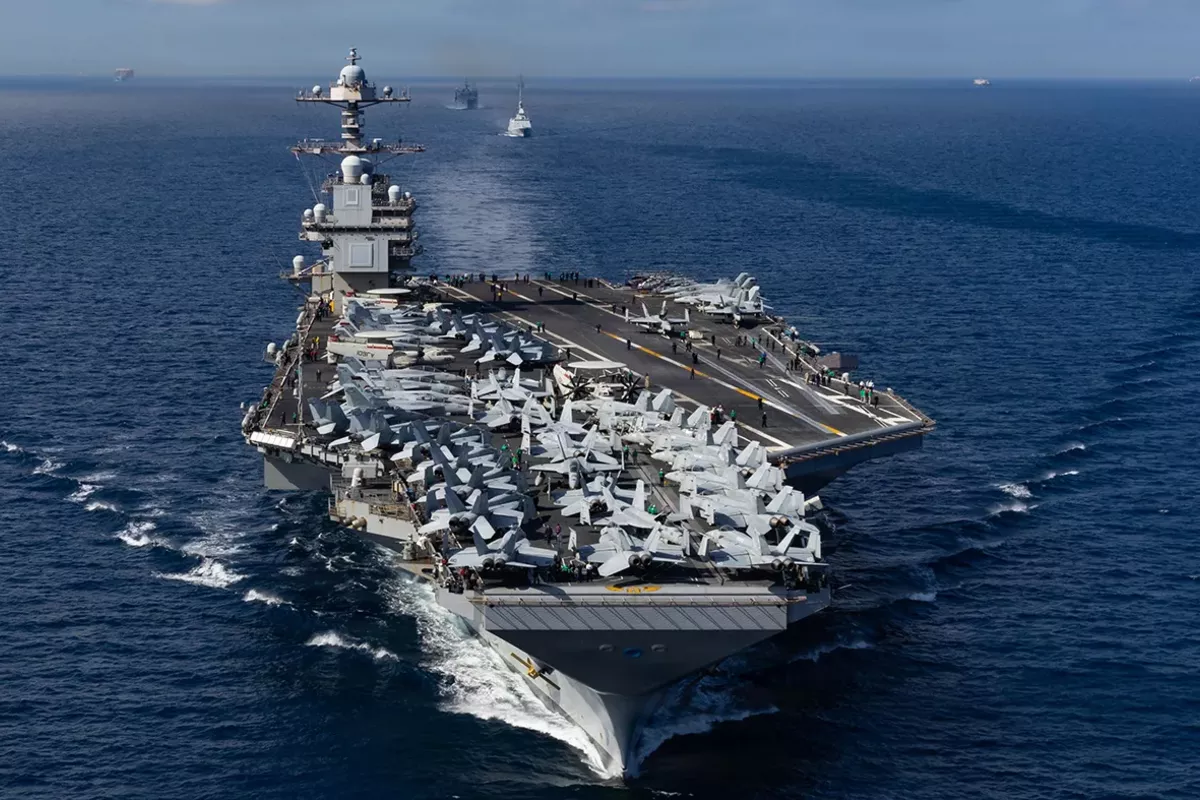
The United States has significantly reinforced its military presence near Iran, deploying more than 150 aircraft to bases across Europe and the Middle East.
This came following Washington-Tehran negotiations held in Geneva on February 17, according to satellite imagery and flight tracking data, The Caspian Post reports, citing The Washington Post.
The scale of the buildup suggests that the administration of U.S. President Donald Trump is preparing for the possibility of a prolonged military campaign rather than a limited, one-day strike operation.
Dana Stroul, a former senior Pentagon official during the Biden administration, told the newspaper that the current posture indicates readiness “for something much more extended than a one-day cycle” of strikes.
According to The Washington Post, the current American military deployment in the region represents the largest concentration of U.S. forces since the Iraq War began in 2003.
Earlier, Greek outlet Proto Thema reported that the U.S. aircraft carrier USS Gerald R. Ford, accompanied by dozens of additional aircraft, arrived at the American naval facility in Souda Bay on the island of Crete. The carrier group is expected to remain there until February 27.
In January, the White House stated that it was seriously considering the use of military force against the Islamic Republic. At the time, Washington expressed hope that Tehran would resume negotiations and agree to what officials described as a “fair and balanced” agreement that would include the complete abandonment of nuclear weapons ambitions.
On February 17, the second round of U.S.-Iran nuclear talks took place in Geneva, mediated by Oman.
Iran’s Foreign Ministry said that both sides had reached mutual understanding on several issues that could be incorporated into a draft agreement on Tehran’s nuclear program. U.S. officials described the consultations as productive, though they noted that Iran remains unwilling to accept several key positions outlined by the White House.
Both Israel and the United States have previously called on Iran not only to halt its nuclear program but also to cease ballistic missile production and end support for pro-Iranian armed groups across the Middle East.
A new round of negotiations between Iranian and U.S. delegations is expected to be held in Geneva on February 26.
Share on social media