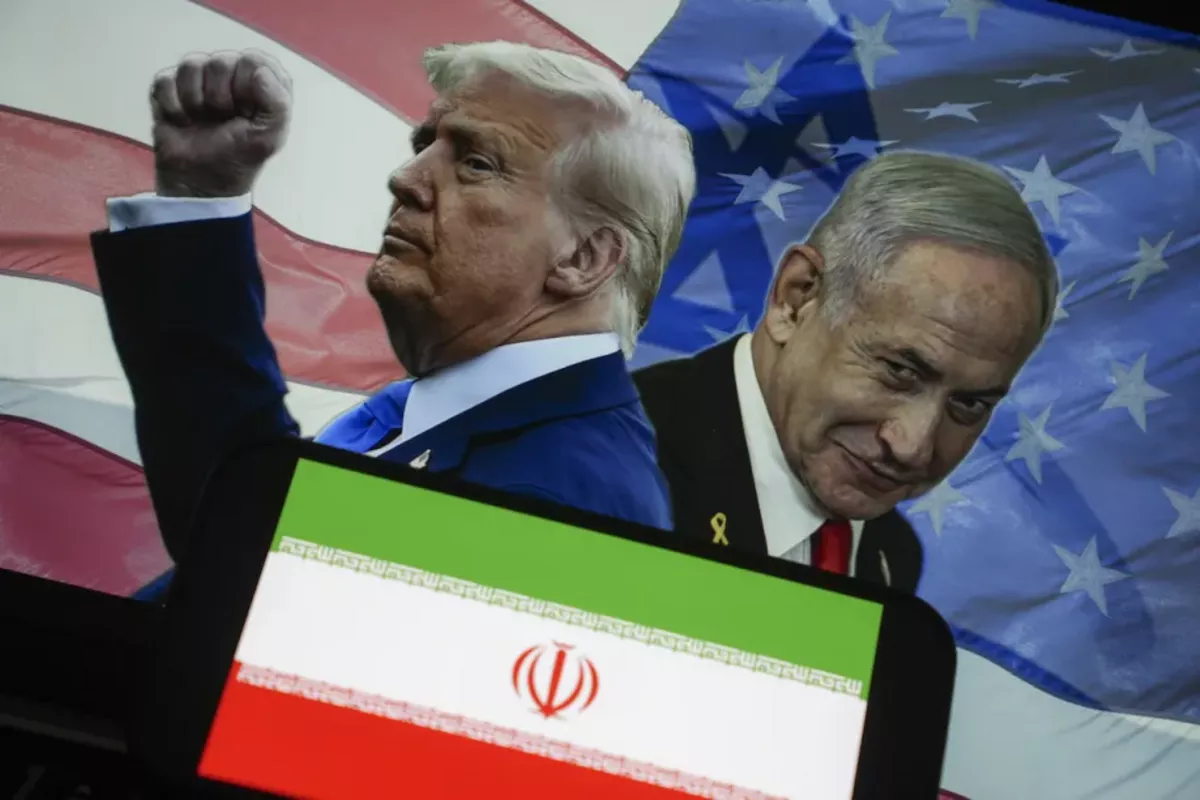
What is currently unfolding between Iran on one side and the United States and Israel on the other can no longer be described as a limited military campaign.
Despite Washington’s careful terminology, in which the word “operation” is used to bypass the constitutional requirement of congressional approval for war, the reality is unmistakable: this is a full-scale war with strategic, systemic objectives. Israel openly acknowledges this, and its actions fully correspond to that assessment. The scale, intensity, and choice of targets clearly indicate that we are witnessing not containment, but an attempt to fundamentally reshape Iran’s political architecture.
The key question, therefore, is not whether this is a war, but what kind of war it is. The answer lies in its ultimate objective. The goal is not simply to weaken Iran, limit its regional influence, or destroy parts of its military infrastructure. The strategic logic pursued by both the United States and Israel suggests something far more ambitious: the dismantling of the current political system - the ayatollah regime itself.
At the same time, both Washington and Tel Aviv clearly understand that a direct external overthrow carries enormous risks, including long-term instability and loss of control over the post-war environment. As a result, a hybrid model is being implemented: external military pressure combined with the creation of internal conditions for regime collapse.
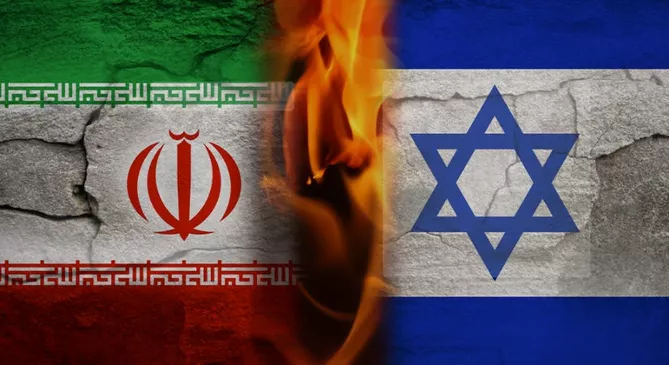
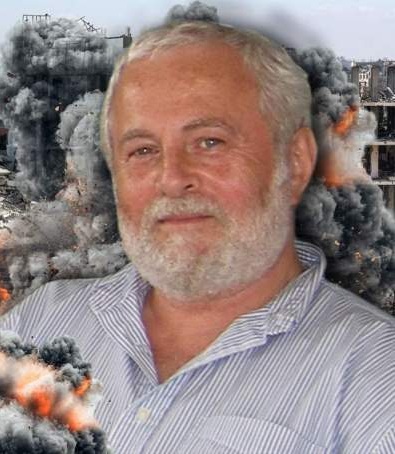
Photo credit: mazmhussain.substack.com
This approach reflects lessons learned from previous conflicts. A weakened regime is not a defeated regime. History has repeatedly shown that political systems under pressure can adapt, rebuild, and return with even greater assertiveness. For Israel, this is an existential issue; for the United States, it is a matter of long-term regional security. In this context, leaving the Iranian regime partially intact is seen not as a compromise, but as a guarantee of future conflict. Hence the shift from containment to transformation.
At the tactical level, the evolution of the conflict reveals a clear trajectory. In the initial phase, Iran attempted to demonstrate resilience through sustained missile activity. Air raid alerts in Israel followed one after another, creating the impression of an ongoing and capable response. However, this phase appears to have been short-lived. The sharp decline in both the frequency and effectiveness of these attacks suggests that Iran’s operational capabilities are deteriorating much faster than anticipated.
This decline cannot be explained solely by the depletion of missile stockpiles. The deeper issue lies in the systematic targeting of Iran’s command-and-control infrastructure. Military effectiveness is not determined by the number of armed personnel or the volume of weapons, but by the ability to coordinate, communicate, and execute decisions in a structured manner. This principle has been known since antiquity, and it remains unchanged in modern warfare. Once communication networks are disrupted and command hierarchies dismantled, even a large and heavily armed force becomes fragmented and ineffective.
What is now emerging in Iran is precisely such a scenario. Field commanders, deprived of centralized coordination, are increasingly forced to act autonomously. This leads to chaotic, uncoordinated actions, which lack strategic coherence and therefore fail to produce meaningful results. In practical terms, this marks the transition from an organized military resistance to a disjointed and reactive posture. If current trends continue, Iran’s ability to sustain a credible offensive capability may be exhausted within a relatively short timeframe - potentially within weeks.
At the same time, Israel’s ability to conduct precision strikes against high-ranking Iranian officials highlights another critical dimension of the conflict: the role of intelligence. The apparent ease with which key figures are identified and eliminated is not solely the result of technological superiority, although advanced surveillance, cyber capabilities, and real-time data processing undoubtedly play a central role. Equally important is the human factor.
The Iranian regime, after decades of internal repression and socio-economic strain, has accumulated a significant level of latent dissatisfaction within its population. While this discontent has not yet manifested in large-scale, organized protests - largely due to the absence of weapons and organizational infrastructure - it has nonetheless created fertile ground for intelligence penetration. In modern conflicts, information has become as decisive as firepower. A population unwilling to defend its government can, consciously or unconsciously, become a source of critical intelligence for its adversaries.
This internal dimension significantly amplifies the effectiveness of external military pressure. It creates a multiplier effect in which technological capabilities are reinforced by human intelligence, making it possible to strike not just targets, but the very core of the system - its leadership, coordination mechanisms, and strategic planning capacity.
Against this backdrop, the question of how the war will end becomes both central and highly complex. Several scenarios are theoretically possible, each with profound implications for the region. One scenario involves the emergence of an alternative political authority within Iran - a provisional government that could be rapidly recognized by the United States and Israel. Such recognition would provide a formal framework for ending hostilities while ensuring that the post-war political order aligns with the strategic interests of external actors.
Another scenario points toward the fragmentation of Iran along ethnic and regional lines. Kurdish regions, which have long harbored aspirations for independence, could seize the opportunity to formalize their status. Other areas may follow a similar path, seeking autonomy that, in practice, amounts to de facto separation. Iranian Azerbaijan presents a particularly complex case, where demands for autonomy could evolve into a broader redefinition of its political status.
Each of these scenarios carries risks. Fragmentation could lead to prolonged instability, while the emergence of a new central authority would require careful management to avoid a power vacuum. Yet despite these uncertainties, one conclusion is becoming increasingly difficult to ignore: the survival of the current regime in its existing form appears unlikely.
The combination of sustained external military pressure, internal erosion of legitimacy, and the systematic dismantling of command structures creates a dynamic that is inherently destabilizing. Unlike previous crises, this is not a confrontation that can be easily frozen or de-escalated through diplomatic means alone. The stakes are too high, and the objectives too fundamental.
In this sense, the war against Iran represents a turning point - not only for the country itself, but for the entire Middle East. It is a conflict that is redefining the balance between external intervention and internal collapse, between military power and societal dynamics. And while the final outcome remains obscured by the inevitable “fog of war,” the direction of movement is increasingly clear: this is a war not of limits, but of systemic change.